


When comparing setting powder and finishing powder, think of them as two essential players in the makeup game, each with a critical role. Ideally, you prepare your face, set your makeup, and achieve the perfect finish to complete your flawless routine. However, many makeup enthusiasts find themselves choosing either a setting powder or a finishing powder, which can lead to makeup that fades away or appears overly powdery. This leads to the question: how do we effectively differentiate between these two makeup essentials?
In the world of beauty, there is often confusion surrounding the terms setting powder and finishing powder. Are they interchangeable, or do they serve unique purposes? A setting powder functions to securely lock makeup in place, while a finishing powder adds the perfect final touch for a seamless look.
Continue reading to gain valuable insights into these distinct powder products and discover how to achieve a long-lasting, flawless makeup appearance with the ideal powder for your needs. Additionally, learn about the top makeup blurring powders that can help you set and finish your routine for an ultimate skin victory!

Understanding the Purpose and Benefits of Setting Powder
If cosmetics were to wear awards, setting powder would undoubtedly take home the trophy in your makeup routine. But what exactly is setting powder, and what makes it so beneficial? This incredible product acts as a veil over your skin, providing a smooth finish that helps to conquer imperfections and rescue your makeup during critical moments!
The primary role of setting powder in your makeup application is to secure your makeup in place, ensuring it doesn’t crease throughout the day. Beyond simply keeping your makeup intact, setting powders also excel at absorbing oil, blurring the appearance of pores, concealing fine lines, and softening the overall makeup look for a refined finish.
However, finding a setting powder that achieves all these benefits without excessively drying out your skin can be a challenge in conventional beauty markets. Therefore, it’s crucial to select a clean, non-toxic setting powder made with natural ingredients, such as those outlined below!
Bamboo Silica: Sourced from bamboo extract, this natural ingredient acts as an oil absorber, helping to mattify the skin, reduce the visibility of pores, and create a smooth, even complexion.
Mica: A natural mineral that imparts a delicate shimmer while contributing to a smooth, even finish.
Kaolin: This clay variant is exceptional at absorbing excess oil and promoting a matte appearance on the skin.
Natural Starches: Ingredients like tapioca starch or arrowroot powder serve as excellent bases for setting powder, providing a lightweight and absorbent texture.
Natural Colorants: If you prefer a tinted setting powder, look for natural colorants derived from sources like fruit pigments, cacao, and turmeric.
Amino Acid and Silica Powders: These components create a soft-focus effect, effectively diminishing the appearance of fine lines, pores, and other imperfections.
Antioxidants: Some setting powders may include antioxidants, such as vitamin E or green tea, which serve to protect and nourish the skin.
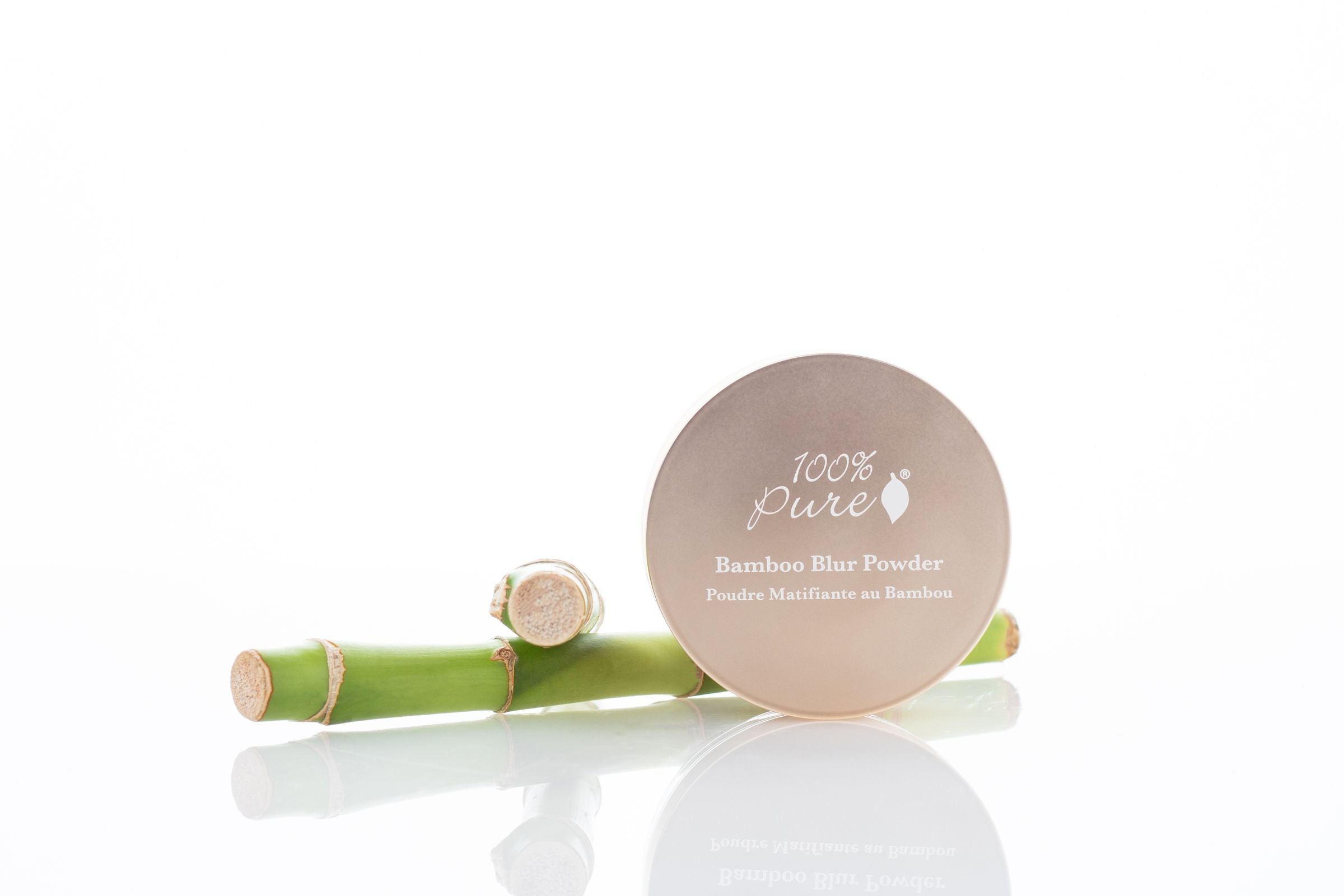
A clean, non-toxic setting powder that encompasses all these desirable natural ingredients is the 100% PURE Bamboo Blur Powder. This talc-free, lightweight setting powder boasts finely milled bamboo silica, making it gentle and suitable for all skin types. We’ve enhanced our beloved setting powder with natural pigments derived from peach, apricot, papaya, cocoa bean, and turmeric, along with green tea for added antioxidant benefits.
Exploring the Advantages of Finishing Powder
If a setting powder finds its perfect match, it’s undoubtedly a finishing powder, which can be considered the crowning jewel of a comprehensive skincare routine. So what is finishing powder, and what advantages does it offer? This remarkable product serves to soften the makeup look while blurring imperfections, adding that all-important final touch to your makeup application.
Finishing powder plays a crucial role in your makeup routine by providing a soft-focus effect that enhances the overall makeup finish. It creates an almost filter-like appearance on the skin, making it ideal for touch-ups without risking a cakey appearance, thanks to its lightweight texture.
With regard to finish, a makeup finishing powder can create either an illuminating or matte appearance on the skin. The distinction between matte vs. illuminating powders lies in the glow factor they impart.
An illuminating finishing powder adds a subtle yet radiant glow to your complexion, accentuating and highlighting your face’s natural contours without appearing harsh or artificial. The light-reflecting particles within these powders also assist in blurring imperfections, contributing to a brighter, more youthful, and vibrant appearance.
Conversely, a matte finishing powder delivers a smooth, non-shiny, and long-lasting matte effect, while also helping to set makeup and minimize oiliness. This matte finish lacks shine or sparkle, producing a velvety complexion that results in a flawless, airbrushed appearance.
For a versatile finishing powder, look no further than the 100% PURE Fruit Pigmented® Powder Foundation, which functions as both a finishing powder and a pressed foundation. This talc-free powder foundation effectively absorbs oil, reducing shine with the help of mattifying rice powder, while vitamins and antioxidants from fruit extracts work to enhance the skin’s anti-aging properties.
Comparing Setting Powder and Finishing Powder: Key Differences
As previously mentioned, a setting powder is designed to lock makeup in place, manage shine, and prolong wear, while a finishing powder provides that final touch by blurring imperfections and creating a soft-focus effect for a polished finish.
Now that we’ve clarified the distinctions between finishing powder and setting powder, let’s summarize their benefits and differences side-by-side for easy reference.
Benefits of Setting Powder:
Controls excess oil and shine.
Extends the wear of makeup.
Produces a matte finish.
Blurs visible imperfections.
Minimizes the appearance of pores.
Benefits of Finishing Powder:
Creates a soft-focus effect.
Blurs fine lines and pores.
Adds a finishing touch to makeup.
Can aid in preventing camera flashbacks.
Here’s a concise comparison table of finishing powder vs. setting powder:
|
Feature |
Setting Powder |
Finishing Powder |
|---|---|---|
|
Primary Objective |
Locks makeup in place, controls shine, extends wear |
Adds a finishing touch, blurs imperfections, offers soft-focus |
|
When to Apply |
After foundation and concealer application |
After all makeup is fully applied |
|
Overall Effect |
A matte finish, oil control, long-wearing |
Soft-focus, blurred imperfections, flawless appearance |
When considering the differences between setting powder and finishing powder, it’s essential to understand how these two types of powder can influence various skin types and makeup styles. While both powders enhance makeup, they serve different purposes and affect skin types and makeup looks in their own unique ways. A setting powder effectively locks in makeup, manages shine, and prevents creasing, while a finishing powder blurs imperfections and creates a soft, airbrushed finish.
For skin types, a setting powder is especially beneficial for those with oily or combination skin, as it effectively absorbs excess oil and provides a matte finish. This results in a long-lasting, shine-free, and smooth look, contributing to an ultimate seamless makeup experience.
On the other hand, a finishing powder is suitable for all skin types, particularly dry skin, since it can offer a touch of luminosity and prevent a cakey appearance. This type of powder boosts natural radiance, creates a soft-focus filter-like finish, and effectively blurs fine lines and pores.
Your Guide to Choosing Between Setting Powder and Finishing Powder
Navigating the vast selection of makeup powders on the market can be overwhelming, especially when it comes to choosing between setting and finishing powders. To make the right choice, consider your skin type and desired makeup finish: setting powder is perfect for controlling shine and providing a matte look, while finishing powder excels at delivering a soft, blurred, and flawless appearance, often with a luminous glow.
Since setting powders typically ensure a matte finish on the skin, they are an excellent option for individuals with oily or combination skin. The best setting powder for these skin types should effectively absorb moisture and minimize shine without leaving the skin looking flat or dull. In addition to ensuring your makeup remains in place, setting powders can effectively absorb oil to achieve a silky-smooth finish.
For optimal oil control and all-day wear, the 100% PURE Bamboo Blur Powder serves as a talc-free setting powder crafted from a single ingredient: bamboo silica. Our finely milled bamboo silica is gentle and suitable for all skin types. We’ve enriched this beloved powder with natural fruit pigments sourced from peach, apricot, papaya, cocoa bean, turmeric, and green tea to provide antioxidant benefits.
A finishing powder is generally a fantastic choice for all skin types, including sensitive skin. As the last step in your makeup routine, it offers a final touch that blurs imperfections while imparting a glowing, soft-focus effect for a flawless finish. For those with dry or mature skin, selecting a finishing powder will yield a softer, more natural finish that won’t dry out the skin or accentuate fine lines and wrinkles.
For a soft, luminous finishing effect, consider the 100% PURE Gemmed Luminizer, which utilizes light-reflecting minerals and gemstones to impart a radiant glow to the skin. Infused with antioxidant-rich fruit pigments and skin-softening avocado and cocoa butter, these luminous powders are crafted using superfine particles from multifaceted gemstones like sunstone, moonstone, pyrite, and opal.
Step-by-Step Application Guide for Using Setting Powder and Finishing Powder
Understanding how to properly use setting powder and finishing powder is essential to avoid issues such as creasing, enhancing fine lines, exacerbating dryness, or creating an overly shiny complexion. While setting powders are particularly beneficial for oily and combination skin, most skin types can benefit from both products.
The key lies in mastering the application techniques for both powders and selecting a clean, non-toxic formula that aligns with your skin type. Follow this step-by-step guide for optimal application.
Correct Use of Setting Powder:
To apply setting powder correctly, use a fluffy powder brush to dust a light layer over your face after applying foundation and concealer, especially on areas prone to shine or creasing. Lightly buff the powder in circular motions to blend it seamlessly, creating a flawless and softened complexion. This approach helps to prevent cakiness while maximizing the longevity of your makeup.
Tips for Long-Lasting Oil Control:
#1. Apply with a light hand – excessive powder can lead to a heavy, cakey appearance and potential flashback.
#2. Concentrate on the T-zone (forehead, nose, and chin) where oil production is most significant.
#3. Reapply throughout the day using a blotting motion instead of rubbing.
Correct Use of Finishing Powder:
To apply finishing powder effectively, use a light, fluffy brush to gently buff it over your entire face after applying setting powder and other makeup. The key to achieving a soft, airbrushed look is to buff the powder in circular motions, focusing on areas where you want to blur pores or achieve a smooth finish.
Tips for a Final Airbrushed Look:
#1. A small amount of finishing powder goes a long way, so apply it sparingly.
#2. Ensure the powder is thoroughly blended into your skin for a seamless finish.
#3. If you have oily skin, you may prefer a setting powder for oil control, while those with dry skin might opt for a finishing powder for a more natural look.
#4. Choose the appropriate shade of finishing powder for the best results.
Optional: After applying finishing powder, you can use a setting spray to lock in your makeup and achieve a long-lasting finish.
Frequently Asked Questions: Setting Powder vs. Finishing Powder
Are setting powder and finishing powder the same product?
No, while both setting powder and finishing powder play roles in achieving a flawless makeup look, they serve different purposes. Setting powder is intended to lock makeup in place and control shine, while finishing powder offers a final touch to your makeup routine, providing a soft-focus, airbrushed effect.
Can I use both setting powder and finishing powder together?
Yes, you can certainly use both types of powder together, although it may not always be necessary. Consider your skin type and the desired finish. For combination skin, you might apply setting powder to oily areas and use finishing powder on drier areas. If you prefer a polished look, layering both products can be beneficial, with setting powder applied first to lock in your makeup and finishing powder added last as a final touch.
What is the best setting powder for oily skin?
For individuals with oily or combination skin types, a setting powder is ideal as it effectively absorbs excess oil and provides a matte finish. This type of powder contributes to a long-lasting, shine-free, and smooth appearance, creating the ultimate seamless makeup look.
Is setting powder necessary for dry skin?
While not strictly essential for dry skin, setting powder can be a useful product for setting makeup and managing shine. It’s important to choose a natural and hydrating formula and apply it sparingly to avoid highlighting dry patches.
Can I use finishing powder without foundation?
Yes, you can absolutely use finishing powder independently of foundation, as it’s primarily designed to provide a smooth, natural finish and control shine without the need for coverage.
