


[ad_1]
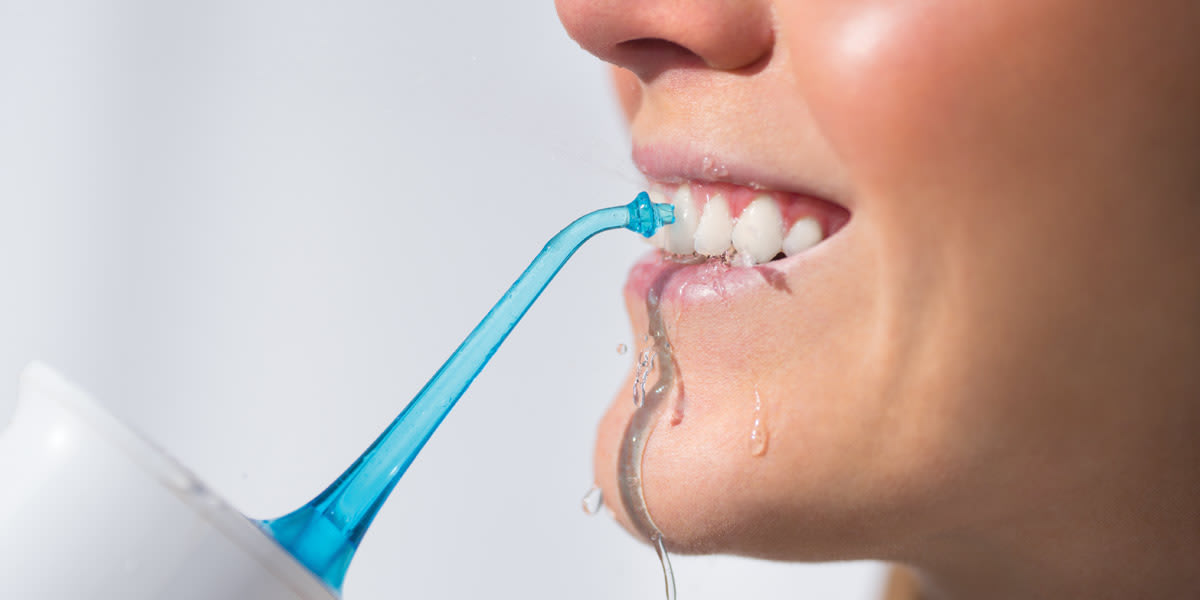
In Hewlett’s view, string floss that’s used correctly accomplishes the task of scraping away bacterial biofilm between teeth at least slightly better than a water flosser can. Water flossers are good at removing food and other debris from the surface of your teeth, he says. And they have some effect on the bacterial biofilm that causes decay. “The studies do indicate that [a water flosser] can disturb and can sort of disrupt the biofilm, and then for a period of time, the bacteria has to reorganize,” he says. But that’s still not quite as good as physically removing the layer of bacteria between your teeth, as you can with string floss.
Richardson agrees. The removal of plaque from teeth by string floss “is a vital component to an efficient daily home care regimen, as regular flossing can effectively remove plaque prior to the calcification process, which creates tartar and can lead to periodontitis [bone loss around teeth].”
That said, many people don’t floss daily or thoroughly, and some people don’t floss at all. If a water flosser is what gets you to consistently clean between your teeth, and you weren’t consistently flossing before, then Hewlett is all for it. “I would be thrilled, as a dentist, if someone used a water flosser every day,” he says.
Linda Cheng, DDS, MPH, a clinical associate professor at the Texas A&M University School of Dentistry, says she hopes people will consider using water flossers because she’s noticed that they often feel more enthusiastic about them than they do about dental floss. “Very recently , I’ve talked to my patients more about getting a Waterpik, and they’ve been more receptive to it than ‘I encourage you to floss,’ ” she says.
And water flossers may have advantages over string floss for many people. Those with orthodontia—whether that’s a measly permanent retainer like mine or a mouth full of braces—can benefit, because water flossing is likely to be easier than using string floss.
People with dental implants can also benefit from added attention to cleaning around them, Cheng says. “People need to realize that just because you have an implant and it’s all metal doesn’t mean you’ll have no problems with it,” she says . “If there’s still plaque around an implant, just like with a natural tooth, you’re going to end up with inflammation.” A water flosser can be useful in keeping the area around an implant clean.
And not everyone can use floss. Water flossers generally have large handles that are easier to grip and manipulate than string floss, Cheng says. For people with dexterity limitations, water flossing can be a useful tool for caring for their teeth.
There are other considerations as well. Some people may decide to use water flossers to avoid PFAS, a class of chemicals linked to potential human and environmental harm, that have been found in certain brands of dental floss.
Others may decide to stick with string floss because they’re already in the habit of using it. Plus, floss is effective and as cheap as a dollar a box. Water flossers are certainly pricier—Walmart has models ranging from about $20 to $160— but the devices should last for many uses and often come with a multiyear warranty.
[ad_2]
Source link