


The sun, a vital celestial entity that grants essential light and warmth to our planet, possesses a dual nature. Its rays can provide a multitude of health benefits, yet they also carry risks, particularly through harmful ultraviolet (UV) radiation. As a response to these dangers, sunscreens have become our primary defense against the sun’s adverse effects, traditionally composed of various chemical ingredients.
Recently, there has been a significant trend towards using natural sunscreen alternatives, prompted by concerns regarding the environmental footprint and potential health risks linked to synthetic formulations. This transition reflects an increasing awareness of the necessity to protect both our skin and the environment, making mindful choices about the products we apply daily.
Understanding the Crucial Importance of Sunscreen
The sun emits three types of rays: UVA, UVB, and UVC, each affecting our skin in different ways. UVA rays penetrate deeply, accelerating premature skin aging and causing DNA damage. In contrast, UVB rays primarily impact the skin’s surface layers, leading to painful sunburns and increasing the risk of developing skin cancer. While UVC rays are absorbed by the Earth’s atmosphere, UVA and UVB are responsible for most sun-related skin problems, emphasizing the need for effective protection.
Excessive sun exposure can result in various skin issues, such as painful sunburn, premature aging, and a significant increase in skin health risks. The silver lining is that these problems can be effectively mitigated with a high-quality sunblock applied daily, ensuring your skin remains protected throughout all outdoor activities.
Embracing the Benefits of Natural Sunblock
The rise of natural sunblocks has gained attention due to several compelling advantages. Traditional sunscreens often utilize chemical filters that, while efficient against UV rays, can irritate sensitive skin and cause adverse reactions. In contrast, natural formulations harness the power of minerals like zinc oxide and titanium dioxide, offering a gentler and safer alternative for sun protection.
Moreover, the environmental ramifications of synthetic sunscreens, which can harm coral reefs and marine ecosystems, have raised significant concerns among eco-conscious consumers. Natural sunblocks utilize eco-friendly ingredients, providing effective sun protection without compromising environmental integrity. This commitment to both skin health and ecological sustainability is what makes them an attractive choice for today’s informed consumers.
Key Ingredients That Make Natural Sunblocks Effective
Natural sunblocks are carefully formulated with essential ingredients that not only shield the skin from harmful UV rays but also provide nourishing benefits:
Zinc Oxide: A foundational component of natural sunblocks, zinc oxide offers broad-spectrum protection by creating a physical barrier on the skin’s surface that effectively reflects and scatters both UVA and UVB rays. It is important to choose non-nano zinc oxide, as it does not penetrate the skin, ensuring both safety and effectiveness while minimizing the risk of irritation.
Titanium Dioxide: Similar to zinc oxide, titanium dioxide serves as a mineral-based physical barrier, providing excellent protection by reflecting and scattering the sun’s damaging UV rays, enhancing the overall effectiveness of sunblock formulations.
Botanicals and Oils: Many natural sunblock products incorporate botanical extracts such as aloe vera and green tea, along with nourishing oils like jojoba oil. Aloe vera offers soothing and hydrating properties, ideal for calming skin exposed to the sun. Green tea is rich in antioxidants that help combat the damaging effects of UV radiation, while jojoba oil not only hydrates but also acts as a natural emollient, ensuring the skin remains soft and supple.
Discover the Best Natural Sunblocks from 100% PURE
100% PURE is a renowned beauty brand committed to delivering pure, natural, and environmentally responsible products. Our philosophy revolves around clean beauty, ethical practices, and using only the highest quality, plant-based ingredients. We recognize the critical role of sunblock in safeguarding our skin from harmful UV radiation, which is why we have designed sunblocks that offer robust sun protection while prioritizing both skin health and environmental sustainability.
Our standout sunblocks, including the Green Tea SPF 30 and Yerba Mate Mist SPF 30, are formulated with clean, mineral-based ingredients like zinc oxide, providing broad-spectrum protection. Let’s delve deeper into the benefits of each of these exceptional sunblock products:
1. Green Tea SPF 30
100% PURE’s Green Tea SPF 30 is a mineral-based sunblock that merges zinc oxide with antioxidant-rich green tea to deliver effective sun protection. It provides broad-spectrum defense against both UVA and UVB rays while simultaneously nourishing the skin.
Benefits
Delivers SPF 30 protection.
Infused with green tea extract for added antioxidant benefits.
Gentle mineral formula suitable for sensitive skin.
What do our customers appreciate about this product?
- “Great sunscreen. Creamy, moisturizing formula.” PY from the USA
- “This is the only sunscreen I use and have not had any sun pigment or sunburn at all.” – Deborah from the USA
- “Green tea goodness. Love the scent and blend-ability of this product” – Aly from the USA
2. Yerba Mate Mist SPF 30
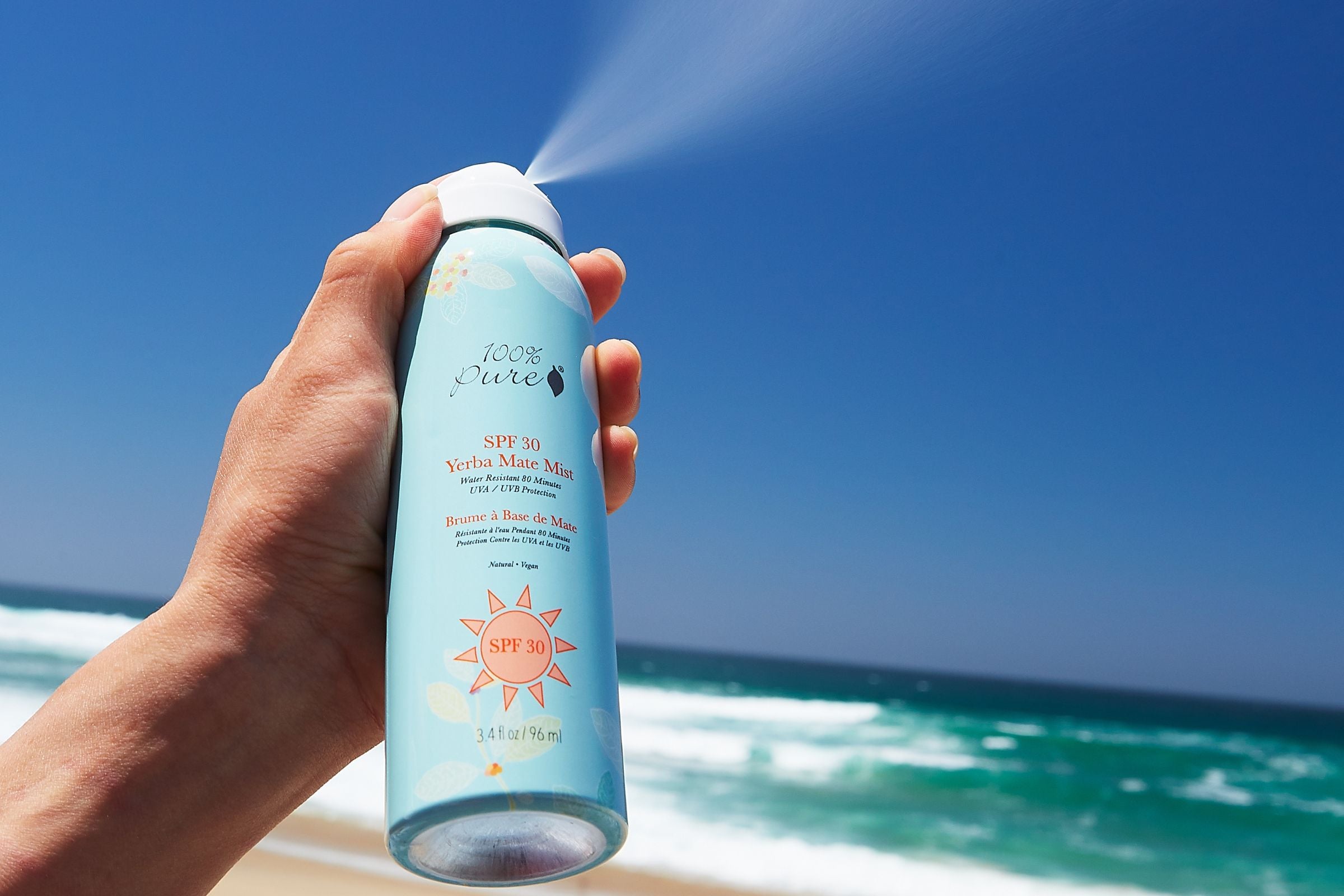
The Yerba Mate Mist SPF 30 is a convenient and eco-friendly sunblock presented in a spray format. It features zinc oxide for UV protection and yerba mate tea for a boost of antioxidant benefits.
Benefits
User-friendly mist application for on-the-go convenience.
Contains yerba mate tea, enhancing antioxidant protection.
Suitable for all skin types.
What do our customers love about this product?
- “Loved this sun protection. Superfine mist and easy to apply.” – Deena from the USA
- “I have super acne-prone skin and it does not break me out. I apply it once on my face at about 10 a.m. most mornings, and the application definitely keeps me protected all day.”- Katie from the USA
- “Oh my goodness this is one of the best natural spray sunscreens. Goes on real easy and doesn’t cake or burn.” – Sophie from the USA
Mastering Application and Reapplication for Maximum Protection
Quantity Matters: For optimal coverage, it’s essential to apply an adequate amount of sunblock. A general guideline is to use about one ounce (equivalent to a shot glass full) for your entire body. For facial application, a nickel-sized amount is typically sufficient.
Timing Your Application Perfectly: It’s advisable to apply sunblock 15-30 minutes before sun exposure. This timeframe allows the product to adhere properly to the skin, maximizing its effectiveness.
The Importance of Reapplication: To maintain consistent protection, reapply sunblock every two hours, or more frequently if swimming or sweating. Regular reapplication is crucial for all-day sun protection and should never be overlooked.
Stay Updated with Our Newsletter Subscribe
for more blog updates and exclusive discounts

Creating an Effective Skincare Routine: Pairing with Sunblock
For a comprehensive skincare regimen, consider layering your sunblock with other beneficial products like serums and moisturizers. Begin with your serum, which can deliver additional advantages such as antioxidants that help combat free radicals. Follow with your sunblock to ensure optimal UV protection, and finish with a moisturizer to lock in vital hydration.
In particular, antioxidant serums can enhance the effectiveness of sunblocks. They provide extra protection against oxidative stress caused by UV exposure, significantly reducing the risk of premature aging. This synergy is crucial for maintaining healthy skin and complements the defensive role of your sunblock.
|
Morning Skincare Routine |
Evening Skincare Routine |
|
Black Tea Grass Jelly Anti-oxidant Serum This potent serum is crafted to protect the skin from free radical damage, featuring black tea, a powerful antioxidant that defends against oxidative stress. By neutralizing these harmful molecules, it helps maintain youthful, vibrant skin. |
Multi-Vitamin + Antioxidants Potent PM Serum In your nighttime regimen, this serum works to combat daily skin damage, including the harmful effects of pollution and UV exposure. Since it contains Vitamin A, it’s important to apply sunblock the next day to prevent any photosensitivity. |
|
Black Tea Grass Jelly Anti-oxidant Moisturizer This moisturizer, enriched with black tea, enhances the protective benefits of your sunblock. The antioxidant properties of black tea aid in reversing free radical damage, ensuring your skin remains resilient and rejuvenated despite UV exposure. |
Multi-Vitamin + Antioxidants Ultra Riché PM Treatment This treatment is designed to repair and rejuvenate your skin overnight. It combines a variety of vitamins and antioxidants to combat daily skin damage. As it contains Vitamin A, remember to use sunblock the following day to prevent UV-induced harm. |
Common Questions About Sunscreen Answered
What is SPF, and what level should I choose?
SPF, or Sun Protection Factor, indicates how effectively a sunscreen can block UVB rays. The ideal SPF depends on your skin type and expected sun exposure. For everyday activities, SPF 15-30 usually suffices, while prolonged outdoor exposure necessitates SPF 30 or higher.
How effective are natural sunblocks in water or sweat?
Natural sunblocks vary in their water resistance, so it’s essential to look for labels indicating water resistance. However, regardless of water resistance, reapplication after swimming or excessive sweating is crucial for optimal protection.
Can I apply body sunblock on my face?
While it is generally safe to use body sunblock on your face, facial sunscreens are specifically formulated for the delicate skin of the face and may offer better compatibility under makeup.
How frequently should I check and replace my sunblock?
Sunscreens have expiration dates, so it’s wise to check them annually and replace any that have expired. Additionally, consider replacing the product if you notice any changes in color or consistency.
Are natural sunblocks safe for children?
Natural sunblocks tend to be more kid-friendly compared to standard formulations. However, it’s always best to review labels for child-specific products that feature gentle, hypoallergenic formulations and higher SPF levels suitable for young skin.
Enhancing Your Sun Protection Approach
Incorporating a holistic strategy for sun protection is not only effective but also vital. Alongside using natural sunblocks, consider combining them with physical barriers such as hats and seeking shade whenever possible. This comprehensive approach ensures robust defense against harmful UV radiation. Remember, using natural sunblock not only nurtures your skin but also contributes positively to environmental preservation.
