



The term “aging” often evokes a sense of dread, and while we appreciate the gift of time, the visible signs of aging can feel like an unwelcome intruder. The reality is that noticing unwarranted signs of aging, such as age spots and fine lines, can happen almost overnight. Once these changes appear, it can feel like an uphill battle to manage and mitigate them effectively.
Instead of fearing the “A” word, it’s essential to become vigilant about recognizing the signs of premature aging. By proactively identifying these signs, we can take steps to address them early on, allowing us to maintain a youthful appearance for as long as possible.
Understanding Aging: Differentiating Between Normal and Premature Signs
Aging is a unique journey for everyone, as no two lives are the same. Consequently, our skin’s aging process varies significantly based on our experiences, environments, and genetics.
So, how do we determine whether we are experiencing premature aging? At a cellular level, this occurs when our skin appears older than our actual age. It may seem far-fetched, but we can illustrate this with a comparison to fruits. For example, bananas harvested on the same day will ripen differently depending on whether one bunch is exposed to sunlight while the other is kept in a cool, dark room.
In a similar way, our skin’s health is influenced by our lifestyle choices and skincare routines, impacting how youthful our skin remains or how quickly it shows signs of aging. But what does premature aging actually look like?
Recognizing 7 Key Indicators of Premature Aging
When we examine our skin, the signs of aging may not always present themselves immediately. Some indicators can be subtle, while others are more pronounced and noticeable.
As we navigate through life, certain changes in our skin are natural and expected; however, there are also signs we would rather prevent, regardless of our current age. Think of your skin as a visual diary, revealing the lifestyle choices you’ve made thus far. Here are seven critical signs to watch for that may indicate your skin is aging prematurely:
Loss of Natural Radiance (Dull Skin)
A significant early indicator of premature aging is a decrease in your skin’s natural luminosity. Healthy skin typically has a vibrant glow, while aging skin may appear lackluster, sallow, or shadowed, which can detract from your overall appearance.
Transition to Dryness (Dry Skin)
As skin loses its glow, you might notice a shift in its texture. If you previously enjoyed normal or even oily skin, you may suddenly find it feeling tight, dry, and parched. This shift can be alarming and signifies that your skin is struggling to maintain its moisture levels.
Development of Uneven Pigmentation (Age Spots)
Age spots can begin to appear earlier than anticipated, particularly if you frequently expose your skin to the sun without adequate protection. These spots become more noticeable over time, resulting in persistent discoloration that may not respond to typical skincare treatments.
Prominence of Pores (Visible Pores)
As your skin becomes unbalanced, you may start to notice your pores more than before. They can even enlarge as a result of imbalanced nourishment and hydration, leading to a less desirable appearance.
Textured Appearance of Skin (Rough Skin)
Dryness often accompanies enlarged pores, resulting in a less smooth skin texture. Instead of enjoying a flawless complexion, you may observe small bumps, flaking, and larger pores that contribute to an uneven appearance.
Inconsistencies in Skin Color (Uneven Skin Tone)
The combination of dryness, roughness, and texture changes can lead to flaking skin and an uneven complexion. Along with breakouts and blemishes, you may notice tonal discrepancies that become increasingly difficult to manage.
Appearance of Fine Lines and Wrinkles
These are perhaps the most recognized signs of aging. By the time fine lines begin to appear around your eyes, forehead, and mouth, many other signs of premature aging are likely already present. A focused skincare regimen can effectively address the various concerns associated with aging skin.

Identifying 3 Major Contributors to Premature Aging
How did we arrive at this point? The signs of premature aging can seem to appear suddenly. As previously mentioned, our daily habits and overall lifestyle choices play a crucial role in how our skin looks and feels. Being our largest organ, the skin deserves dedicated care and attention, yet it is often overlooked or undervalued.
Excessive Sun Exposure is a primary factor in premature aging. While many enjoy a sun-kissed glow, the risks associated with prolonged UV exposure are well-documented. Intense sunlight can accelerate cellular aging and inflict damage on skin structure, making sun protection essential regardless of your tanning preferences.
Environmental Pollution significantly influences the aging process of our skin. Exposure to pollutants can exacerbate conditions such as dermatitis, eczema, and acne, and is linked to increased rates of premature aging and even skin cancer.
While many forms of pollution are beyond our control, some individuals actively choose to expose themselves to harmful substances. For instance, both cigarette smoke and secondhand smoke are detrimental to skin health and can hasten the natural aging of skin cells. These pollutants often contribute to dullness, pronounced lines, and uneven skin tone.
Additionally, lifestyle choices and genetics play pivotal roles in how our skin ages. While we may have a genetic predisposition to certain skin characteristics, our daily habits can either support or undermine our skin’s health.
Maintaining an ideal lifestyle can be challenging, as it requires regular hydration, sufficient sleep, a balanced and low-sugar diet, and appropriate skincare. Achieving this balance can feel overwhelming, but it is essential for minimizing the risk of premature aging.
Exploring 4 Effective Treatments for Premature Aging
While it’s impossible to halt the aging process entirely, we can implement strategies to slow it down and even reverse some effects through a combination of natural ingredients and scientific advancements.
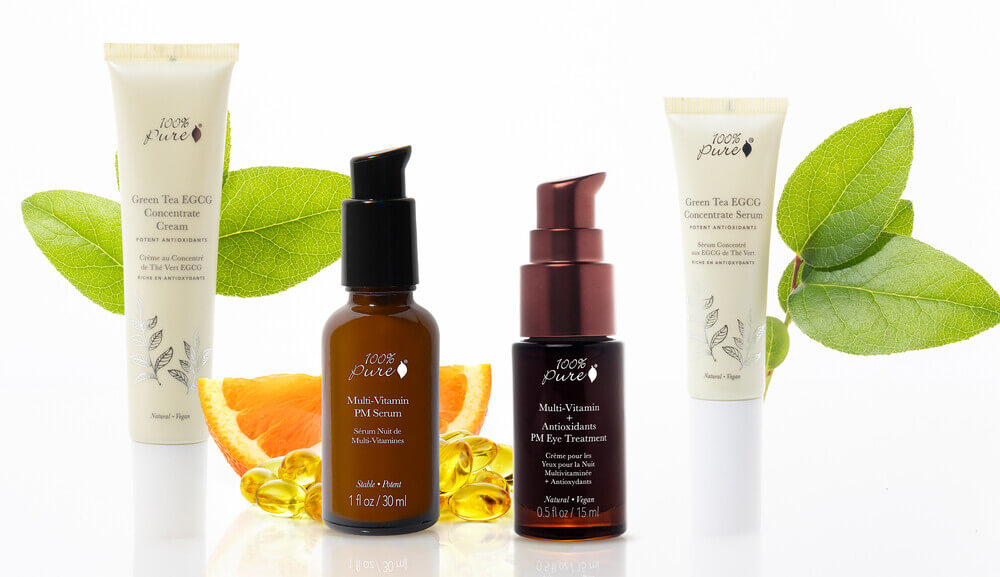
For Eye Care: Multi-Vitamin + Antioxidants PM Eye Treatment
The eyes and hands often reveal our age first, which is why this award-winning eye oil deserves attention.
This powerful formula effectively reduces puffiness, dark circles, and fine lines, all while being gentle enough for the delicate eye area. Infused with jojoba oil, vitamin C, and green tea oils, it offers antioxidant properties that can rejuvenate the appearance of aging skin.
For Hydration and Fine Lines: Green Tea EGCG Concentrate Serum
Prepare for a remarkable experience. This serum, packed with antioxidant-rich green tea and acai, is aptly named concentrate for a reason. Its active ingredients penetrate deeply to enhance skin elasticity and firmness. With the addition of superfruit extracts and hydrating rose, this serum delivers lasting moisture without a greasy finish.
For Pore Minimization and Texture Improvement: Retinol Restorative Overnight Balm
Sometimes, the most effective skin treatments are those with straightforward formulas – and this balm certainly delivers results. Infused with rejuvenating retinol and fatty acids from sunflower and olive oils, it restores skin elasticity and bounce while reducing the visibility of fine lines. The restorative vitamin E promotes an even skin tone, providing deep hydration, radiance, and an improved complexion overnight.
For Treating Age Spots: Multi-Vitamin + Antioxidants Potent PM Serum
When we say this serum covers all bases, we mean it. The star ingredient, niacinamide, counteracts UV damage, refines enlarged pores, and enhances skin texture. Coupled with vitamin C for firmness and glow, hydrating hyaluronic acid, and rosehip oil, this powerhouse formulation, along with retinol and vitamin E, effectively addresses the visible signs of premature aging.
var windowWidth,lazyLink,lazyImages,lazySource,lazyBackground,lazyIframe,lazyScripts,navigator_platform,lazyLoadedJS,src,style,datasrc,urls,analytics,s,x,i,j,flag;
function init(){flag&&(flag=0,load_all_js(),lazyLoadImg(),lazyLoadBackground(),lazyLoadIframe(),lazyLoadSource())}
function isElementInViewport
var a=t.getBoundingClientRect();
return a.top>=0&&a.left>=0&&a.bottom<=(window.innerHeight||document.documentElement.clientHeight)&&a.right<=(window.innerWidth||document.documentElement.clientWidth)
}
function insertAfter(newNode, referenceNode) {
referenceNode.parentNode.insertBefore(newNode, referenceNode.nextSibling);
}
function isElementInView
var a=t.getBoundingClientRect();
return a.top(window.innerHeight/2||document.documentElement.clientHeight/2)
}
function lazyLoadLink(){
lazyLink.forEach(function
t.href=null==t.dataset.href?t.href:t.dataset.href
})
}
function lazyLoadImg(){
lazyImages.forEach(function
null!=(src=windowWidth<600?null==t.dataset.mobsrc?t.dataset.src:t.dataset.mobsrc:t.dataset.src)&&(t.src=src),t.classList.remove("lazy2")
})
}
function lazyLoadImg2(){
lazyImages.forEach(function
isElementInViewport
})
}
function lazyLoadSource(){
lazySource.forEach(function
t.srcset=null==t.dataset.srcset?t.srcset:t.dataset.srcset
})
}
function lazyLoadBackground(){
lazyBackground.forEach(function
lazybg=windowWidth<768?null==t.dataset.mobstyle?t.dataset.style:t.dataset.mobstyle:t.dataset.style,null!=lazybg&&(t.style=lazybg),t.classList.remove("lazybg")
})
}
function lazyLoadIframe(){
lazyIframe.forEach(function
t.src=null==t.dataset.src?t.src:t.dataset.src
})
}
function lazyLoadScripts(){
j!=lazyScripts.length&&("lazyload2"==lazyScripts[j].getAttribute("type")?(lazyScripts[j].setAttribute("type","lazyloaded"),void 0!==lazyScripts[j].dataset.src?((s=document.createElement("script")).src=lazyScripts[j].dataset.src,document.body.appendChild(s),s.onload=function(){j++,lazyLoadScripts()}):((s=document.createElement("script")).innerHTML=lazyScripts[j].innerHTML,document.body.appendChild(s),j++,lazyLoadScripts())):(j++,lazyLoadScripts()))
}
function lazyLoadCss
(s=document.createElement("link")).rel="stylesheet",s.href=t,document.getElementsByTagName("head")[0].appendChild(s)
}
function lazyLoadJS
if(lazyLoadedJS)return setTimeout(function(){lazyLoadJS
}
function wnwAnalytics() {
var script2 = document.querySelectorAll(".analytics");
script2.forEach(function(analyticsScript) {
trekkie.integrations=false;
s = document.createElement("script");
s.innerHTML = analyticsScript.innerHTML;
insertAfter(s, analyticsScript);
analyticsScript.parentNode.removeChild(analyticsScript);
});
}
document.addEventListener("DOMContentLoaded",function(){windowWidth=screen.width,lazyLink=document.querySelectorAll("link"),lazyImages=document.querySelectorAll("img.lazy2"),nolazyImages=document.querySelectorAll("img.lazy"),lazyBackground=document.querySelectorAll(".lazybg"),lazyIframe=document.querySelectorAll("iframe"),lazySource=document.querySelectorAll("source"),lazyScripts=document.getElementsByTagName("script"),navigator_platform=navigator.platform,i=0,j=0,flag=1,window.addEventListener("scroll",function(){init()}),window.addEventListener("mousemove",function(){init()}),window.addEventListener("touchstart",function(){init()}),"Linux x86_64"!=navigator_platform&&init(),setTimeout(function(){init()},60000)});
function load_all_js() {
lazyLink=document.querySelectorAll("link");
lazyLoadLink();
}