


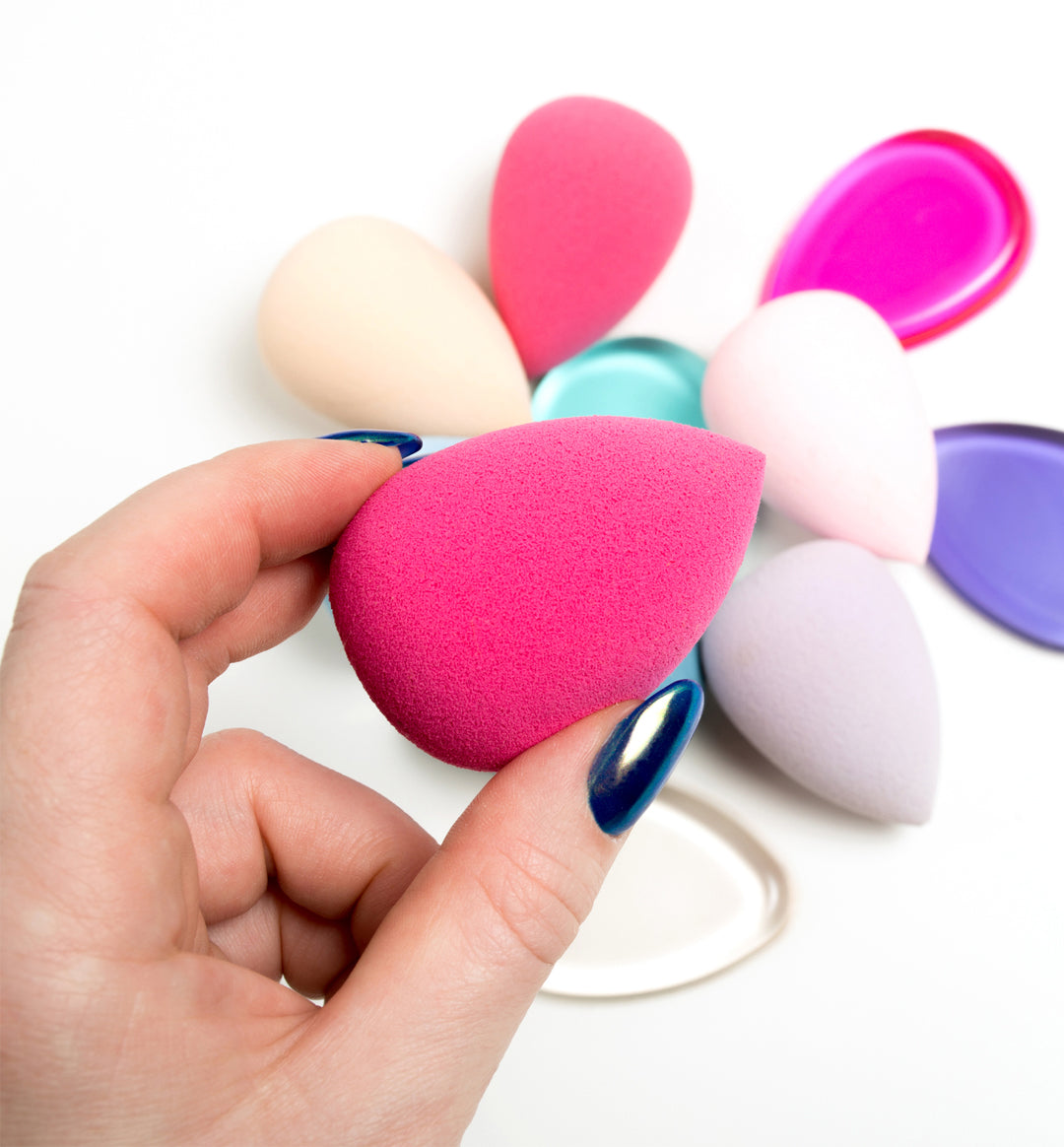
In the past, it was widely believed that traditional makeup brushes were the ultimate tools for applying face products. While we still appreciate the artistry that a good brush can bring, it’s evident that makeup sponges have captured the attention and admiration of both makeup enthusiasts and professionals. Their unique ability to create flawless finishes has made them indispensable in the makeup application process.
Whether you’re just starting your journey with makeup sponges, feeling skeptical about their effectiveness, or are a devoted brush user, exploring this alternative application method can revolutionize your makeup routine. With an array of designs, shapes, and textures available, discovering the ideal makeup sponge for your needs can feel akin to finding your very own glass slipper!
Join us as we explore the extensive universe of makeup sponges, learn how to apply foundation using a sponge, and discover innovative ways to use a damp sponge for various makeup applications.
Discover the Advantages of Using Makeup Sponges
Curious about the benefits of incorporating makeup sponges into your routine? If you have previously learned how to apply foundation with a brush, you may be wondering what a sponge can offer that your trusted brush cannot. While brushes undoubtedly hold their own merit in any makeup kit, let’s delve into the compelling reasons to choose makeup sponges for your daily foundation application.
Achieve a Flawless Finish with Minimal Effort
Using a sponge to apply liquid and cream foundation results in a more natural and blended appearance. The unique texture of a sponge allows for easier blending, particularly when dampened, as it helps the product spread more seamlessly across the skin. This technique minimizes the risk of leaving behind unsightly brush streaks, ensuring your makeup looks professionally applied.
PRO TIP: If you prefer using powder foundation, some makeup sponges may not yield optimal results. Many dry powder enthusiasts opt for a brush to avoid unnecessary product loss.
Ideal for Dry Skin Types
Because sponges are typically used damp, they apply makeup with a stippling technique that reduces friction on the skin. This gentler approach helps minimize the risk of flakiness, which can often occur with dry tools that increase friction. Additionally, the moisture retained in a damp sponge can provide a radiant, hydrated appearance to your skin, enhancing your overall makeup look.
Unveiling the Key Benefits of Makeup Sponges
The tools we select can significantly influence our ability to achieve a seamless, blended look, and makeup sponges are high-caliber tools for attaining this sought-after aesthetic. From flawless blending to achieving the perfect makeup finish, a damp sponge is essential for foundation, concealer, and even more complex applications!
Let’s explore the top benefits associated with using makeup sponges.
Comparing the Benefits of Wet Sponges Versus Dry Application Techniques
A wet sponge tends to absorb less foundation, resulting in a smoother, more natural finish compared to its dry counterpart. While a dry sponge may absorb a greater amount of foundation, it compensates by providing fuller coverage. Let’s examine the advantages of each application method in greater detail.
Wet Sponge Advantages:
#1. Reduced Product Waste: A wet sponge absorbs significantly less foundation, ensuring that more product is transferred directly onto your skin.
#2. Smoother and More Natural Finish: The damp sponge aids in achieving a luminous and healthy-looking finish by enhancing product infusion.
#3. Perfect for Foundation Application: A wet sponge is typically favored for foundation application, allowing for even and seamless blending.
#4. Best for Lighter Coverage: If your preference leans towards a sheer or natural finish, a wet sponge is the ideal choice.
Dry Sponge Advantages:
#1. Fuller, Matte Coverage: A dry sponge delivers a more substantial, matte finish, making it a suitable option for those desiring heavier coverage or for building up product.
#2. Excellent for Powder Products: A dry sponge is often the go-to for applying powders such as setting powders or blushes, ensuring that powders do not clump.
#3. Ideal for Baking: Some makeup enthusiasts utilize a dry sponge for baking powder, resulting in a beautifully set look.
#4. Great for Dense Application: A dry sponge can be effectively used to buff in a second layer of foundation without making it appear too heavy or cakey, as it won’t absorb excess product.
How Makeup Sponges Create a Natural, Blended Finish
While brushes can sometimes lead to streaks, smudges, and caking, a makeup sponge’s soft texture absorbs any excess product, facilitating a seamless blending process. Makeup sponges are adept at achieving a natural, blended finish by distributing makeup evenly, minimizing product waste, and providing an airbrushed effect.
A makeup sponge’s distinctive shape, texture, and material, when combined with the wet application method, contribute to a smooth and blended finish. To achieve this flawless look, it’s crucial to use a high-quality, versatile non-latex sponge – it will elevate your blending experience!
Understanding the Difference Between Makeup Wedges and Beauty Blenders
Makeup wedges typically have a long, triangular shape with sharper ridges, which facilitate a more concentrated and intense application. These wedges are particularly effective for targeting blemishes or smaller areas of the face, allowing for heavier coverage.
In contrast, beauty blenders feature a tapered tip and a rounded edge that is perfect for blending foundation. The tapered end is ideal for the delicate eye and nose areas, while the rounded edge is designed for broader areas such as the cheeks, forehead, and chin. Beauty blenders excel in seamlessly applying and blending foundation across both large and small areas.
The Specific Benefits of Sponge Application for Dry Skin Types
Utilizing a makeup sponge, especially when damp, can greatly benefit individuals with dry skin by preventing makeup from settling into dry patches, resulting in a more natural, airbrushed finish. The soft, gentle texture of the sponge can also aid in hydrating the skin and locking in moisture, creating an overall healthier appearance.
Tips for Selecting the Perfect Foundation Sponge
Makeup sponges are available in a variety of shapes and materials, and the right choice can significantly enhance your application technique for foundation and coverage. Let’s explore the different types of makeup sponge shapes, followed by insights into various sponge materials!
SHAPES
#1: Teardrop
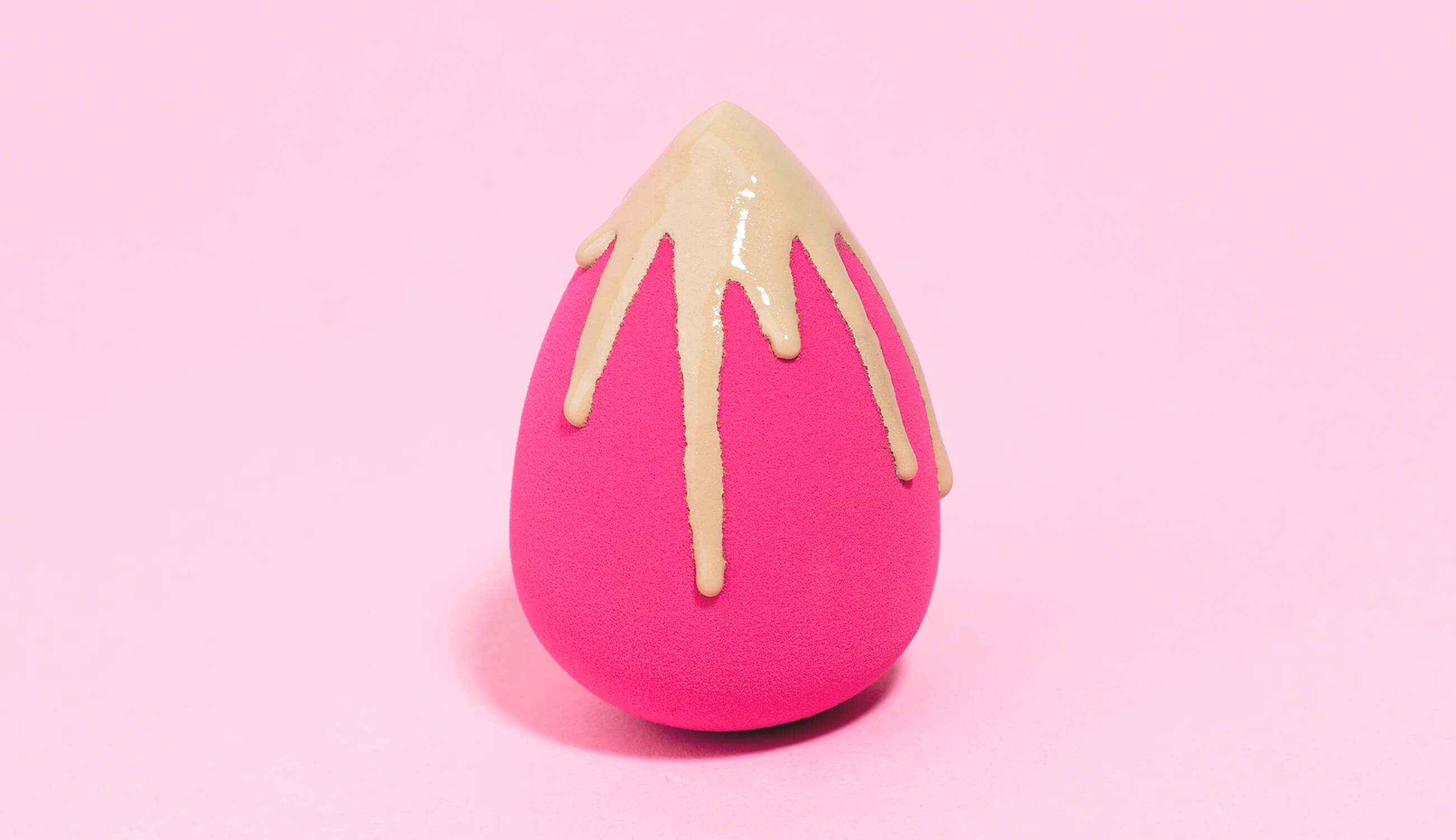
Our Non-Latex Makeup Blender features a tapered tip and a rounded edge, making it perfect for blending foundation. The tapered end is excellent for the eye and nose area, while the rounded edge effortlessly covers the cheeks, forehead, and chin.
Perfect for: Seamlessly applying and blending foundation in both broad and intricate areas.
#2: Wedge
This sponge is shaped like a long, skinny triangle, and its sharper edges facilitate a more concentrated application.
Perfect for: Targeting blemishes or smaller areas of the face; ideal for heavier coverage.
#3: Beveled
This design includes a tapered side and a flat slanted edge. The tapered side is perfect for detailing, while the flat edge is ideal for packing on pigment for increased coverage.
Perfect for: Applying foundation to both broad and detailed areas of skin.
#4: Hourglass
This sponge has a unique hourglass shape, with a wide tapered edge that narrows in the center and flares back out, resembling a soda bottle. This design allows for softer and broader application.
Perfect for: Applying foundation to larger areas of the face with a lighter touch.
#5: Flat
These sponges, often composed of spongy latex material, come in either circular or soft-edged square shapes. You may have encountered flat sponges in drugstore foundation compacts, often featuring a distinct rubber-like aroma.
Perfect for: Applying pressed powders for setting or baking techniques.
#6: Oval
These sponges belong to the flat category. The thicker the material, the better they are for applying liquid and cream foundations. If you find traditional teardrop-shaped sponges cumbersome, these flat options may be more suitable.
Perfect for: Individuals who struggle with the use of standard makeup sponges.
MATERIALS
Let’s delve into the various materials used to create makeup sponges. Some sponges are easier to work with when learning how to apply foundation using a sponge, while others require less frequent cleaning. Remember that some sponges are disposable, which can make hygiene easier but also contribute to environmental waste!
#1: Latex
This material has a rubbery texture and is non-porous, allowing for ample product transfer to your skin. Many commonly found makeup sponges are made from latex, making it one of the most popular options.
Perfect for: Achieving heavier coverage and using matte formulas.
#2: Non-latex
Our Non-Latex Makeup Blender foam is designed to be more porous compared to latex, allowing it to absorb more product, which often results in a lighter, more natural application.
Perfect for: Individuals with latex allergies, those sensitive to the rubbery scent of traditional sponges, or anyone seeking to customize their coverage level.
#3: Silicone/Jelly
Sponges labeled as “jelly” are typically made from silicone. Like latex, silicone is non-porous and does not absorb foundation like other types, making these sponges easier to clean. However, they may not blend as seamlessly as other sponges, leading to a less natural finish. Furthermore, these sponges cannot be dampened, which may result in a more matte appearance.
Perfect for: Those who prioritize easy cleaning and product conservation.
PRO TIP: Silicone sponges do not require frequent replacement like other sponges. They are more durable, but you may need to compromise on blending effectiveness.
Step-by-Step Guide to Applying Foundation with a Sponge
Now for the exciting part – learning how to put on foundation with a sponge! After thoroughly cleansing, moisturizing, and priming your skin, follow these detailed steps for a seamless finish. Remember to incorporate a broad-spectrum sunscreen into your routine, whether it’s in your moisturizer or a separate product, as some sunscreens offer a priming effect!
#1. Select the Right Foundation and Makeup Sponge
Be sure to choose a foundation that suits your skin type and achieves your desired coverage. Using the tips provided, select a sponge that complements your foundation formula.
Best Choices for Natural Foundations – Liquid, Cream, and Powder Foundations:
For normal to dry skin, our Full Coverage Water Foundation offers a flawless high-coverage finish with a satin, lightly dewy effect.
For normal to dry skin seeking a hydrating, natural finish, our Fruit Pigmented® Tinted Moisturizer is an ultra-lightweight formula that refreshes and imparts a dewy glow to the skin.
For normal to oily skin, our Fruit Pigmented® Foundation Powder is a talc-free, fruit-pigmented pressed powder foundation that helps absorb oil and reduce shine while providing medium coverage with mattifying rice powder.
For normal to dry skin, our Fruit Pigmented® Cream Foundation delivers medium to full coverage with a satin finish.
For normal skin, our Fruit Pigmented® 2nd Skin Foundation offers anti-aging benefits, medium to full coverage, and a weightless, satin-like finish.
#2. Dampen Your Sponge
Why does using a wet sponge prevent cakey makeup and streaks? A damp sponge minimizes product absorption, ensuring that more makeup reaches your skin while reducing waste. Additionally, a wet sponge allows for smoother blending, preventing the makeup from being pulled or streaked across the skin.
Wet your sponge, then squeeze out any excess water to prevent over-absorption. You want to avoid having a dripping sponge! However, this rule changes when applying powder; wetting the sponge before using a powder formula can lead to caking.
#3. Apply Using a Stippling Motion
Avoid using rubbing motions; instead, utilize a stippling technique for makeup application to prevent streakiness and minimize skin tugging. Pressing and bouncing a makeup sponge in gentle stippling motions ensures even product distribution and seamless blending.
This technique helps prevent dragging the sponge, which can lead to uneven coverage or marks on the skin. By employing the sponge to “bounce” or stipple the makeup, it gets pressed into the skin, resulting in a smooth, airbrushed finish.
#4. Blend and Build for a Seamless Look
To achieve light to full coverage by layering foundation with a makeup sponge, begin with a light application using a damp sponge, then build coverage by adding more layers to areas requiring additional attention. Utilize stippling motions (dabbing instead of swiping) to blend and maintain a streak-free finish. For a full coverage look, apply extra layers focusing on areas like blemishes or dark circles, and consider using a concealer for enhanced coverage.
#5. Set Your Foundation for Lasting Wear
The final step to achieving a flawless base is applying a setting powder or spray to ensure your makeup lasts throughout the day. Our Bamboo Setting Powder is available in translucent and tinted options, formulated with mattifying bamboo silica to absorb excess oil, eliminate shine, and refract light for a soft, poreless finish. This crucial step will reward your hard work, ensuring your makeup holds up beautifully.
Maximize Your Makeup Sponge: Tips for Other Applications
Makeup sponges are versatile tools that can be effectively utilized for various makeup applications beyond simply applying foundation. They are excellent for blending cream products like blush and eyeshadow, and even for setting powder. The key is to adjust your technique and the wetness of the sponge based on the product and desired coverage.
Blending Concealer – Achieve a Bright, Creaseless Under-Eye Look.
#1. Damp Sponge (or Dry for Full Coverage): Damp sponges work wonders for under-eye concealer, while a dry sponge can offer fuller coverage.
#2. Utilize the Pointed Tip: Use the pointed tip to apply concealer precisely in the inner corners of the eye and around the nose.
#3. Blending: Blend the concealer using a stippling motion for a flawless finish.
Applying Cream Contour & Bronzer – Effortlessly Achieve Seamless Contouring.
#1. Damp or Slightly Damp Sponge: A damp sponge is ideal for cream products, promoting seamless blending.
#2. Dot and Blend: Apply the product to your skin and then use the sponge to blend it out with a stippling motion.
#3. Precision Application: Utilize the pointed tip to apply cream blush or eyeshadow in smaller areas.
Buffing Out Powder & Setting Makeup – Techniques to Avoid Cakiness.
To prevent a cakey appearance when buffing out powder and setting makeup, focus on hydration, light application, and proper blending techniques. Hydrating your skin before applying makeup, using a thin layer of setting powder, and blending thoroughly will help avoid heaviness or unevenness. Finish with a setting spray to help meld the makeup and create a more natural look.
Dabbing on Liquid or Cream Blush – Achieve a Natural Flush without Streaks.
For a natural flush without streaks when applying liquid or cream blush, start with your fingers or a brush, emphasizing dabbing and blending rather than rubbing. Begin with a small amount of product and gradually build, blending upwards and outwards for a subtle, lifted glow.
Precision Baking & Highlighting – How Sponges Enhance Features.
Makeup sponges are instrumental in setting and enhancing features during precision baking and highlighting techniques. They excel at blending and setting makeup, yielding a smooth, flawless finish. Their versatile shapes allow for precise application and blending, while their material effectively absorbs excess product, avoiding a cakey look while enhancing facial features.
Pro Tip: Makeup sponges are multi-functional tools — they can be used for far more than just foundation!
FAQs: Answering Your Most Common Questions About Sponge Application
How do I use a makeup sponge for foundation?
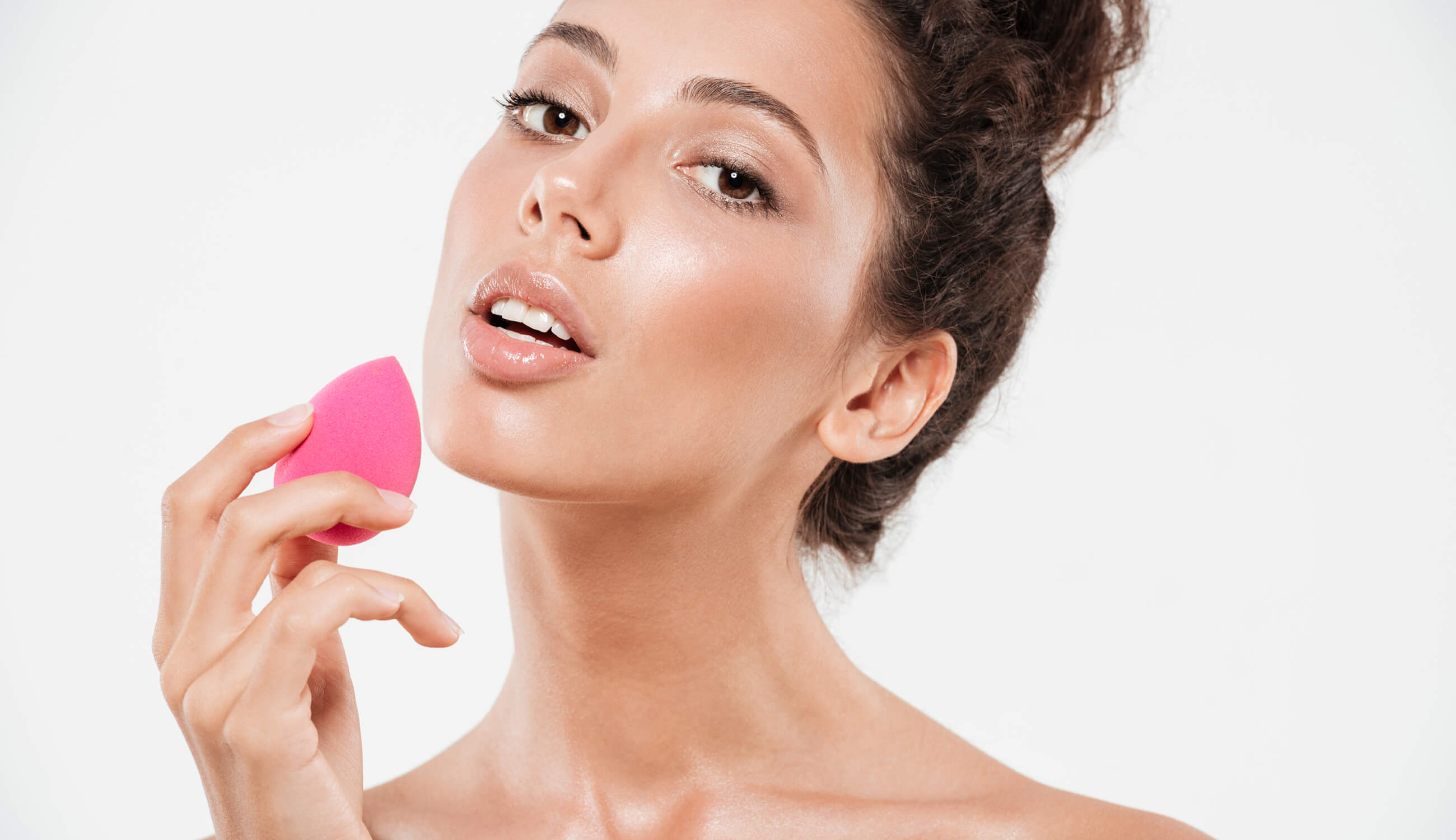
To apply foundation using a makeup sponge, first dampen the sponge and squeeze out any excess water. Then, dispense foundation onto the back of your hand. Use the sponge to dot the foundation onto your face and blend using a dabbing or bouncing motion.
What’s the difference between a makeup brush and a sponge?
Makeup brushes and sponges provide different application results and serve various purposes. Brushes generally deliver more precise and controlled coverage, while sponges are renowned for creating a more natural, seamless finish by absorbing excess product and blending smoothly.
Should I use my makeup sponge wet or dry?
For most makeup applications, it’s typically advisable to use a makeup sponge damp rather than dry to achieve a smoother, more natural-looking finish and prevent product wastage.
How often should I clean my makeup sponge?
To maintain healthy skin and ensure flawless makeup application, it’s best to wash your makeup sponge after every use or at least once a week.
What’s the best way to apply foundation with a sponge for full coverage?
For full coverage foundation application with a sponge, use a dry sponge and apply foundation using a stippling motion, which is a gentle bouncing or tapping action rather than a swiping motion. A dry sponge is best for full coverage as it absorbs less product, allowing you to build the desired coverage effectively.
The versatility of makeup sponges is one of their greatest strengths; they are not limited to just foundation application. You can also use them to buff out contour lines and apply highlighter to your cheekbones. Incorporate a makeup sponge into your dewy skin routine or your no-makeup look, and you’ll be grateful for the results!
[ad_2]
Source link
