


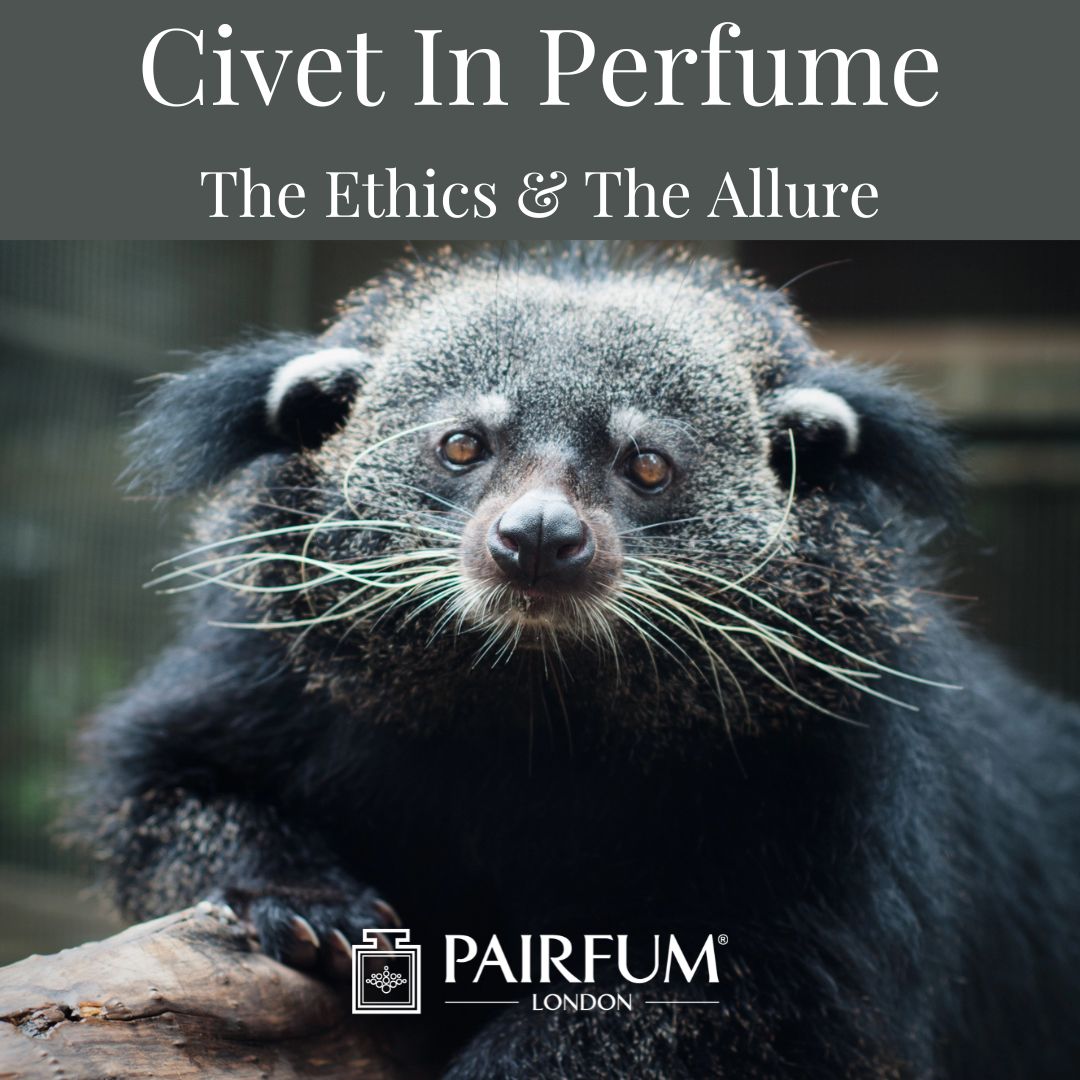
Civet in Perfume: Unveiling Nature’s Alluring Essence showcases the incredible artistry of perfumery, which navigates the enchanting world of scents, ranging from the ethereal notes of flowers to the rich, complex depths of earthy and woody aromas. One of the most intriguing elements in this aromatic landscape is the inclusion of animalic notes like Civet, which play a crucial role in crafting distinctive and captivating perfume blends.
These animalic notes are known for their intense and natural fragrance, possessing a remarkable ability to engage the senses and create layered, sophisticated scents that endure. At Pairfum London, a boutique perfumery house, we delve into the intricate relationship between these aromas, uncovering and sharing the hidden beauty within these mysterious scents while also addressing the ethical dilemmas they sometimes present.
Embark with us on an exploration led by Pairfum London into the fascinating world of Civet in perfume. We will uncover its rich historical significance, contemporary relevance of animalic notes, and the essential role they play in defining exquisite fragrances.
Journey Through Time: The Rich Legacy of Civet in Fragrance Crafting
Civet: The Enigmatic Secret of Perfume Makers
Civet, a unique musky secretion obtained from the African civet cat, has been a highly coveted ingredient in the world of perfumery for centuries. Renowned for its intoxicating warm, musky scent, it has been incorporated into numerous iconic fragrances, bridging the divide between the animalistic and botanical realms. The allure of Civet lies in its exceptional capacity to infuse a captivating depth and sensuality into perfume formulations, harmonizing and enriching other notes within the scent. Historically, civet paste was harvested from the perineal glands of both male and female civets, often from the Indian civet and the African species.
Civet’s Historical Significance in Ancient Fragrance and Healing Practices
The story of Civet in perfume dates back to ancient Egypt, where this remarkable substance, along with other animalic notes, was treasured for its rarity and captivating allure. The Egyptians incorporated civet into perfumes and ointments, often reserving it for sacred ceremonies or offering it as a valuable gift among the elite. Over time, the application of civet expanded to the fields of medicine and apothecary, where its unique characteristics were utilized to promote health and wellness.

The Unique Aroma Profile of Civet: Exploring Its Distinctive Characteristics
In its natural state, Civet offers a signature musk that is both alluring and intricate. It is often characterized as warm, animalic, and slightly fecal, with subtle undertones of honey, leather, and even tobacco. Some Civet perfumes incorporate dark coffee notes, harmonizing with the animalic musk, possibly inspired by the natural aroma of coffee berries, which can sometimes mirror the scent of civet. The true elegance of civet is revealed as it interacts with the skin, transforming into a smoother, more refined musky scent with a hint of sweetness.
This exceptional aroma profile renders civet a potent fixative, enhancing both the longevity and sillage of perfumes. Furthermore, it contributes depth and complexity, resulting in a sophisticated scent that persists on the skin and in the air.
The Chemistry of Civet: Understanding Its Chemical Composition and Olfactory Effects
The mesmerizing aroma of civet is attributed to a complex blend of chemical compounds, including indole, skatole, and civetone, among others. Indole and skatole introduce the initial animalic and fecal notes, while civetone imparts the distinct musky undertone that defines civet’s character.
When paired with other fragrance notes, civet can craft a harmonious symphony of scents. It melds particularly well with floral, woody, and spicy accords, infusing warmth and sensuality into the overall composition. The interplay between civet and complementary ingredients is what makes each civet-infused fragrance unique and captivating. The inclusion of a spicy floral accord in some civet perfumes adds vibrancy and intrigue to this remarkable note.
The Lasting Influence of Animalic Notes in Modern Fragrances: Civet’s Timeless Appeal
The Modern-Day Significance of Animalic Notes
In today’s dynamic world of perfumery, the incorporation of animalic notes like civet has undergone a fascinating evolution. Contemporary perfumers are no longer limited to raw, animalic ingredients; instead, they are exploring innovative methods and synthetic materials that evoke a sense of wildness within their fragrances. These synthetic alternatives possess intriguing, warm, and sensual qualities that mirror the essence of natural civet, paying tribute to the characteristics of animalic notes while prioritizing ethical and sustainable practices. Notably, “real civet” is seldom used in modern perfumery due to ethical concerns and the availability of high-quality synthetic substitutes.
Civet’s Integration in Niche and Boutique Fragrances
Civet remains a vital component in the realm of niche and boutique perfumery, where artisanal perfume houses embrace the enigmatic charm of animalic notes and their extraordinary capacity to enrich and unify intricate compositions. The Civet note is frequently utilized in chypre fragrances to impart depth and complexity. We take pride in our discerning appreciation for the nuances and trends in fragrance, recognizing the profound impact of animalic notes like civet in captivating and engaging the senses, ultimately creating unforgettable and lasting scents.
The Revered Use of Civet Oil in Perfume Formulations
The application of Civet oil in perfumery has long been celebrated for its ability to craft alluring, long-lasting fragrances. Traditionally sourced from the civet secretions of the small Indian civet and other related species, this natural civet musk boasts a rich, animalistic scent that adds warmth and complexity to various compositions. It seamlessly blends with earthy notes, sweet vanilla, and intoxicating floral aromas. Historically, perfumers infused civet into their creations through a tincture process, allowing its complexity to mature over time.
Perfumers have approached this ingredient with a careful balance, tempering its raw potency with essential oils and other refined notes to create fragrances that are both sensual and sophisticated. Although ethical concerns have prompted a shift towards synthetic options, the timeless allure of civet-inspired formulations continues to influence the luxurious world of perfumery, ensuring that its captivating legacy endures.
Navigating Ethical Dilemmas: The Shift to Synthetic Civet Alternatives
In recent years, awareness surrounding the ethical implications of sourcing natural civet has become increasingly prominent. Traditionally, civet was harvested through the collection of civet paste from the anal glands of wild civets, a practice that raised significant concerns regarding animal welfare. The zebu horn was historically employed for this collection process.
Currently, the perfume industry has largely transitioned to utilizing synthetic civet. This synthetic variant not only alleviates ethical concerns but also provides enhanced consistency and control over the final fragrance product.

Civet in Perfume: Embracing the Allure of Animalic Notes
Mastering the Art of Civet Integration in Fragrance Creation
While the techniques and components utilized in modern fragrance creation have significantly evolved, the art of incorporating the essence of civet into perfumes remains a delicate and captivating endeavor. To achieve a harmonious and enchanting scent, perfumers meticulously balance the unique and potent animalic characteristics against the other elements of the perfume, ensuring a seamless integration of notes that enhance and elevate one another.
Key Characteristics of a Well-Designed Civet-Inspired Perfume Include:
An Engaging Depth: The essence of civet infuses a profound, sensual richness into fragrances, ensuring an air of intrigue that lingers and captivates the senses. – Harmonious Complementarity: A successful blend of animalic and non-animalic notes creates a fragrance that works cohesively, offering warmth and sensuality while maintaining a balanced, alluring aroma. – A Timeless Quality: An expertly crafted civet-inspired perfume should possess an enduring charm that resonates with wearers across generations, transcending fleeting trends to become a classic.
The Captivating Spectrum of Animalic Notes Beyond Civet in Fragrance
The realm of animalic notes extends well beyond civet, encompassing a rich and diverse array of aromas that inspire and enchant fragrance enthusiasts. Among these scents are:
Musk: Recognized as one of the most prominent animalic notes, musk is derived from the glandular secretions of the musk deer, delivering an intoxicating, sensual aroma that imparts depth and warmth to countless fragrances. Today, synthetic musks have become the ethical standard, offering a cruelty-free alternative with similar desirable characteristics.
Castoreum: Extracted from the glands of beavers, castoreum contributes a robust, leathery scent to the fragrances it enriches. Although not as commonly used as musk or civet, it still plays a vital role in both niche and classic perfumery.
Ambergris: A rare substance originating from the digestive system of sperm whales, ambergris imparts a unique, musky-earthy scent with marine undertones. Due to its scarcity, synthetic alternatives are frequently employed in modern fragrance creation.
Civet’s Iconic Presence in Fragrance: Noteworthy Perfumes Featuring This Element
Several renowned perfumes have beautifully highlighted the captivating essence of civet.
- Chanel No. 5: This timeless masterpiece incorporates a subtle civet note, adding depth and warmth to its floral composition.
- Shalimar by Guerlain: Civet enhances the oriental richness and sensuality of this legendary fragrance.
- Muscs Koublai Khan by Serge Lutens: This bold and animalic perfume celebrates the raw allure of animalistic musks, including civet, creating an unforgettable olfactory experience.
- Frederic Malle’s Musc Ravageur is a modern classic that features a prominent civet note, showcasing the depth and complexity of this ingredient.
These examples illustrate how perfumers have skillfully utilized civet to create enduring masterpieces that have withstood the test of time.

Exploring Civet Beyond Perfume: Its Presence in Diverse Industries
While civet is primarily associated with the fragrance industry, its applications extend to various other sectors. In traditional medicine, it has been credited with a range of therapeutic properties. Moreover, civet has also been utilized as a flavoring agent in certain culinary traditions, particularly in regions known for coffee production.
Choosing and Wearing Civet Perfumes: A Guide for Enthusiasts
Selecting a Civet perfume can be an exhilarating yet challenging endeavor, given its distinctive and potent nature. Terms such as “Civetticitis” and “civetta” are often used interchangeably to refer to civet in perfumery, so be vigilant while researching. The unique Civet aroma can elicit both admiration and aversion, underscoring its polarizing character, making it essential to understand your personal preferences when exploring civet fragrances. Here are some tips to navigate the world of civet perfumes:
Begin with a Sample: Always test a sample before committing to a full-sized bottle. Civet can react uniquely with individual skin chemistry, so it’s crucial to observe how it evolves on your skin.
Evaluate the Concentration: Civet is commonly used in Eau de Parfum or Parfum formulations due to its intensity. If you are new to civet, consider starting with a lower concentration.
Focus on Blending: A well-crafted civet natural perfume will seamlessly incorporate the animalic note with other fragrance components, resulting in a balanced and harmonious scent profile.
Wear it with Assurance: Civet perfumes make bold statements. Embrace their distinctive character and wear them with confidence.
Celebrating the Wild Allure of Civet-Infused Fragrances
Civet in perfume serves as the hidden, enigmatic beauty that is integral to the captivating allure of animalic-inspired scents. These fragrances are simultaneously sensual, mysterious, and vibrant, provoking a passionate response from both wearers and those who encounter the scent. As a representation of untamed wildness, the essence of civet and other animal scents remind us of nature’s captivating power and the extraordinary sensory experiences it can provide through the exquisite craft of perfumery. While animal scents may be polarizing, they undeniably add a unique and enchanting dimension to the world of fragrances.
Discover the Enigmatic Allure of Masculine Fragrances with Pairfum London
At Pairfum London, we are dedicated to creating luxurious fragrances that are completely vegan and free from animal-derived ingredients, all while encapsulating the complexity and depth traditionally associated with materials like civet. Our selection of masculine perfumes is meticulously crafted to evoke the same rich and sophisticated allure using innovative plant-based ingredients and expertly blended accords. Each fragrance offers a distinctive olfactory experience, proving that elegance, intensity, and refinement can be achieved without utilizing animal products.
- A rich, woody and spicy fragrance where the zest of Grapefruit & Bergamot infuses the opening with freshness.
- The sensual heart of Masculine Leather is enhanced by the rich spicy elements of Black Pepper and Nutmeg.
- The base is intensely woody with Black Cedar, Patchouli, Tonka Bean, and Moss.
We invite you to embark on a sensory journey with our exquisite collection of masculine fragrances designed to enchant and inspire. Explore Pairfum London’s online shop today, and uncover the true essence of animalic notes within our meticulously crafted scents. Delve into the mystery and allure of the untamed, and discover your sublime, signature aroma that resonates with the depths of your spirit.
