


Born in New York City to Chinese parents, photographer Baldwin Lee reflects on his unexpected journey into the world of photography in his new monograph, titled Baldwin Lee. He shares, “Creativity was never brought up in my childhood,” revealing a transformative moment during his sophomore year when he enrolled in a photography class. Influenced profoundly by the legendary Minor White at MIT and Walker Evans at Yale, Lee describes these figures as akin to studying with Matisse and Cézanne. He briefly served as Evans’ personal printer, meticulously handling negatives from the iconic work, Let Us Now Praise Famous Men.
In 1982, Lee established the photography program at the University of Tennessee, where he would educate aspiring photographers for over thirty years. While teaching, he discovered his unique photographic subject matter during travels throughout the American South. Between 1983 and 1989, he embarked on road trips during teaching breaks, gravitating toward Black neighborhoods where signs of success were often overshadowed by neglect. Lee humorously recounts his strategy of visiting local police stations to gather insights on safe areas to photograph, often providing them with a highlighter to mark places to avoid, only to seek out the opposite.
Utilizing a cumbersome, tripod-mounted 4×5 view camera that demanded long exposure times, Lee captured stunningly beautiful images that resonated with the depth of the subjects. Most interactions with locals took place in front yards and on porches, allowing him to build rapport and explain his artistic approach. He gave his subjects specific directives while embracing the unexpected, saying, “There is a beauty in this process that exploits the unintended.” His ability to create authentic connections highlights the essence of his work.
As a member of a minority himself, Lee deeply understands the experience of being overlooked and underestimated. He recalls an incident when he and his Irish Catholic wife opened a bank account together in Tennessee. The bank employee spoke only to his wife, failing to recognize him until it was time to sign. His wife’s response, “Why don’t you ask him?” underscores the challenges Lee faced and continues to address in his art.
Captivating Scene in Nashville, Tennessee (1983)
© Baldwin Lee
Alongside the powerful monograph filled with poignant portraits that illuminate the dignity of his subjects amid their struggles, an exhibition of Lee’s work is currently on display in New York at Howard Greenberg Gallery from September 22 to November 12, with another exhibition set for next year at David Hill Gallery in London. In an engaging conversation with The Daily Beast, Lee reflects on the themes of racism through different eras, the vibrant culture of Black hair, and the importance of knowing when to step back.
Let’s delve into your editing process. The book features 88 plates selected from a staggering ten thousand images! How did you approach the curation for this publication?
About four years ago, the publisher at Hunter Points Press, Barney Kulok, reached out to me. I initially sent him a folder containing 20 images I was keen on including, and he selected the remainder. This collaborative effort allowed me to take a backseat and observe the project evolve.
What condition was your archive in at that time?
Panic set in on April 14, the day before taxes, as I found myself completely disorganized and uninterested in the tedious task of inventory management. When Barney inquired about the number of images I possessed, I was unsure. Thus began a thorough, forensic-like search that took three weeks to consolidate everything into one location. I had no inventory; I made a rough estimate by counting them out. I even devised a makeshift contraption using a hinge on top of a light table to hold my iPhone while I documented over ten thousand photographs. Despite holding a degree from MIT, I found myself struggling with technology—it feels like the institution should revoke my diploma!
During my travels through the South, I would return with stacks of exposed film, developing each batch. I had certain images in mind that I hoped to print, while the majority remained unseen for nearly three decades. In fact, I have yet to view around 98 percent of my work.
Did you have a specific vision or framework in mind, such as an exhibition or a book, while capturing these images, or was it purely about honing your photographic eye?
During my graduate studies at Yale in 1973, our program was intimate, with only four students accepted each year. In our first meeting, one classmate, who hailed from Sacramento, asked me to draw a map of Soho. Before classes even began, he had meticulously planned his career trajectory, identifying the right galleries, openings, and social events to attend. While I respected his ambition, I was quite the opposite; I prioritized my teaching position and focused on fulfilling the requirements necessary for job security and promotion. Self-promotion was never my priority.
It’s remarkable to operate without a defined strategy. It’s quite rare to pursue something purely out of interest rather than a set agenda.
Indeed, it’s akin to fly fishing. Fishermen often don’t aim for trophies; they simply enjoy the experience of wading into the water. For me, it was all about personal fulfillment.
At a dinner party, I shared with a painter friend how I felt as if I had been resurrected from the dead. While she congratulated me, I reflected on why such recognition didn’t materialize during my photography career. I could have been recognized, potentially monetized, or labeled a contender! However, she echoed your sentiments, suggesting that it’s more rewarding to experience this acknowledgment later in life. I was liberated from the pressures of creating what galleries might demand next, allowing me to pursue my passions without constraints.
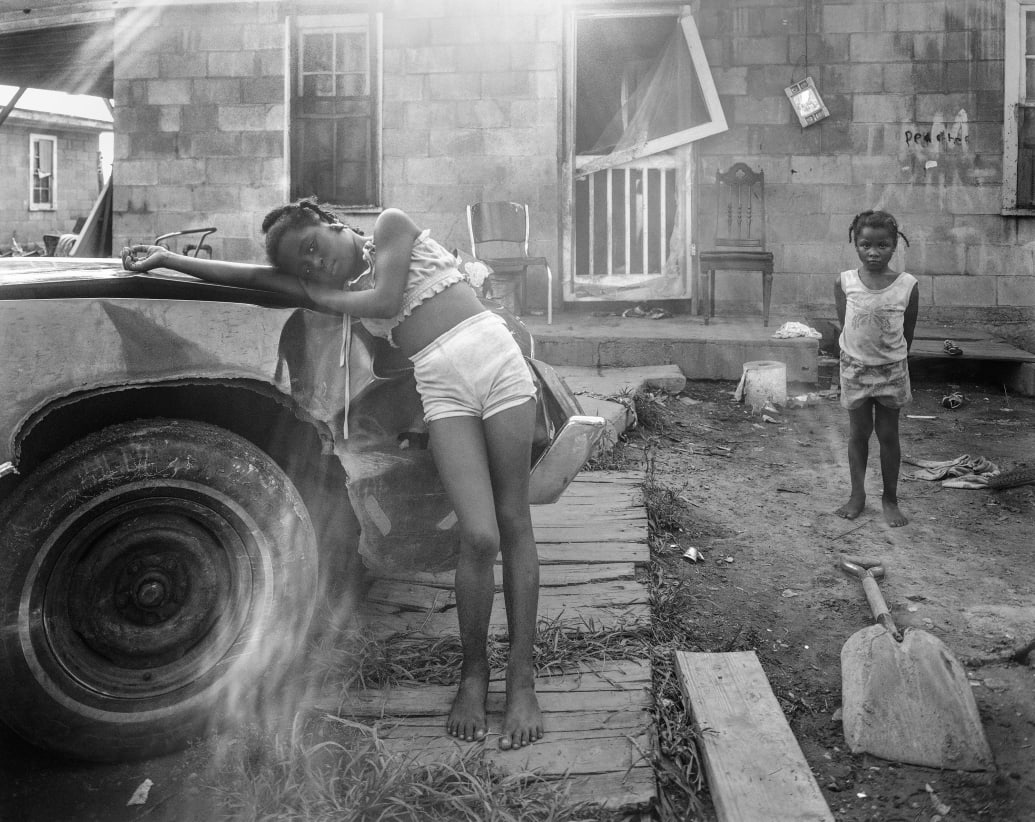
Visual Storytelling in Walls, Mississippi (1984)
© Baldwin Lee
In Casey Gerald’s essay, he positions your work within the context of “political turmoil and racial reckonings,” linking it to the ongoing “Black cultural renaissance.” Despite being over three decades old, your images resonate powerfully with current events. How do you perceive your work today in this contemporary setting?
When I began my photographic journey, Ronald Reagan was in office, and by the time my work gained traction, we had shifted to Donald Trump, followed by the tragic events surrounding George Floyd and Breonna Taylor. Currently, viewers interpret my work through the lens of the existing political climate, recognizing it as a contribution to the ongoing dialogue about race and ethnicity in America’s complex history.
In the past, my photographs were often confined to their specific time and place, categorized narrowly as niche works. People would comment on the fashions or vehicles present in the images. Yet, when I capture a family on a porch, the essence of the photograph transcends the details of their surroundings. My focus has always been on the individuals themselves, which is why the images remain timeless.
While teaching, I also enrolled in English literature and writing courses. I learned about the concept of “interiority” in literature, which perfectly aligns with my photographic intentions. Through the lens of reality, I aim to reveal the inner lives of my subjects, delving into what fundamentally connects us all. This pursuit is why I believe my work defies temporal categorization.
That’s an insightful comparison! Were there any additional creative influences or external factors that shaped your artistic vision?
I prefer to focus on curiosity and perception rather than labeling it as creativity.
Go on, I’m intrigued.
I possess the unique ability to exist within a moment while simultaneously observing it from the outside. I recall attending arthouse theaters in Manhattan, watching films by directors like Bertolucci, while my mind wandered to the surroundings—the exit signs, the heads in front of me, or the smoke from the projector. I never felt like I was missing out on the film; rather, I was always aware of the context surrounding it.
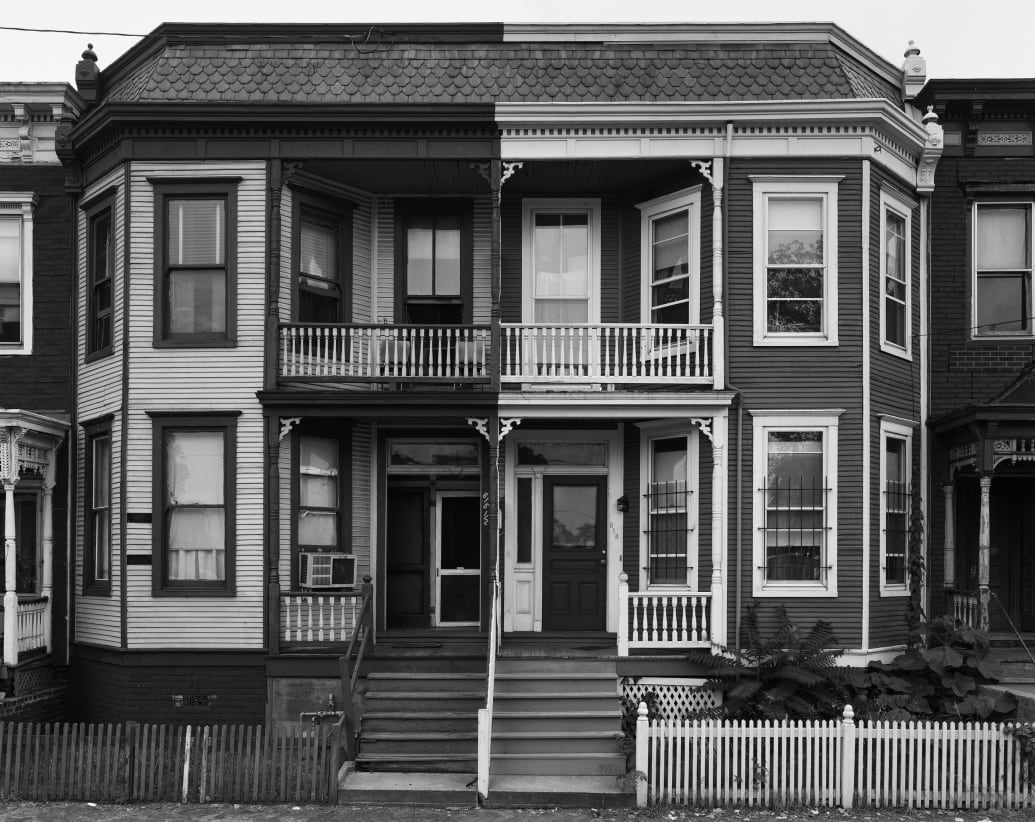
Cultural Reflections in Richmond, Virginia (1984)
© Baldwin Lee
Having roots in the Northeast, what initially inspired you to explore and photograph the South?
My move to the South was primarily practical. After completing my graduate degree at Yale in 1975, I accepted a teaching position there for four years. Following that, I took a job at Mass Art in Boston. One day, I received a call from a department head in Tennessee who had met Tod Papageorge, who recommended me for a position. It was February, and the weather in New York and Boston was miserable. The snow, while beautiful initially, quickly turned into a dismal, muddy color.
That sludge color.
Exactly, that awful color that emerges after the snow has melted. It’s reminiscent of the sky over the New Jersey turnpike—a hue with no proper name.
But it’s very specific—I completely understand what you mean.
Yes—that color. Upon arriving in Tennessee, I was enchanted by the charm of the place. After landing, the department head picked me up in a new white Mercedes and took me to his lovely Southern home, where he and his wife welcomed me with martinis.
“Most creative people do their best work in five to seven years. Unless you’re Picasso, you’re unable to sustain it for decades.”
— Baldwin Lee
As a non-studio photographer, my curiosity led me to explore the surrounding areas for captivating subjects. I embarked on a spontaneous ten-day trip, covering 2,000 miles and capturing a myriad of photographs—landscapes, architecture, and portraits of people from all walks of life. However, I was particularly drawn to photographing Black Americans. That experience marked the beginning of my journey, which culminated in over ten thousand photographs before I decided to step back.
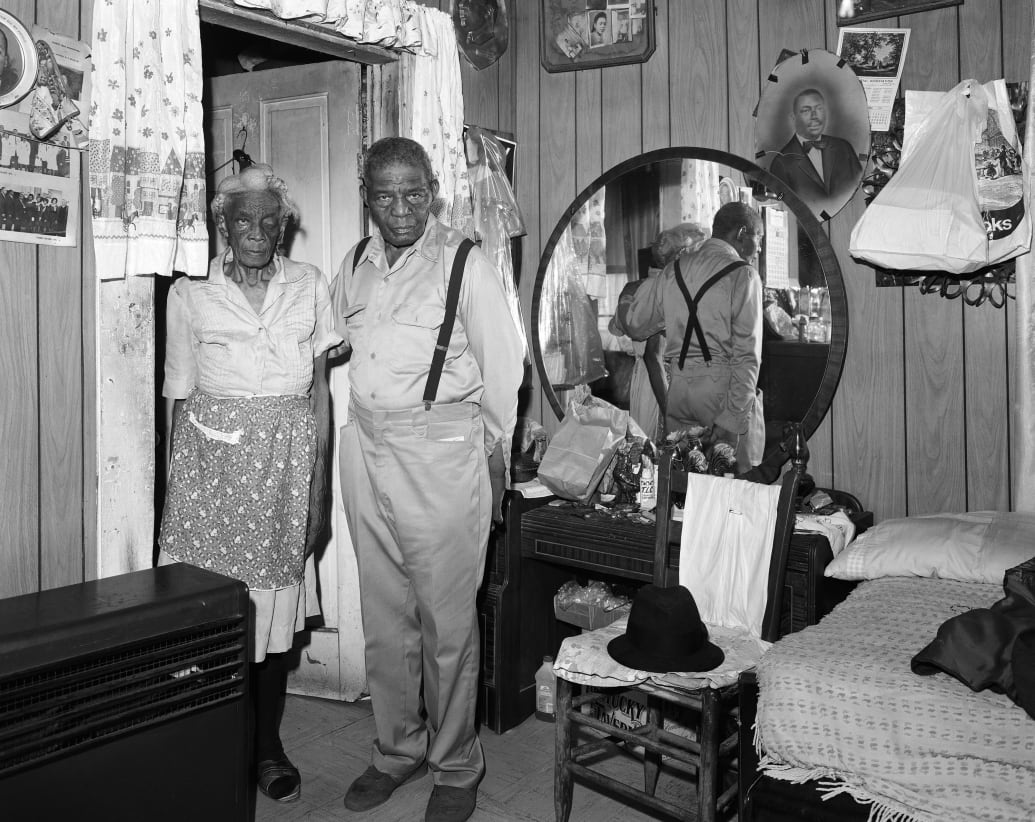
Dynamic Portrait from Lula, Mississippi (1984)
© Baldwin Lee
I was taken aback by your decision to quit photography, as discussed in the book interview with Jessica Bell Brown. You mention several reasons for this choice, but given your keen observational skills, I’m curious about why you felt it was the right time to step away.
One reason was that I felt emotionally and psychologically drained. Immersing myself in the lives of individuals enduring significant hardships took a toll, especially upon returning to my middle-class life. Becoming a father intensified this feeling; I often reflected on the stark contrast between the lives of those I photographed and my own. This guilt is something many can relate to.
However, there was another factor: I felt I had already produced my best work. I understood, from my limited knowledge of art history, that most creative individuals peak within a five to seven-year window. Unless you are Picasso, sustaining excellence over decades is rare. I recognized that if one could produce quality work over a long period, it might become diluted due to sheer volume.
For me, the project in the South coincided perfectly with the right moment in my life and career. I was ready; I didn’t need to build momentum—I simply hit the ground running.
Working as a darkroom assistant for Walker Evans for a year, I learned from his final years of artistry. Notably, John Szarkowski pointed out that nearly all we know about Evans and his oeuvre stems from an intense 18-month period. Although Evans lived for another 40 years, he struggled with feelings of sadness and loneliness, desperately trying to replicate his earlier success. If you were to discard all his works after 1936, it would hardly matter; his earlier pieces defined his legacy. Understanding this reality is crucial. Youthful fearlessness can be advantageous, but I can no longer replicate what I once did.
“Students loved me in class, because I start to talk about something photographic, but then I get off topic… Thank God I wasn’t teaching surgery. I would have killed thousands of people. ”
— Baldwin Lee
Another aspect I discussed in the book interview is that when artists continue working beyond their prime, they risk engaging in self-deception and dishonoring their medium. They should recognize the value of their craft and refrain from creating subpar work simply for accolades or financial gain. It’s essential to appreciate what the medium has offered and gracefully transition to new pursuits rather than clinging to past glories.
It’s easy for people to hold on to the notion that something extraordinary could emerge, but it does take courage to acknowledge when to pivot.
To illustrate, I wouldn’t spend $5,000 for a ticket to see Bruce Springsteen. I appreciate “Born to Run” as a classic, but if he can no longer fit into those jeans, I’m not interested.
With the renewed attention from your book, if someone approached you about embarking on a new project, would you consider it?
Absolutely not. That chapter is closed for me.

Sienna Blake is a licensed aesthetic consultant and beauty writer specializing in cosmetic surgery advancements and non-invasive treatments. With a background in dermatology and over eight years of industry experience, Sienna is passionate about helping people achieve confidence through informed beauty decisions. She holds a Bachelor's degree in Health Sciences and regularly collaborates with top plastic surgeons to stay at the forefront of aesthetic innovations. Outside of her work, Sienna enjoys traveling, skincare research, and practicing Pilates.
