


[ad_1]
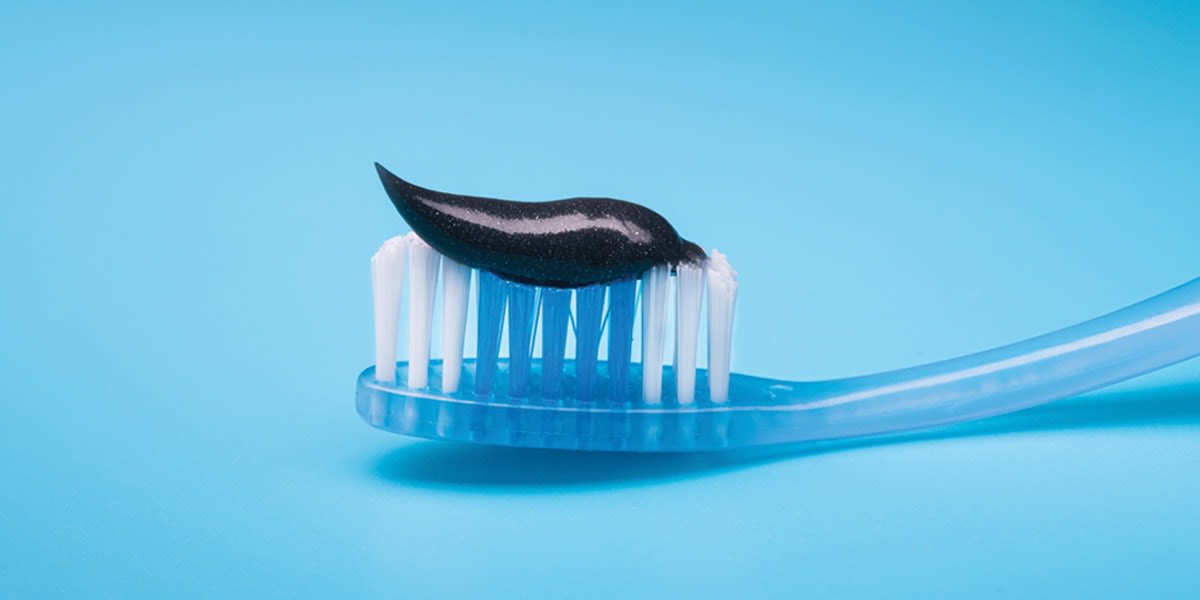
The main risk from charcoal toothpaste appears to be linked to its abrasiveness.
“If it’s too abrasive, over time, it can lead to sensitivity of your teeth,” says Linda Cheng, DDS, clinical associate professor at the Texas A&M University School of Dentistry.
According to the American Dental Association, some early research on charcoal toothpaste suggested that if whitening is your goal, too much abrasiveness could even backfire, by removing too much enamel and revealing the more yellowy layer of dentin beneath. Loss of enamel can also make teeth less strong and more prone to chipping, Hewlett says.
Abrasive toothpastes can also pose some additional risks to your teeth, Hewlett says. Normally, the surface of a tooth’s root is covered by the gums. But abrasive toothpastes can contribute to gum recession—meaning gum tissue pulling away from teeth and leaving the surface of the roots exposed.
That’s a problem because the exposed root is not protected by enamel and is therefore more prone to decay. And continuing to brush with an abrasive toothpaste may further damage the less protected exposed root surface.
These problems used to be more common, Hewlett says, when more abrasive toothpastes were more frequently sold in stores than they are today. Most conventional brands you find on drugstore shelves today aren’t likely to be overly hard on your teeth, he says.
Existing research has found that charcoal toothpastes on the market vary in their levels of abrasiveness, so different products may pose different levels of risk.
Still, unless a toothpaste has the ADA Seal of Acceptance, which certifies that it isn’t abrasive enough to cause harm over a lifetime of using it, it’s difficult for a consumer to tell whether a toothpaste might be too rough on their teeth. Currently , no charcoal toothpaste has earned that seal, according to a search of the ADA’s list of products.
With charcoal toothpastes, it’s probably better to avoid the risk of using a product that is potentially too abrasive, Hewlett says.
“If we’re not sure, and if there is some evidence that the abrasivity is a concern, then that should be cause for caution right there,” he says.
[ad_2]
Source link
