


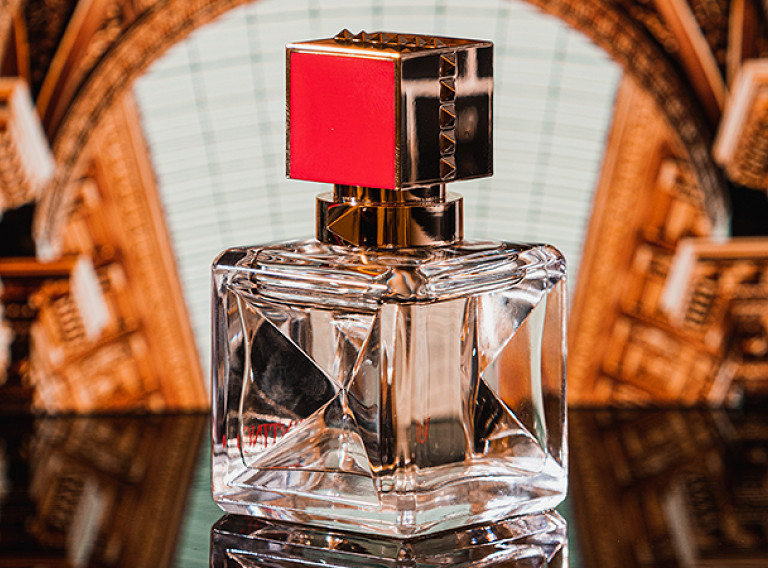
But are the collectors really into chasing the scent, or is it more about the design of the bottle? Or some marketing insider knowledge that drives the discontinued market?
When we are creating fragrance, there are two schools of thought. The men’s brands tend to have focus groups and will produce a fragrance that pretty much puts all their chips on red, and know that they are going to have at least a few years after . When you see a big celebrity on the shoot at every bus stop, thousands of bottles go out to influencers, it’s a pretty safe bet. But sometimes you have fragrances that you have from the vision of the designer. , in a positive sense, Thierry Mugler’s Angel. And everyone hated it when it was launched, and looking at it now, it’s a juggernaut that will never die, and it was slightly ahead of its time but foreshadowed the movement.
What drives the trends for certain scents, and might this explain how we sometimes get it wrong?
Fragrance tends to follow popular culture. Stereotyping the big hits of the ’80s like Poison and Opium. These were excessive, shoulder pads, vulgar Dynasty, Dallas, and we moved very quickly to the CK Ones and Issey Miyake, which were ’90s and water and clean, and perfume historians say it followed the AIDS epidemic and wanted to go back to this purity. There was fear of sex, so we started producing these very laundry-clean American-style fragrances. We moved from the ’90s into this fruity floral gourmand, the foody, vanilla -y, we didn’t need that minimalism anymore and started to need comforting, lovely sweet things, and previously you never had sweet fragrances like this. So if someone launched something like Angel without the budget that it had and they completely missed the mark, it would have been lost very quickly, but its success was the mark of great brand management, which holds fast on something that they think, “I see this coming, we are just a bit early.” It’s that old adage: don’t be first, it’s the market. You have to be second. I am sure there was someone before Angel that failed trying to do something in that style.
There is one tiny niche brand, which I have never found a bottle of, called Dinner, which was created by Bo-Bo, and it was apparently the smell of a dinner party, and when I heard perfume professionals talking about it, I never got a bottle. It was so niche, it was discontinued in a couple of years, and then Angel came about, so maybe it came about by standing on the shoulder of this earlier brand— one can never know. .
But there must be other scents which you thought, this will never work, but did?
When I was working with Diptyque, they launched a fragrance called Philosykos, which is Greek for “lover of figs.” It was a slow burn, it smelled like a fig tree, and now in every boutique hotel we have candles and it’s become ubiquitous .
Are there any brands that do badly at first but survive?
Tom Ford consistently launched fragrances that were ahead of their time. That’s why most of his early fragrances have been discontinued. Right now you pay thousands of pounds on eBay for a Tom Ford late ’90s / early 2000s fragrance. I have friends who have them if we go out, or if we meet I always remind them to bring that bottle because I just want to smell it.
But apart from your friends, how do you hook up?
There is a really lovely online community of people who love fragrance, there is a lot of sharing or decants. You take a few drops from the bottle and stick it on something for another fellow perfume lover or you can go to swap meets, so you bring your weird bottle and they bring their ones and we share—they were popular during the pandemic—and then share these fragrances.
The last time I saw this, Tom Ford was working for Gucci, he released a plethora of fragrances and they have all been discontinued, every single one. That seemed to be a theme of Tom, that these scents were discontinued, and I think the The problem was the world was not ready for them. They were ahead of their time.
But how can you calculate or predict that?
At the moment we are coming to the end of the obsession of food-smelling perfumes, and we are moving, or there will be a return, to clarity or single-note smells like honeysuckle. But in the pandemic, people would buy comfort fragrances like someone had wrapped you in a blanket or just given you a hug—soft, musky, like hugging a pet, sandalwood, cedarwood, cashmere, musks were very popular during the pandemic. And seeing what big brands are doing and what the customers are asking, for there is a very small number in the niche fragrance brands of clarity—the single note, a single rose, or jasmine, or cedarwood.
But you have a lot of perfume which is seemingly popular and everywhere, then just goes away. What drives that?
A lot of mass brands like the Yardleys and the Revlons have been around for a very long time, and suddenly the market cleared. There was a Spanish orange scent in the UK in the ’70s and that sort of Biba style, things like Elizabeth Taylor’s White Diamond, Clinique Happy, Elizabeth Arden Red Door, Green Tea, Sunflowers, really defined a generation or era. The people who love those fragrances tend to have an emotional connection to the teenage, adolescent puberty, and we associate these smells with a time And Giorgio Beverly Hills’ formula has changed and it’s not like the old formula anymore, so that is a problem—that people may not have a brand discontinued fully, but the formula might have changed.
But that must be another factor. That the formulations change?
There is no law that says they can’t change the formula; no food company would be bound by law, they just have to list the ingredients, the customers might not notice. We are regulated by IFRA, and that is about contact allergies, and there is no way that the original Chanel No. 5 would be allowed today. Chanel will not tell you that it is not exactly the same formula as 1905—they sell you on the legend, which is very clever, respecting the past. IFRA laws change all the time. The last incarnation in 2018 reduced the amount of jasmine as an allergen to such a small amount that there is no way that Chanel No. 5, which is predominantly a jasmine fragrance, would be the same post-2018. But there are new versions of it all the time, but you are also selling the legend to a younger audience, so that is why you have Chanel No. 5 flankers. So Chanel No. 5 is the pillar fragrance, and the flankers would be Chanel No. 5 L’eau, or Chanel No. 5 Premiere. Or Coco was an original fragrance, so when a legend sells off the back of something that has already got an audience like a remake of a film or a prequel—you are selling the legend.
Is there a different mindset between those who collect for bottle reasons and those who collect for scent reasons?
In a Venn diagram of them, there is a small crossover of bottle and fragrance. I will give you a really good example. Donna Karan’s first fragrance was done in a bottle sculpted by her husband who was an artist, and the bottle to me looks like a duck, but for some reason, her first fragrances are in bottles that look like a gear stick or a duck. There is a massive online community chasing those two purely because I think DK was smart when it was bought by Lauder, and they reissued the old fragrances about 15 years ago, and just normal stock cylindrical bottles. And people thought it did not smell the same, and I think that was psychosomatic, because they thought the different bottle meant that the smell would be different.
What is a good online community where collectors can find these discontinued brands?
Check out Basenotes.com. It’s a chat board for men’s fragrance, and if you search “discontinued” you will go down a rabbit hole, but there are also batch codes, and some collectors think that every batch fragrance is a recall or something went wrong. Some perfumers swear there is a difference between batches. I am not so sure. But the community is supportive, and there are real-life meetups, where people bring their perfumes and we swap in decants, small amounts poured into other bottles. It’s not a competitive thing. The community is supportive. Everyone wants to help everyone else find the thing they are looking for. And to get what they themselves are looking for.