


Facial cupping not only offers remarkable skincare benefits, but it also serves as an excellent method to alleviate muscle tension and promote relaxation!
How often do you glance in the mirror and think, “I look so tired”? When a few strategic applications of highlighter or concealer don’t quite do the trick to lift and brighten your complexion, it may be time to explore the rejuvenating effects of facial cupping.
Indeed, facial cupping is a fantastic option. Think of it as a DIY facial or a non-invasive facelift that can refresh and energize your appearance.
*Affiliate Disclosure: This blog post contains affiliate links. If you make a purchase through my link, I may earn a small commission at no extra cost to you. I take my affiliate partnerships seriously, promoting only companies and products I truly believe in.
Understanding Facial Cupping: A Holistic Skincare Technique
Facial cupping draws inspiration from the principles of traditional Chinese medicine and represents a refined adaptation of body cupping, which has been utilized for centuries to address various health concerns. This innovative facial treatment employs suction cups specifically designed to enhance blood circulation, delivering a bright, toned appearance and a radiant glow to your skin.
Unveiling the Science Behind Facial Cupping: How It Works
The unique suction and gentle gliding motion of the cups across your skin can significantly enhance blood circulation, promote lymphatic drainage, stimulate collagen production, and facilitate muscle relaxation.
During the suction process, the layers of your skin can separate, allowing for increased blood flow to the targeted area. This rich blood supply, filled with oxygen and essential nutrients, supports skin repair and rejuvenation. The influx of oxygenated, nutrient-dense blood can lead to a noticeably smoother and more luminous complexion.
Related Content: Frownies Review- Do They Really Work?!
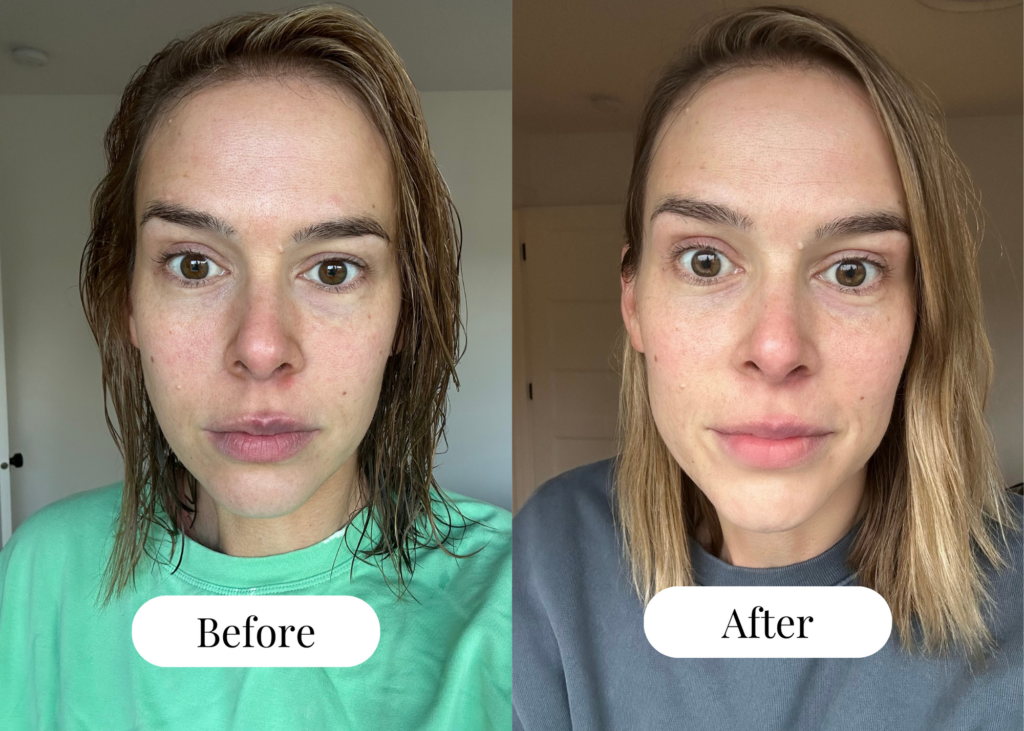
Unlocking the Benefits of Facial Cupping for Glowing Skin
While the exact mechanisms behind cupping therapy are still under investigation, several theories have emerged to explain its various effects. 1
- Enhances Microcirculation – Cupping works by dilating blood vessels in the face, thanks to the release of vasodilators such as adenosine, noradrenaline, and histamine, which lead to improved blood flow.2
- Stimulates Collagen Production – By boosting blood flow to the facial muscles, cupping can encourage the production of collagen and elastin, vital for youthful skin.
- Illuminates Skin – Cupping promotes the generation of new blood cells, enhancing your facial features and imparting a healthy glow.
- Addresses Skin Issues – This technique can be effective in managing skin conditions like acne and eczema.3
- Tightens and Firms Skin – When performed with upward strokes, cupping can help to lift and tighten sagging skin.
- Reduces Pore Size – Cupping can effectively open pores, allowing them to breathe and absorb serums and other skincare products more efficiently.
- Minimizes Imperfections – Improved circulation from cupping can help reduce the appearance of scars, fine lines, and wrinkles, yielding an anti-aging effect.
- Decreases Puffiness – By facilitating lymphatic flow and clearing toxins, cupping can significantly reduce facial puffiness.
- Relieves Muscle Tension – Cupping can also provide relief for tight muscles in the face.
- Helps Alleviate Sinus Pressure – This technique can be beneficial in clearing sinuses and relieving sinus pressure.
Your Ultimate Step-By-Step Guide to Facial Cupping Techniques
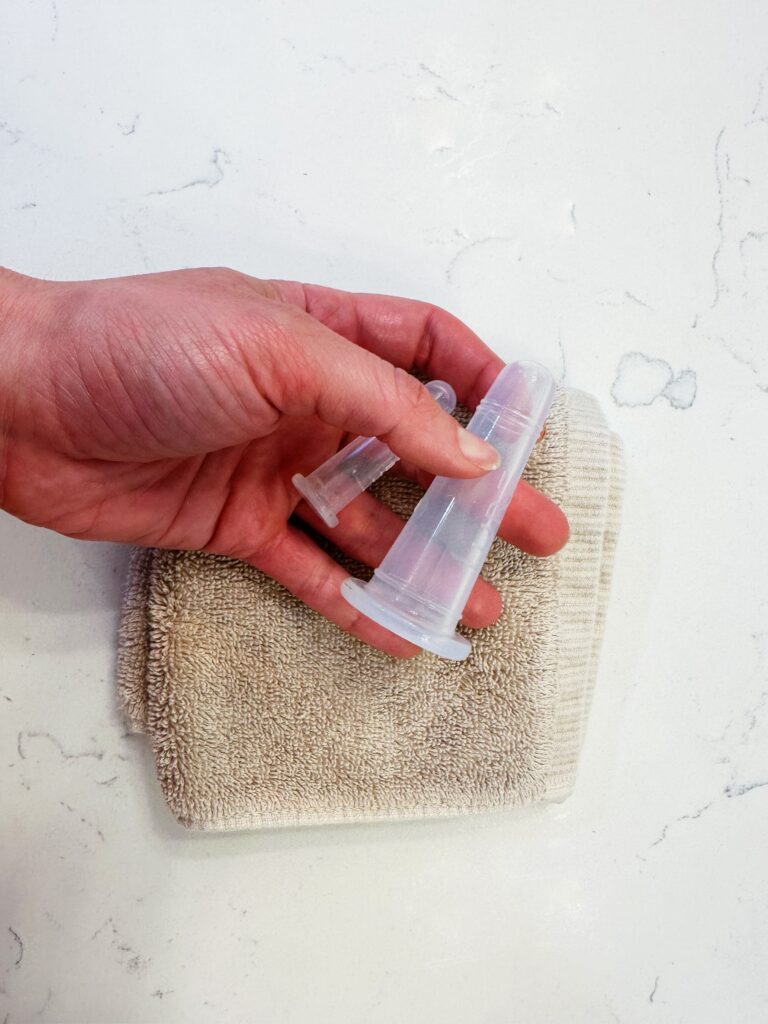
Essential Tools for Your Facial Cupping Session
Before beginning your facial cupping session, gather a few essential tools to ensure a smooth process.
- Facial Oil: A high-quality oil helps provide the necessary slip for the cups to glide effortlessly. I recommend this oil as it is suitable for various skin types and contains just one ingredient.
- Facial Cups: I prefer these facial cups, which are widely available and budget-friendly. Be sure to have both a large and a small cup on hand.
Step-By-Step Process for Effective Facial Cupping
- Start by thoroughly cleansing your face to create a clean canvas.
- Apply a facial oil or oil-based serum, massaging it into your face, neck, and chest area. This allows the cups to glide smoothly and helps relax your muscles, enhancing circulation.
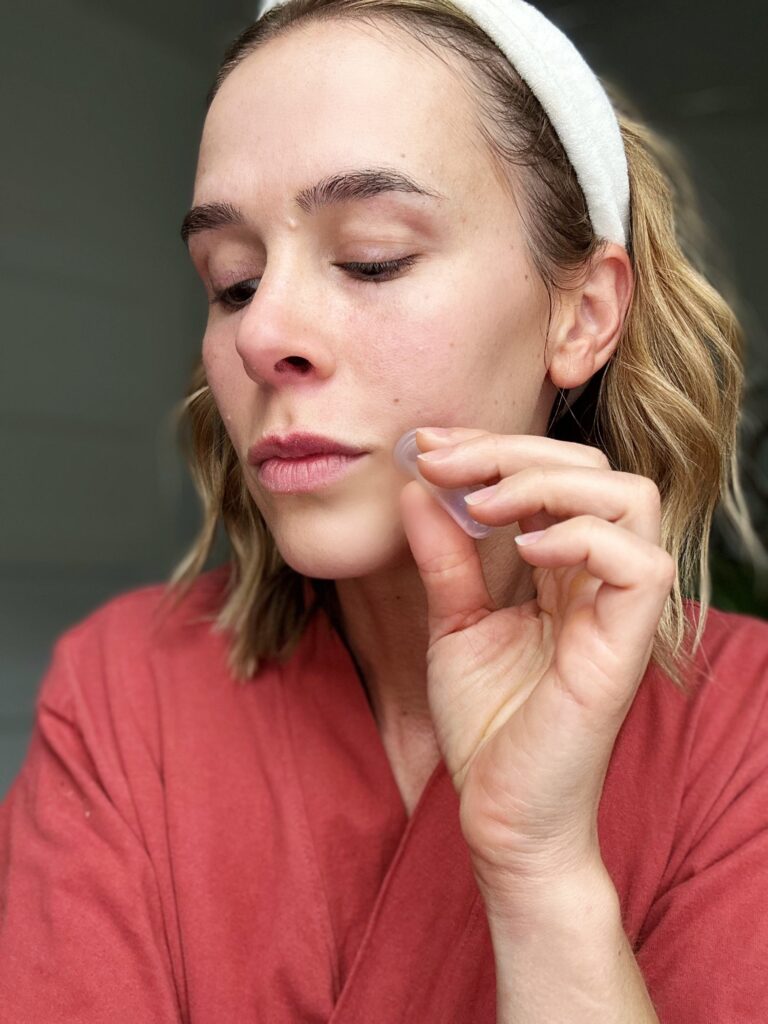
- Begin with the smallest cup, as it provides more precise suction and helps your skin adjust to the sensation of cupping. You can switch to a different size cup as needed depending on the area being treated.
- Ensure that you apply a gentle suction and limit it to around three seconds to avoid any potential bruising.
- Position the cup at the base of your neck near the collarbone, squeeze the cup, then release.
- Work the cup upwards along both sides of your collarbone, then transition to the jawline, taking care not to slide or glide the cup on your neck—just squeeze and release gently.
- From your chin, glide the cup upward along your jawline toward your ear, repeating this motion several times.
- Next, move to your cheeks, then your forehead, repeating each motion multiple times.
- From the center of your forehead, move the cup outward toward the sides of your ears, repeating this motion a few times.
- Repeat the process on both sides of your face.
- Once finished, cleanse your face again and proceed with a gentle skincare routine.
Related Content: Best Organic Skincare For Anti-Aging
Watch My Comprehensive Facial Cupping Tutorial Here:
Essential Precautions for Safe Facial Cupping
Before engaging in facial cupping, it’s important to consult a healthcare professional if you have any concerns or pre-existing conditions.
Facial cupping is generally not recommended for:
- Children or senior individuals.
- Pregnant or breastfeeding women and during menstruation.
- Individuals with cardiovascular issues, open wounds, active breakouts, cancer, hemophilia, or pacemakers. Facial cupping may increase the risk of infection and can cause nausea or dizziness in some people. It may also lead to bruising or inflammation.
Your Facial Cupping Questions Answered
How often should you practice facial cupping?
For best results, aim to incorporate facial cupping into your routine 1-3 times a week, with at least once a week being essential for noticeable benefits!
When can I expect to see results from facial cupping?
Many individuals notice significant improvements within 2-3 weeks of regular cupping sessions. However, some people may experience visible results right after their first treatment—the post-cupping glow is indeed a reality!
Are there specific skincare products to avoid after cupping?
Post-cupping, your skin may be sensitive and slightly inflamed, so it’s advisable to avoid exfoliating or abrasive products to prevent irritation.
What is the ideal time of day to perform facial cupping?
Many individuals choose to incorporate facial cupping into their nighttime skincare routine, as it serves as a wonderful way to relax the face. Moreover, doing it at night allows your skin to repair and rejuvenate while you sleep, maximizing the benefits.
Exploring the Value of Facial Cupping: Is It Worth It?
Facial cupping is undeniably a worthwhile practice! It provides a natural method to enhance collagen production, reduce wrinkles, and stimulate your lymphatic system. Additionally, it effectively decreases puffiness, alleviates muscle tension, improves circulation, and can even give you a natural facelift effect! I have been thoroughly impressed by the myriad benefits that facial cupping brings to my skincare routine.
Have you experienced facial cupping? I would love to hear your thoughts in the comments!
If you enjoyed this post, consider checking out some of my previous articles:

References
- J Tradit Complement Med. (2019) The medical perspective of cupping therapy: Effects and mechanisms of action
- Biomed Opt Express (2020) Photoacoustic imaging of microenvironmental changes in facial cupping therapy
- Acta Dermatovenerol Alp Pannonica Adriat. (2018) Cupping in dermatology: a critical review and update
Related
!function(f,b,e,v,n,t,s)
{if(f.fbq)return;n=f.fbq=function(){n.callMethod?
n.callMethod.apply(n,arguments):n.queue.push(arguments)};if(!f._fbq)f._fbq=n;n.push=n;n.loaded=!0;n.version=’2.0′;
n.queue=[];t=b.createElement(e);t.async=!0;
t.src=v;s=b.getElementsByTagName(e)[0];
s.parentNode.insertBefore(t,s)}(window, document,’script’,
‘https://connect.facebook.net/en_US/fbevents.js’);
fbq(‘init’, ‘1110336275818047’);
fbq(‘track’, ‘PageView’);
