


[ad_1]
French sophistication meets traditional Siamese elegance at Parfums Dusita, Pissara “Ploi Uma” Umavijani’s beautiful Parisian atelier.
In the heart of the 1st arrondissement of Paris, at 11 Rue de la Sourdière, the discreet atelier of Parfums Dusita, with its black façade, strikes a distinctly Thai top note. The base notes, meanwhile, reflect the history of French perfumery. Next door, a non-descript wooden entrance – 10 Rue de la Sourdière – marks this street’s connection with the French revolution. Maximilien de Robespierre emerged from a tunnel here, escaping the rioters at the Church of Saint Roch.
On the right bank of the Seine in one of the oldest areas of Paris, flanked by Jardin des Tuileries and Place Vendôme near Rue Saint-Honoré, Pissara “Ploi Uma” Umavijani has created her own paradise. The black façade is a modernist touch, as are the black velvet sofas. The perfume walls are ivory, lined with black-framed sketches by the 41-year-old perfumer, who is the atelier’s only nose.
Every perfume begins with an emotion, a feeling, a dream that Pissara sketches out and then distils that emotion into a fragrance. Each perfume is an impressionist work of art; an abstract concept, an emotion bottled into a scent. Each framed sketch, the idea she would like to convey in the fragrance. As a Thai perfumer in Paris, Pissara is very clear about the foundations of her creations. “Parfums Dusita is a French atelier – French sophistication meets traditional Siamese elegance.”
Her approach is Parisian, her style European, and her creations are contemporary originals that are not hesitant to record ‘unknown registers’. Completely immersed in the expression of French perfumery, Pissara strikes a bold note with her brand that she launched in 2014, in Paris, winning a clutch of awards over the years.
“It wasn’t easy,” she recalls. “Not only was I a complete outsider, but I was also a woman who didn’t have a formal degree in perfumery. I’m self-taught. But this is what I was determined to do.” The artistic mindset of Paris fuels Pissara’s creativity, but when she wants a taste of home, she rustles up a pad thai, a som tam or even a tom yum goong. French cooking is still a mystery, though she makes a mean quiche.
Having obtained a Master of Arts from Chulalongkorn University in Social Psychology and International Conflict, Pissara took a year off soon after stepping into the professional world with her mother’s encouragement to “find herself ”. In the process her perfumery hobby began to consume her. She even sacrificed two of her mother’s antique tables at the altar of perfumery (her first scent labs) in search of who she was.
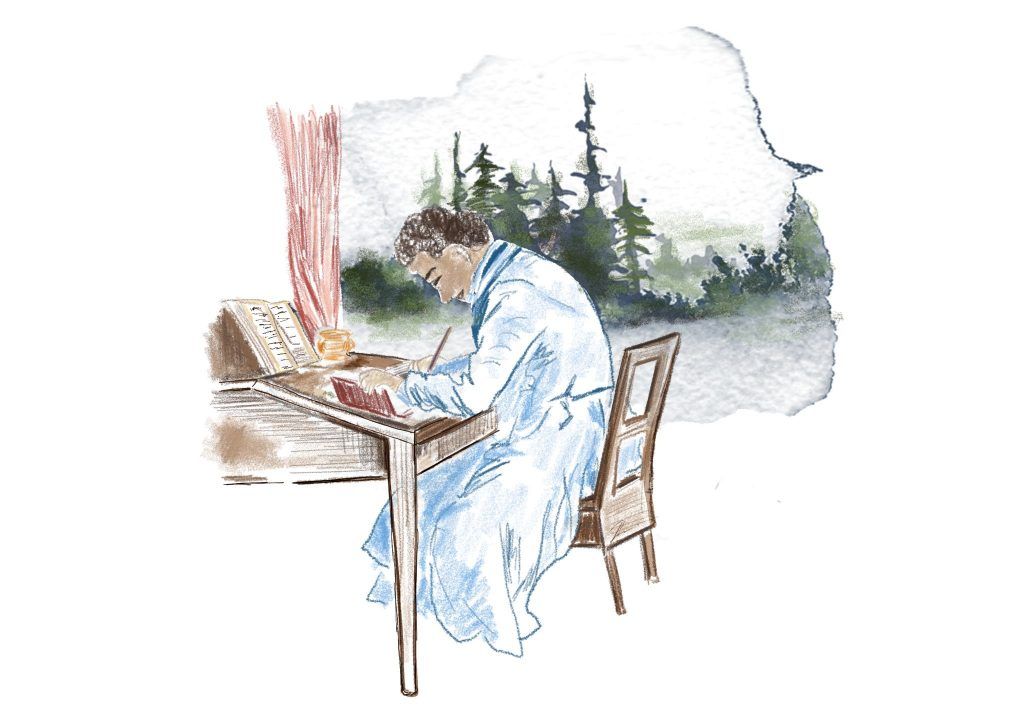
The search led her to a fashion school in Paris – École supérieure des arts et techniques de la mode (ESMOD) – and her time in that city made it clear this was where she wanted to be. Paris was also where her father, the acclaimed Thai poet Montri Umavijani (1941-2006), penned some of his works, and quotes from his poems accompany the perfumes. “I grew up surrounded by poetry, and in a way, my perfumes are those poems. He expressed happiness through his poems ; I do it through perfumes.”
Her latest creation, released in June, is called Montri. “My 13th perfume pays homage to my father. He liked spices. They represented voyages he had taken, the ones he dreamed of, the people he had met, and the ones he hoped to meet.” It opens with gentle top notes of spices, and has a heart of rose de Mai, damask rose, jasmine, ylang ylang, and tobacco accents, with a base of woody notes.

The business of scents is all very personal to Pissara. “Everyone’s experience with a fragrance is intensely personal. The perfume they wear is an expression of their personality, just like my creations are an expression of me, my femininity, my strength.”
Moonlight in Chiangmai portrays a moment of silence and contemplation; the sketch has the golden spire of the chedi on Doi Suthep captured in the moonlight.
Erawan is a never-ending adventure into a tropical forest. Anamcara (soul friend in Gaelic), is a fruity-floral-woody composition, and Mélodie de l’Amour is a floral love song.
“Mélodie de l’Amour is me,” she adds. “It reflects love, and love doesn’t need words. A flower doesn’t say love when you enter a room, but its presence signals love.”

Cavatina’s “joie de vivre” reflects Pissara’s love for vintage perfumes. Several unisex fragrances in the line reflect the new mindset that is less gender-conscious and more in the moment. “There is no boundary anymore,” she muses.
Her gold standard in fragrance? “Vintage scents,” she asserts, singling out the 1930s floral Joy by Jean Patou and Robert Piguet’s Bandit, a Chypre Floral fragrance for women launched in 1944. The nose behind Bandit, Germaine Cellier, was one of the first prominent female perfumers.
Pissara seeks harmony at work, in her atelier and her company. “I like to integrate people in my company, have them work together. Everyone is important. I like to listen to people and understand their needs and what motivates them. Creating a positive environment for them to evolve and grow and giving them space is crucial. The aggressive leadership of male-dominated businesses no longer works with the modern generation.”
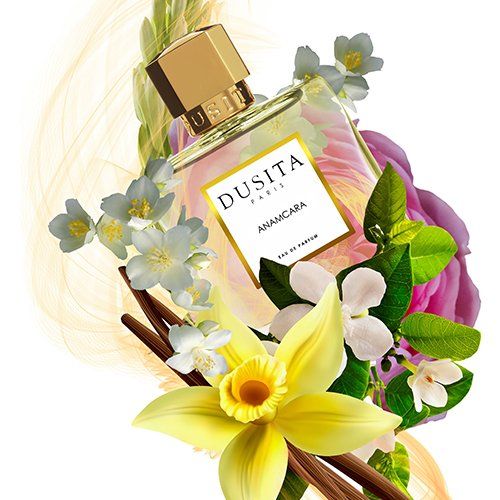
So, what does female empowerment smell like, I ask? “It’s not easy being a woman in this business, but women have an inner strength; they can adapt. I would use Rose de Mai because it is subtle and powerful. To that, I’d add vetiver grass. Empowerment is also about being flexible without losing yourself and Vetiver is well rooted to the ground.”
“I love being around nature. I stay next to a park, and the day starts with a long walk with my Yorkies (five of them). I also do agility training with my dogs. Hopefully, we will compete one day. I love running. Nature puts me in a meditative mood.” Speaking of meditation, which she practices daily, her mother, Prof. Chutatip’s ground-breaking book on meditation, Life and Knowing Oneself, is a constant companion and guide.
Pissara ultimately dreams of living in the countryside with her boyfriend, Sylvian Laguet, and her dogs, and going for long walks in the forest, playing the violin, and growing vegetables. “It’s an impossible dream for now,” she laughs, “I will never be able to get into work. The traffic here is worse than Bangkok.”
[ad_2]
Source link
