


[ad_1]
Lemongrass is a fragrance ingredient because it offers a fresh, bright, and zesty scent, which matters for perfumers and fragrance enthusiasts. This unique herb is often used as a top or heart note in perfumes, creating invigorating and herbaceous fragrances that appeal to a wide audience.
At CosmeticsUrgeryNews, we specialize in cosmetics, beauty, body care, hair care, and perfume, helping fragrance lovers achieve the perfect scent experience. Our mission is to provide insights into the world of fragrances, including the role of ingredients like lemongrass in creating captivating perfumes.
This guide covers the following key attributes: the history of lemongrass in perfumery, types of lemongrass used, its culinary and wellness applications, and its role in iconic and niche fragrances.
What is the History of Lemongrass in Perfume?
Lemongrass oil has deep roots in traditional herbal blends. It was recognized for its calming character long before perfumers began to explore its potential. In early perfumery, lemongrass oil gained popularity due to its strong citrus notes, providing a fresh aroma without being overly sweet.
As the wellness movement grew in the late 20th century, lemongrass found its place in personal fragrances. This shift solidified its status as a choice for clean, herb-forward aromas. The botanical name, Cymbopogon, derives from Greek, referring to the plant’s unique features.
- Lemongrass has been used in personal fragrances since the late 20th century.
- Its botanical name, Cymbopogon, comes from Greek words meaning ‘boat’ and ‘beard’.
- In perfumery, it is valued for its ability to blend with various notes.
Where Does Lemongrass Grow?
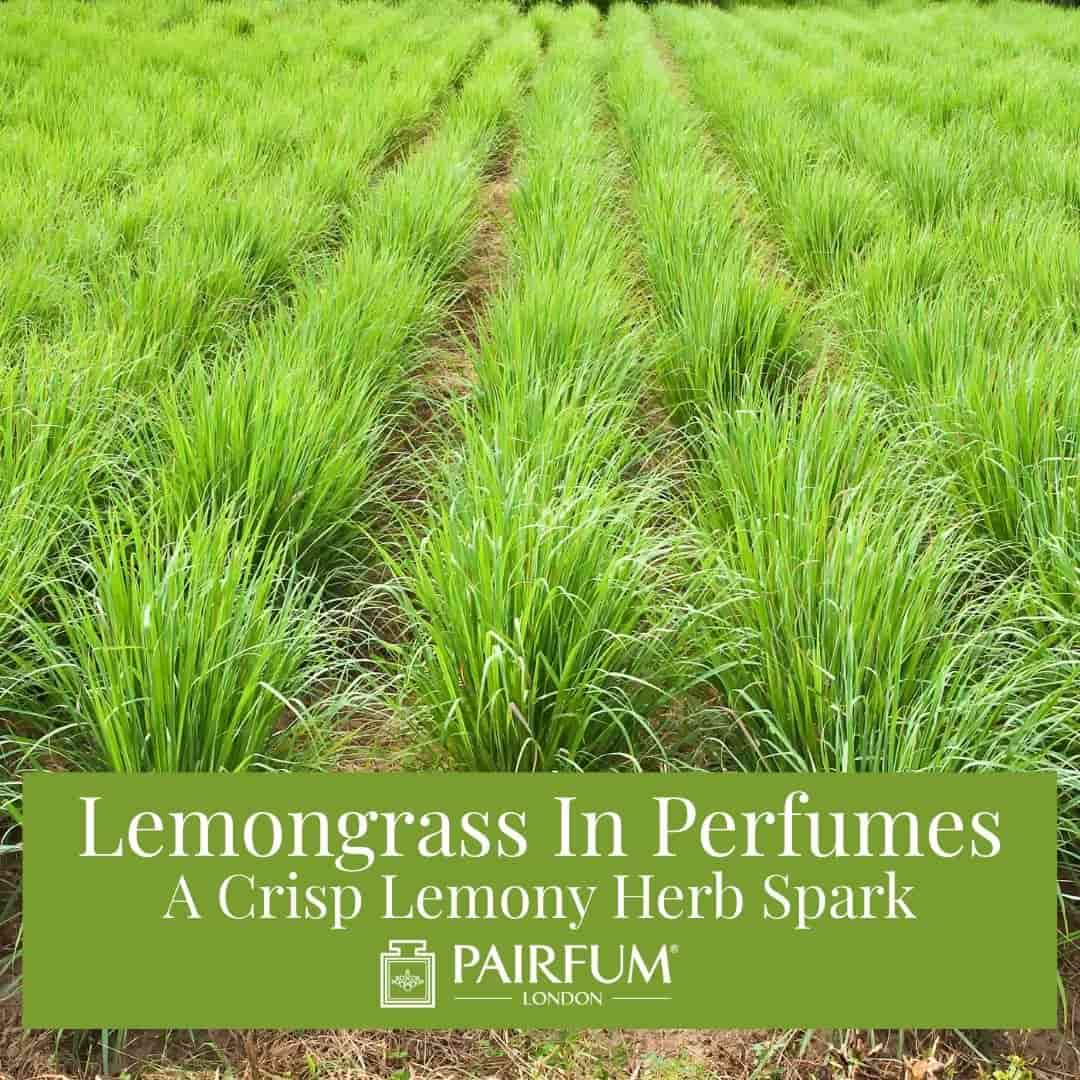
The lemongrass plant thrives in tropical climates, particularly in Southeast Asia, Sri Lanka, and South India. It requires well-draining soil that remains moist but not waterlogged. This herb can grow in fields or in pots indoors, needing plenty of sunlight to develop its aromatic oils.
For gardening enthusiasts, lemongrass can be propagated from seeds or stalks. Once established, the plant becomes hardy, with long, slender leaves that release a citrus scent when crushed. In the UK, it is recommended to grow lemongrass in containers to protect it from frost.
- Lemongrass is commonly found in tropical regions.
- It requires well-draining soil and plenty of sunlight.
- Propagation can be done from seeds or stalks.
What Types of Lemongrass are Used in Perfumery?
There are two primary types of lemongrass utilized in fragrance:
| Type | Description |
|---|---|
| Cymbopogon citratus | Also known as West Indian lemongrass, it offers a soft, lemony feel with delicate green notes. |
| Cymbopogon flexuosus | Known as East Indian lemongrass, it has a spicier aroma and can be more herbal than sweet. |
Each type delivers a distinct effect. West Indian lemongrass is ideal for light, airy perfumes, while East Indian lemongrass adds warmth and complexity. This variety allows perfumers to create unique blends tailored to different fragrance profiles.
How is Lemongrass Used Beyond Perfume?
While lemongrass is celebrated for its scent, it is also a culinary staple in Southeast Asian cuisine. In Thai cooking, lemongrass provides a citrusy backbone to various dishes. It is often bruised or finely chopped to release its flavor, playing a vital role in recipes like Thai green curry and tom yum soup.
Experts note that lemongrass has a complex flavor profile, combining hints of ginger and mint. When selecting fresh stalks, look for those that are firm and heavy, avoiding any that appear dry or brittle.
- Lemongrass is essential in Thai cuisine, enhancing dishes with its citrus flavor.
- It pairs well with coconut milk, balancing sharp lemon notes.
- Fresh stalks should be firm and heavy for optimal flavor.
How to Grow and Use Lemongrass Stalks?
Growing lemongrass at home can be rewarding. To harvest, cut the stalks at the base once they reach half an inch in thickness. The outer layers are tough and should be peeled away to access the tender core.
For culinary uses, the core provides intense flavor. Lemongrass can be grown indoors with sufficient light and nutrient-rich soil. Bruising the stalks before use helps release essential oils for infusing broths.
- Harvest stalks at half an inch thickness for best flavor.
- Bruising stalks enhances their aromatic qualities.
- Lemongrass can be grown indoors with proper care.
What are the Benefits of Lemongrass Tea?
Lemongrass tea is renowned for its digestive benefits and calming effects. To prepare, steep fresh or dried lemongrass in hot water. The resulting tea has a pale yellow hue and a refreshing, citrusy flavor.
Many find that drinking lemongrass tea provides a moment of tranquility, mirroring its relaxing properties when used in aromatherapy. This versatility makes lemongrass a valuable ingredient in both culinary and wellness applications.
- Lemongrass tea aids digestion and relaxation.
- It has a clean, citrusy flavor that is less acidic than lemon juice.
- Steeping fresh or dried lemongrass creates a soothing beverage.
What are the Technical Details of C. Citratus and C. Flexuosus?
Cymbopogon citratus is commonly found in home gardens and is preferred for cooking. It thrives in sandy soil and requires plenty of heat. Conversely, Cymbopogon flexuosus is the primary source of essential oil for industrial use, known for its high citral concentration.
Interestingly, Cymbopogon nardus is another relative, known for producing citronella oil. While less common in fine fragrances, it shares similar characteristics and insect-repelling properties.
- C. citratus is favored for culinary uses.
- C. flexuosus provides a robust scent profile for perfumes.
- C. nardus is known for its citronella oil and insect-repelling qualities.
Why Does Lemongrass Shine in Winter?
Lemongrass is not just a summer favorite; it plays a vital role in winter fragrances as well. Its citrus notes can brighten heavier oils, preventing them from feeling overly rich. This herb is often blended with woods, spices, and resins to maintain a fresh aroma during colder months.
Even in winter, people seek uplifting scents. Lemongrass delivers this freshness, whether used alone or in combination with indulgent notes. It also enhances home fragrances, keeping indoor spaces lively during the colder seasons.
- Lemongrass adds brightness to winter fragrances.
- It balances heavier oils, preventing a flat aroma.
- Used in home fragrances, it keeps indoor spaces feeling fresh.
How is Lemongrass Featured in Iconic and Niche Perfumes?
Lemongrass may not always be the star note, but it plays significant supporting roles in various fragrances. In niche perfumes, it pairs well with crisp notes like bergamot and green tea, as well as herbs like basil and mint.
When used as a top note, lemongrass sets the tone for the fragrance, offering a bright, herbal introduction. In contrast, it can also enhance heavier aromas, making it a favorite in natural and niche blends. Here are a few notable examples:
| Fragrance | Description |
|---|---|
| Annick Goutal – Les Nuits d’Hadrien | A Mediterranean-inspired scent where lemongrass adds herbal crispness to a warm citrus-spice base. |
| Lush – Karma | A cult-classic blend using lemongrass for a bright lift against earthy patchouli and pine notes. |
| Diptyque – Oyédo | A vibrant fragrance layering yuzu and green mandarin over a heart of lemongrass for a zesty finish. |
