


Hold on tight and resist the urge to touch your face—especially when it comes to skincare! We all know that our skin deserves the best care, and that includes avoiding the temptation of squeezing pimples with our fingers. Instead of taking unnecessary risks, we should stick to tried-and-true methods that involve using appropriate skincare tools and healthy practices. We have high hopes that these approaches will reward us with a radiant complexion. However, when a breakout occurs, it’s tough to fight the instinct to pick at our skin. Let’s explore why this is a bad idea and how to treat breakouts effectively.
Pimples, whether they are large or small, are not just annoying; they can severely impact our self-esteem. It often feels as if there’s an attention-grabbing spotlight on our blemishes, making us self-conscious throughout the week. What many don’t realize is that using our fingers or improper tools to deal with these blemishes can lead to even greater issues. To help you navigate pimple care wisely, we present our comprehensive guide, including the 10 vital commandments of pimple care, essential do’s and don’ts, and a nighttime acne dark spot remover to expedite healing and improve safety.
10 Essential Guidelines to Avoid When Dealing with Pimples
Think of these 10 guidelines as the ultimate ‘don’ts’ when it comes to treating pimples. These actions are not only damaging to the skin but can also lead to pain, scarring, and exacerbation of the acne itself. Let’s dive into what you absolutely must avoid:
#1. Avoid Excessive Squeezing
When faced with a pesky pimple, our instinct might drive us to squeeze it, but this can feel like an assault on our skin. The excessive pressure can create microscopic tears, leading to redness, bruising, and significant discomfort, resulting in more harm than the original blemish. The rule is simple: the harder you squeeze, the more problematic your pimple becomes! This practice can also lead to scarring, which is something we all want to avoid.
Instead, ensure a gentle touch using only the pads of your fingers (and definitely no nails). Pop a pimple only when it has developed a noticeable ‘head’—indicating it’s ready to be addressed. When it reaches this stage, the center typically shifts from red and inflamed to a slight peak, often with a white or lighter center. Treat your skin delicately, and you’ll maintain the integrity of your complexion in the long run.
#2. Resist the Temptation to Pick While Healing
We’ve all been there—after popping a pimple, we notice the healing skin starts to flake, and the urge to pick at the scab is strong. However, this isn’t just any dead skin; it’s a vital protective barrier that aids healing for the breakout beneath. Picking at it exposes the healing pimple, which could lead to another, potentially worse, breakout.
Instead of picking, consider using a gentle exfoliant to help remove any dead skin that is ready to slough off naturally. This method not only promotes a smoother texture but also supports the healing process over time. For optimal results, try our Strawberry Brightening Scrub, a natural facial scrub that utilizes berries for effective exfoliation. The AHA Fruit Acids blend works to gently exfoliate and soften the skin, while papain helps to soothe and reduce inflammation.
#3. Avoid Concealing Inflammation with Heavy Makeup
When a breakout occurs, our immediate reaction might be to layer on makeup to conceal it. But piling on concealer and foundation can exacerbate the situation. Instead of camouflaging the problem, opt for skin products that target the issue directly.
For instance, applying tea tree oil overnight can help eliminate the bacteria causing the breakout. Our Tea Tree Concentrated Spot Treatment is an excellent choice for both day and night use, effectively targeting pimples with its active ingredients. This powerful formula combines tea tree oil with witch hazel, which helps manage fast-growing pimples, while peppermint and eucalyptus oils work to diminish acne-causing bacteria, ultimately preventing future breakouts. If makeup is absolutely necessary, use a light layer of a natural concealer to mask redness, and a clean lip brush to delicately apply foundation powder around the pimple to soften the discoloration.
#4. Maintain a Consistent and Healthy Skincare Routine
The foundation of great skin lies in an effective skincare routine. During the day, it’s crucial to combat impurities using natural acne-fighting products containing tea tree oil. Start your skincare regimen with our Tea Tree Clear Complexion Cleanser, designed to remove surface impurities without stripping the skin of its natural oils. Follow this with our Tea Tree & Willow Acne Clear Astringent, formulated to soothe and clarify acne-prone skin while preventing future breakouts. Remember, even those with oily or blemish-prone skin require moisture to balance sebum levels and combat excess oiliness. Our Tea Tree Balancing Moisturizer effectively hydrates while providing essential omega fatty acids, complemented by turmeric to help reduce the appearance of acne scars.
#5. Avoid Touching Your Face with Unwashed Hands
When we notice a breakout, our instinct might be to poke and prod at the affected area, which can worsen inflammation. A fundamental principle of skincare is to minimize touching your face. Even if our hands are clean, they can transfer bacteria to our skin, which is counterproductive when dealing with breakouts.
If touching is unavoidable, ensure that your hands are clean and sanitized prior to contact with your skin. Additionally, applying a natural toner suited for your skin type afterwards can help reset your skin’s balance and maintain cleanliness.
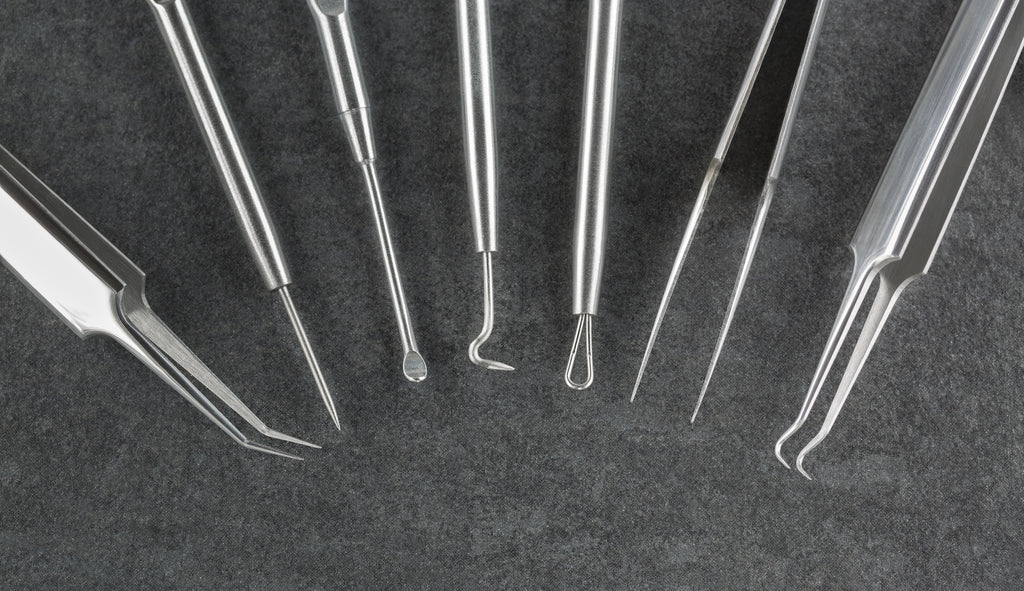
#6. Do Not Use Metal Popping Tools
You may have seen social media personalities or doctors, like Dr. Pimple Popper, showcasing dramatic pimple-popping techniques. While it may look easy, we are not trained professionals, and using metal tools on our skin can be risky. Misusing these instruments can lead to excessive pressure, resulting in skin damage.
#7. Avoid Touching with Dirty Fingernails
Continuing from our previous point, never pop or touch pimples with your fingernails. Even freshly cleaned nails harbor bacteria that the naked eye cannot see. Keeping your nails away from inflamed skin is crucial to prevent any unintended consequences. Fingernail indentations can leave lasting marks, and careless handling can result in broken capillaries or scars that may become permanent.
#8. Steer Clear of Hot Compresses
While the comforting warmth of a facial steam can be delightful, applying a hot compress directly to a breakout can be detrimental. Many believe that heat can help bring a pimple to a head, but this method may irritate the area and exacerbate inflammation instead. A little heat can be beneficial for a pimple that’s ready to pop, but it should be avoided at all other times.
#9. Avoid Using Drying Ingredients on Pimples
Using astringent products containing alcohol to dry out pimples can be counterproductive. For those with oily skin, this may seem like a remedy, but harsh, drying ingredients can worsen the condition. Excessive dryness can prevent the pimple from fully developing, making it harder to treat effectively.
#10. Do Not Apply Toothpaste on Pimples
You might recall the age-old advice of using toothpaste as a quick fix for acne. This is a big no-no! Toothpaste is formulated for oral hygiene, not for delicate facial skin, and applying it can cause irritation. Remember, your skin deserves better than makeshift remedies that can lead to more issues.
Establishing a consistent, healthy skincare routine is paramount for maintaining a clear and glowing complexion. Proper skincare, combined with sun protection during the day, is essential for preventing breakouts. If you struggle with persistent acne, seek out natural acne products tailored to your needs.
If the fundamental steps of cleansing, toning, and moisturizing aren’t sufficient, consider our Anti-Acne Sheet Mask, enriched with rosemary and witch hazel, to balance and clarify your skin gently. Unlike other blemish treatments, this mask nourishes and hydrates, thanks to its plant-derived ceramides and hyaluronic acid.
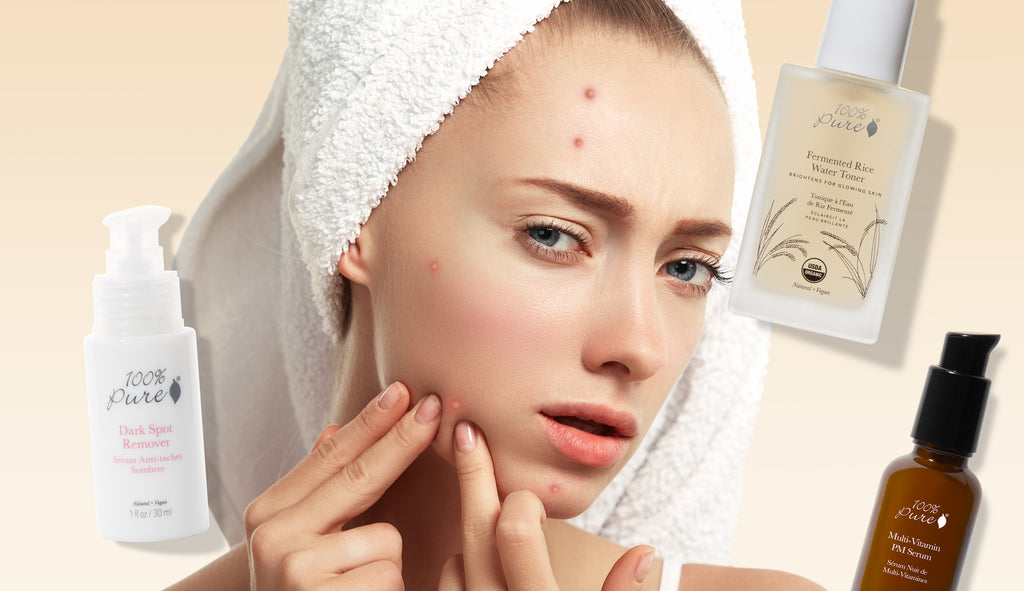
For addressing dark spots caused by acne, incorporating vitamin C into your routine is essential for lightening them. The 100% PURE Multi-Vitamin + Antioxidants Riché PM Treatment is ideal, as it combines vitamin C and retinol to brighten and even skin tone while you sleep. The potent retinol content helps resurface the skin and clear excess debris that could block pores and lead to further breakouts.
For those dealing with stubborn dark spots or deeper skin tones, our Dark Spot Remover serum offers a vegan solution that includes vitamin C, sake, and aloe—ingredients known for promoting skin cell turnover and repair. The addition of matsutake mushroom extract and lime works to brighten acne scars naturally, avoiding harsh chemicals that could irritate the skin.
Common Questions About Pimples & Acne
How can I tell if a product is non-comedogenic?
To verify if a product is non-comedogenic, first, look for “non-comedogenic” labels on the packaging. Although these labels are not strictly regulated, they suggest a lower likelihood of clogging pores. Additionally, scrutinize the ingredient list for known comedogenic substances such as sulfates, fragrances, specific dyes, PEGs, and parabens.
What should I do if a product worsens my acne or causes breakouts?
If you notice that a product is irritating your skin and leading to breakouts, take immediate action. First, stop using the product right away. Next, return to your previous skincare routine to allow your skin to recover. If necessary, seek advice from a dermatologist for personalized recommendations on products that suit your skin type.
Can a product still cause pimples even if it lacks comedogenic ingredients?
Yes, even products without known comedogenic ingredients can still lead to breakouts. Individual skin reactions vary, meaning that while certain ingredients are more likely to clog pores, each person’s skin is unique. For example, those with sensitive skin might react negatively to peppermint essential oil, while others may experience no issues.
How long should I test a product before concluding it causes breakouts?
The timeline for assessing whether a product is responsible for breakouts can differ. It’s advisable to try a new product for at least 2-4 weeks, allowing enough time for your skin to adjust and for any adverse reactions to surface.
Can my diet influence the development of pimples?
Many of us have been warned that consuming chocolate can lead to breakouts, which may be exaggerated but holds some truth. While indulging in chocolate occasionally is unlikely to cause acne, a diet high in sugar, fat, and refined carbohydrates can elevate blood sugar levels, potentially leading to pimple formation.
Empower Yourself with Effective Skincare Practices
Understanding the impact of your skincare choices is crucial for achieving clear, healthy skin. Now that you are familiar with the 10 essential guidelines for handling pimples, you play a key role in your skincare journey. The rest depends on a consistent, gentle, and effective skincare routine designed to keep breakouts at bay, ensuring that you can showcase your best self.
By integrating beneficial ingredients like tea tree oil and witch hazel into your regimen, you can effectively manage breakouts and keep pesky pimples under control. Remember to carefully examine product labels, familiarize yourself with comedogenic ingredients, and maintain a natural skincare routine that includes the best acne treatments. Stay patient, consistent, and true to your skin, because ultimately, the results will be well worth the effort!
var windowWidth,lazyLink,lazyImages,lazySource,lazyBackground,lazyIframe,lazyScripts,navigator_platform,lazyLoadedJS,src,style,datasrc,urls,analytics,s,x,i,j,flag;
function init(){flag&&(flag=0,load_all_js(),lazyLoadImg(),lazyLoadBackground(),lazyLoadIframe(),lazyLoadSource())}
function isElementInViewport
var a=t.getBoundingClientRect();
return a.top>=0&&a.left>=0&&a.bottom<=(window.innerHeight||document.documentElement.clientHeight)&&a.right<=(window.innerWidth||document.documentElement.clientWidth)
}
function insertAfter(newNode, referenceNode) {
referenceNode.parentNode.insertBefore(newNode, referenceNode.nextSibling);
}
function isElementInView
var a=t.getBoundingClientRect();
return a.top(window.innerHeight/2||document.documentElement.clientHeight/2)
}
function lazyLoadLink(){
lazyLink.forEach(function
t.href=null==t.dataset.href?t.href:t.dataset.href
})
}
function lazyLoadImg(){
lazyImages.forEach(function
null!=(src=windowWidth<600?null==t.dataset.mobsrc?t.dataset.src:t.dataset.mobsrc:t.dataset.src)&&(t.src=src),t.classList.remove("lazy2")
})
}
function lazyLoadImg2(){
lazyImages.forEach(function
isElementInViewport
})
}
function lazyLoadSource(){
lazySource.forEach(function
t.srcset=null==t.dataset.srcset?t.srcset:t.dataset.srcset
})
}
function lazyLoadBackground(){
lazyBackground.forEach(function
lazybg=windowWidth<768?null==t.dataset.mobstyle?t.dataset.style:t.dataset.mobstyle:t.dataset.style,null!=lazybg&&(t.style=lazybg),t.classList.remove("lazybg")
})
}
function lazyLoadIframe(){
lazyIframe.forEach(function
t.src=null==t.dataset.src?t.src:t.dataset.src
})
}
function lazyLoadScripts(){
j!=lazyScripts.length&&("lazyload2"==lazyScripts[j].getAttribute("type")?(lazyScripts[j].setAttribute("type","lazyloaded"),void 0!==lazyScripts[j].dataset.src?((s=document.createElement("script")).src=lazyScripts[j].dataset.src,document.body.appendChild(s),s.onload=function(){j++,lazyLoadScripts()}):((s=document.createElement("script")).innerHTML=lazyScripts[j].innerHTML,document.body.appendChild(s),j++,lazyLoadScripts())):(j++,lazyLoadScripts()))
}
function lazyLoadCss
(s=document.createElement("link")).rel="stylesheet",s.href=t,document.getElementsByTagName("head")[0].appendChild(s)
}
function lazyLoadJS
if(lazyLoadedJS)return setTimeout(function(){lazyLoadJS
}
function wnwAnalytics() {
var script2 = document.querySelectorAll(".analytics");
script2.forEach(function(analyticsScript) {
trekkie.integrations=false;
s = document.createElement("script");
s.innerHTML = analyticsScript.innerHTML;
insertAfter(s, analyticsScript);
analyticsScript.parentNode.removeChild(analyticsScript);
});
}
document.addEventListener("DOMContentLoaded",function(){windowWidth=screen.width,lazyLink=document.querySelectorAll("link"),lazyImages=document.querySelectorAll("img.lazy2"),nolazyImages=document.querySelectorAll("img.lazy"),lazyBackground=document.querySelectorAll(".lazybg"),lazyIframe=document.querySelectorAll("iframe"),lazySource=document.querySelectorAll("source"),lazyScripts=document.getElementsByTagName("script"),navigator_platform=navigator.platform,i=0,j=0,flag=1,window.addEventListener("scroll",function(){init()}),window.addEventListener("mousemove",function(){init()}),window.addEventListener("touchstart",function(){init()}),"Linux x86_64"!=navigator_platform&&init(),setTimeout(function(){init()},60000)});
function load_all_js() {
lazyLink=document.querySelectorAll("link");
lazyLoadLink();
}
wnwAnalytics();
setTimeout(function() {
const wnw_load = new Event('wnw_load');
window.dispatchEvent(wnw_load);
}, 100);
setTimeout(function() {
var DOMContentLoaded2_event = document.createEvent("Event");
DOMContentLoaded2_event.initEvent("DOMContentLoaded2", true, true);
window.document.dispatchEvent(DOMContentLoaded2_event);
}, 60000);
j=0;
lazyScripts = document.querySelectorAll("script[type=lazyload2]");
lazyLoadScripts();
lazySource = document.querySelectorAll("source");
lazyLoadSource();
}
