


[ad_1]
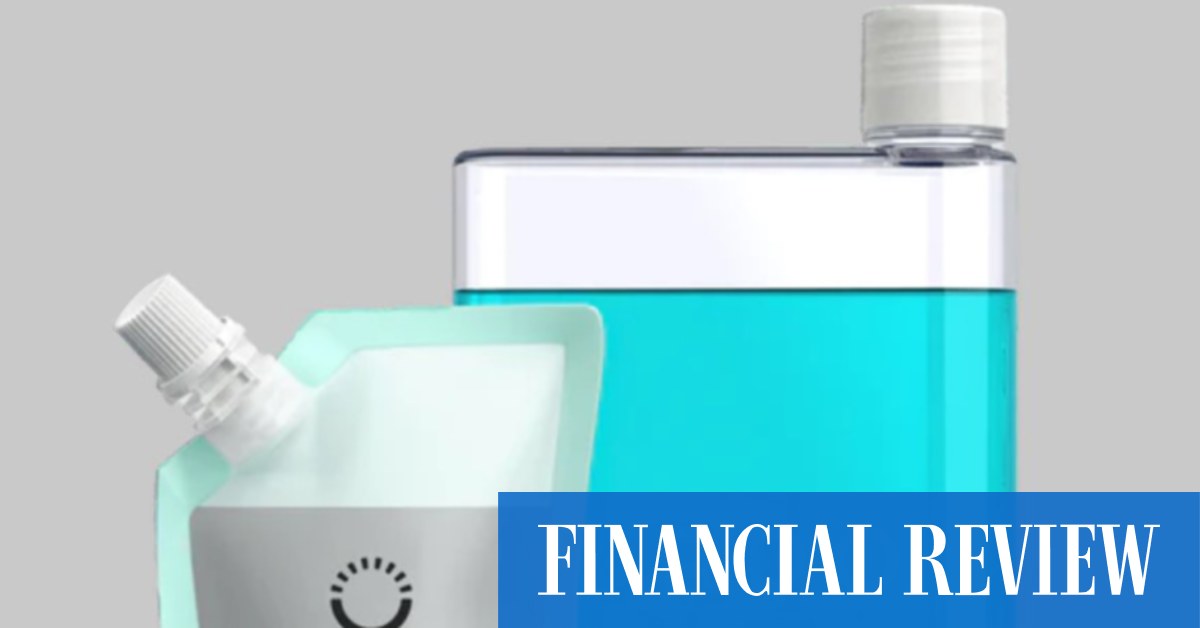
British oral-care brand Ordo sells pouches of dilutable mouthwash on subscription. One 80ml pouch is the equivalent to four ordinary bottles: why ship water when it’s readily available from the tap?
Drinks brands in Australia and abroad have been exploring more sustainable packaging innovations, from putting wine in cans and pouches to companies like Hey Tomorrow launching new cask brands. In the UK, so fundamental is the bag to the wine sourcer Le Grappin, it went as far as patenting the word “bagnum”.
Ordo’s reusable mouthwash bottle and mouthwash concentrate in a pouch.
“It was hard to sell them at first; customers expected low-quality wine so thought they were expensive,” says co-founder Emma Nielsen of her Côtes du Rhônes and rosés, which cost £30 for a 1.5-litre bag. Produced by Irish firm Smurfit Kappa, the pouches are so lightweight that a five-litre bag has 80 per cent lower carbon emissions than glass packaged wines, according to the company.
Attractive designs have helped shift perception. “We try to show how nice a pouch can be,” says Sarah Vachon, co-founder of the UK-based Citizens Of Soil, an olive-oil brand that sells its product in an arty-looking pouch (£13.50 for one litre) splashed with hues of Yves Klein Blue and abstract graphics of the limestone soil in which it grows. The brand takes responsibility for the afterlife of its bags, too: if recycling isn’t available, customers can return them using a freepost address.
“I find it frustrating when I see luxury brands investing in nice packaging only to expect you to throw it away and buy it all over again,” Vachon says.
Bags can also help cut down on product waste. Wine and oils stay fresher for longer – two to three weeks after opening for wine, and more than six months for olive oil, according to Constantinou (olive oil ordinarily dates after three months once air gets in).
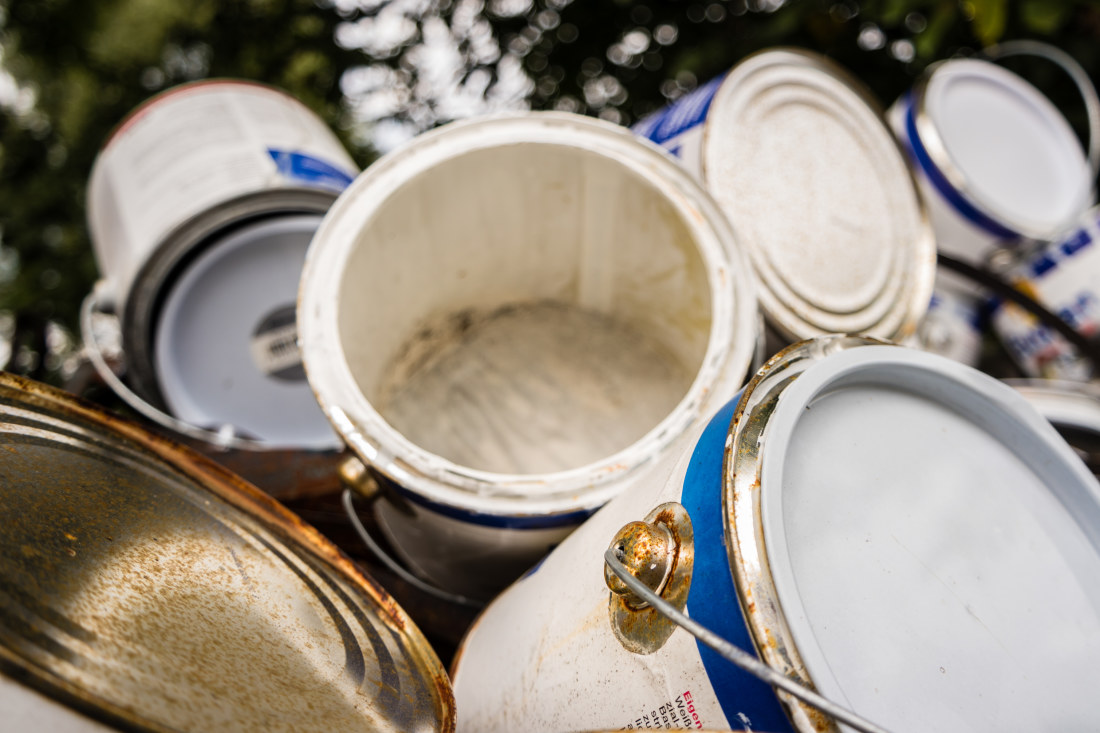
YesColour paints founder John Stubbs says “14,000 tins go to landfill every year” in the UK. He sells paint in one-litre pouches instead.
“The entire proposition for YesColors had to be sustainable, not just one part,” says Stubbs, who says he got “a fair few raised eyebrows” when he tried to convince manufacturers to bag his paint. Each pouch features a milk-carton style screw top and a clear window, making the contents visible and easier to pour. “Tins are difficult to open, reseal, or dispose of safely.” He sells them by the litre, with an on-site calculator to predict the volume each customer will need for their paint project: it stops half-empty tins ending up in the bin.
Psyche sells one-litre pouches rather than half-litres to encourage consumers to make fewer orders; Le Grappin’s bagnums are two-bottles-in-one. “Ten one-litre pouches might be the same volume as 20 smaller ones, but it’s 10 fewer T-taps and 60 to 70 per cent less plastic we need to produce,” says Constantinou, who supplies restaurants including Atelier September in Copenhagen and Scarrs Pizza in New York with bigger-volume bags. (Last month, he opened a Psyche cafe in Copenhagen, where his oil is used in bulk.)
In the era of online grocery shopping, Psyche Organic and Citizens of Soil offer subscription models to encourage customers not to default to store-bought bottles. “Pouches don’t require the amount of protective packaging to prevent breakages like we need with glass,” says Vachon. And, emission-wise, “that last-mile transport actually accounts for a lot”.
Bags have less baggage, it seems.
— Financial Times
[ad_2]
Source link
