


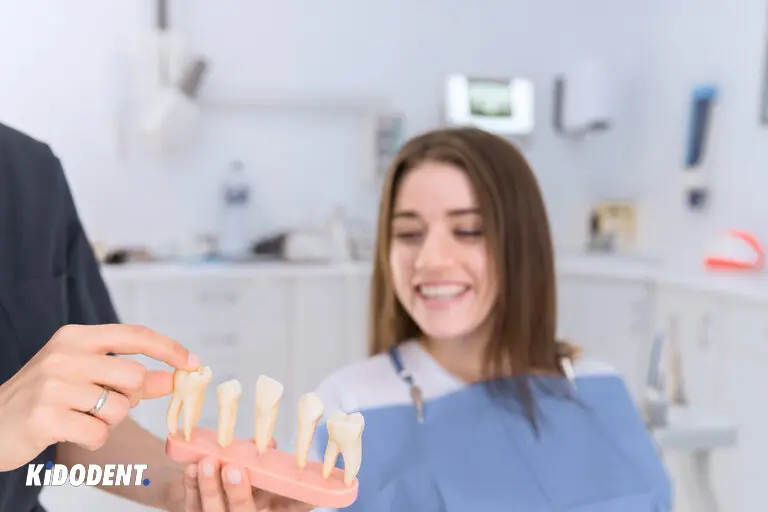
Every human tooth, like all components of the body, possesses distinct characteristics, with each tooth serving a specific name and purpose. The anatomy of teeth is primarily categorized into two types: hard tissues and soft tissues. The hard tissues encompass enamel, dentin, and cementum, which is the mineralized connective tissue that covers the roots of teeth and anchors them to the alveolar bone. In contrast, the soft tissue is represented by the pulp, which is essential for supplying nerves and blood to the teeth. Let’s delve deeper into the various types of teeth and their respective functions.
Understanding the Stages of Primary and Permanent Teeth Development
Teeth are intricate structures that undergo development throughout various life stages, including prenatal periods. The initial set of teeth, known as primary teeth or baby teeth, usually begins to emerge around the age of six months during the teething phase. Interestingly, these primary teeth start forming as early as 14 weeks in utero and continue to develop until they are fully present by approximately three years of age. This foundational stage sets the groundwork for a child’s dental health and future oral development.
As children grow, they enter a transitional phase called mixed dentition, which typically begins around six years old. This phase is marked by the emergence of the first permanent teeth and the gradual loss of primary teeth, occurring sequentially. This natural progression is crucial for the alignment and spacing of adult teeth, ensuring a healthy mouth and smile.
The final phase of tooth development is the permanent teeth period, which can extend from ages 12 to 15 as the remaining adult teeth make their appearance. Interestingly, some individuals may not see their third molars, commonly known as wisdom teeth, erupt until they reach their mid-20s, highlighting the variations in dental development among individuals.
Key Differences Between Primary and Permanent Teeth
When comparing primary and permanent teeth, several notable distinctions arise beyond just the timing of their eruption and maturation periods. These differences are essential for understanding dental health across different life stages.
- In primary teeth, the pulp size is proportionately larger compared to the crown’s dimensions, influencing their overall structure.
- Baby teeth typically exhibit a lighter and whiter appearance, distinguishing them from the more mature, darker permanent teeth.
- The enamel and dentin, which form the hard tissue structures of teeth, are significantly thinner in primary teeth than in their permanent counterparts.
- The crowns of baby teeth are generally smaller, which is crucial for accommodating the size of a child’s mouth.
- There are notable variations in the roots and sizes of different teeth, especially in primary molars, which play a crucial role in dental alignment.
Exploring the Total Number of Teeth in Humans
To understand the configuration of teeth, we can visualize the dental arch divided by a median line, which serves as a central point separating the upper (maxillary) and lower (mandibular) jaws. This median line is particularly noticeable as it separates the central incisors.
On each side of this median line, there exists a dental arch. In a healthy dental condition, each arch contains 10 teeth on either side, totaling 20 primary teeth in children. This number assumes the absence of dental issues such as trauma or conditions like hypodontia, where teeth may be missing.
In adults, the number of permanent teeth rises to 16 per side of the arch, culminating in a total of 32 permanent teeth. This complete set includes various types of teeth, each tailored for specific functions within the mouth.
Identifying the Types of Teeth and Their Functions
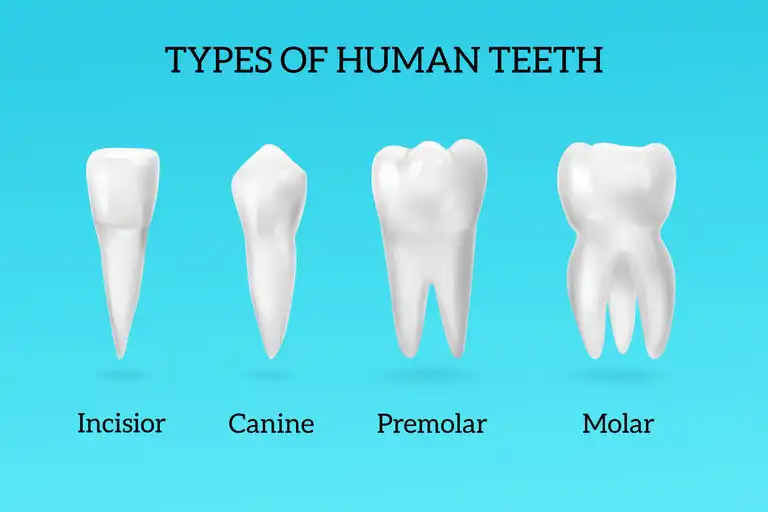
Teeth are categorized based on their shapes and functions, with each category serving a distinct role in the oral cavity. The primary classes of teeth include incisors, canines, and molars. Additionally, premolars are prominent in the permanent dentition, appearing as children transition to adulthood.
Understanding Incisors: The Teeth for Biting and Cutting
Incisors are typically the first teeth to erupt during the baby teeth phase, fully emerging by the age of 16 months. These are the series of anterior teeth located at the front, comprising both lateral and central incisors. The central incisors occupy the middle position, while the lateral incisors are found adjacent to them.
In total, there are four central and four lateral incisors—two on the upper and two on the lower jaw—resulting in a total of eight incisors in the human mouth. Their sharp edges enable incisors to effectively bite and cut food, making them essential for initial food preparation in the eating process.
Exploring Canines: The Cornerstone of Oral Function and Aesthetics
Similar to the canine teeth found in dogs and other carnivores, human canines play a vital role in the dental arch. There are four canines, two located in the upper arch and two in the lower arch. These teeth are characterized by their pointed shape and longer length compared to other types of teeth.
Canines hold a prominent position in the mouth, being the third teeth from the median line. From an aesthetic standpoint, canines contribute significantly to facial structure and smile design. Functionally, they are crucial for tearing food and provide stability to the dental structure owing to their unique positioning within the arch.
Premolars: The Transitional Teeth for Grinding and Tearing
In the human mouth, there are eight premolar teeth—four in the upper jaw and four in the lower jaw. These consist of the first premolar, which is adjacent to the canines, and the second premolar, positioned in front of the molars.
Premolars serve an intermediary function between canines and molars. The first premolar assists canines in tearing food, while the second premolar facilitates grinding, though not as effectively as molars. It’s important to note that premolars do not exist in the primary dentition; they emerge as part of the permanent set, replacing the primary molars.
Molars: The Powerhouse Teeth for Chewing
Located at the back of the mouth, molar teeth are recognized for their broad surfaces and multiple cusps, making them the largest teeth in the dental arch. Both the upper (maxillary) and lower (mandibular) jaws contain a total of 12 molars—six in the upper jaw and six in the lower jaw, three on each side of the arch.
Molars are integral to the chewing process, helping to break food into smaller, manageable pieces. Their multiple cusps enhance their grinding capabilities, which is essential for effective mastication. Specifically, molars consist of the first molar, which is next to the second premolar, followed by the second molar, and the third molar, commonly referred to as the wisdom tooth. In some individuals, there may be insufficient space for wisdom teeth to develop properly, leading to potential dental complications.