


Estée Lauder’s Wisdom on Beauty: Embracing Evolving Perspectives
Cosmetics icon Estée Lauder once remarked, “Beauty is an attitude.” This statement prompts reflection on whether she anticipated the evolving definitions of beauty influenced by changing societal attitudes. The contemporary understanding of beauty has undergone significant transformation since Lauder’s era. Rather than focusing on flaw correction and the pursuit of perfection, today’s beauty landscape emphasizes self-care, holistic well-being, and overall health. Beauty is now about nurturing oneself and fostering a positive self-image.
The perception of beauty products has shifted dramatically. They are now seen as essential components of daily routines, akin to fundamental practices like brushing teeth, rather than mere indulgences reserved for a select few. This newfound importance illustrates how beauty products contribute to daily self-care rituals, enhancing lives and encouraging a healthier mindset.
According to Jake Campbell, the founder of the Australian men’s skin care brand HIZ Body, modern men share a similar perspective on beauty. He states, “Males typically view skin care or personal care as something that they need to do. It’s more of a chore, they view it as something that needs to be done rather than something that they enjoy doing.” This approach may have made beauty more accessible to men, fueling the growth of the male beauty and personal care market.
In recent years, major brands have recognized the significance of this shift. For instance, in 2018, the luxury brand Chanel made headlines with the global launch of Boy de Chanel in South Korea. The success of this launch paved the way for further developments, such as the introduction of FIVEISM x THREE, a brand focusing on men’s make-up, in 2019. These initiatives highlight the industry’s commitment to catering to a diversifying customer base.
During the pandemic, Amorepacific, a giant in the K-beauty sector, expanded its men’s grooming brand Bro&Tips into the US market via Amazon, showcasing the growing demand for male grooming products. Similarly, in 2022, Shiseido announced the relaunch of its Shiseido Men’s line and introduced SIDEKICK, a brand specifically for Asian Gen Z males, further emphasizing the expanding male beauty market.
The market’s evolution is not confined to established brands alone; new and independent male personal care brands like MANSCAPED, Shakeup Cosmetics, and HIZ Body are rapidly gaining traction. MANSCAPED, which specializes in below-the-waist grooming, has become a global sensation, serving over six million male customers with its innovative products, according to CEO Paul Tran.
Shakeup, which launched its make-up line just two years ago, achieved remarkable success by surpassing established brands like Chanel and Tom Ford in the premium BB cream category on Tmall Global within three months of its launch. This rapid growth underscores the changing perceptions of make-up among men, shifting from taboo to acceptance.
Since its debut in March this year, HIZ Body has experienced remarkable growth, doubling its revenue month-on-month, a trend that is expected to continue. The rise of social media, particularly the selfie culture, has led both men and women to become increasingly aware of their physical appearance, while the influence of K-Pop and K-beauty has democratized the use of cosmetic products.
Additionally, the COVID-19 pandemic has significantly heightened awareness of personal care among men. For example, during the pandemic, Phillips, an electronic consumer goods company, faced a global shortage of nasal hair trimmers, indicating the increased focus on grooming during lockdowns. Nicholas Lee, who led the personal health division in the ASEAN region during that period, attributed this unprecedented demand to the heightened scrutiny of physical appearance among men, driven by the surge in video calls.
Understanding Male Consumers: Insights into Grooming Purchases
By 2022, the stereotype that only a specific demographic of men seeks out cosmetic and personal care products is becoming increasingly outdated. Jake Xu, co-founder of Shakeup, notes, “Male beauty brands have a much wider appeal than you may think.” He highlights that while the LGBTQ+ community comprises a significant portion of their consumer base, modern metrosexual men are increasingly recognizing that skincare is synonymous with self-care.
Campbell supports this notion, indicating that their brand’s customer demographic spans from 18-year-olds to men in their late 60s and early 70s. He asserts, “It’s a very broad market. We surveyed 1,000 completely random men and 70% reported that they were using at least one male beauty or personal care product on a daily basis. It shows that a lot of men are beauty consumers.”
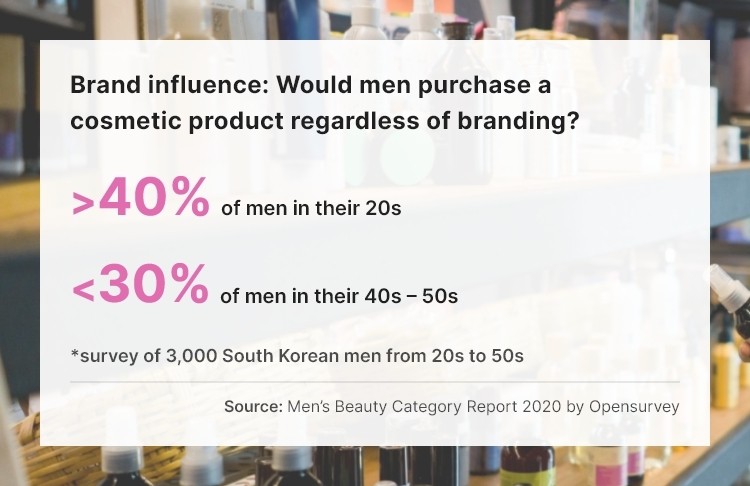
However, age remains a significant factor in cosmetic usage. A survey conducted by the Japanese cosmetics portal @cosme revealed that while skincare usage is prevalent across all age groups, men in their 50s exhibit the lowest rates of cosmetic use. In contrast, younger consumers, particularly those in their 30s and below, demonstrate higher engagement with products such as essences, pore packs, eye creams, and supplements.
Paul Tran, CEO of MANSCAPED, believes that skincare and below-the-waist grooming have become standard practices among young men globally. He emphasizes, “Gen Z males, notably, have brought about a new wave of self-expression regardless of gender identity, and this resonates with the destigmatization of below-the-waist grooming and men’s self-care.”
However, Tran also points out that the opportunities within the male beauty and personal care market extend beyond a singular demographic. “This is just one segment within the massive $70 billion global grooming market. As a multigenerational brand with a customer base of men ages 18 to 65, we are seeing a growing interest in full-body grooming and self-care routines among men of all ages and across all walks of life.”
Men’s Beauty Preferences: Practical Solutions Over Trends
Similar to their female counterparts, men are increasingly on the lookout for beauty and personal care products that effectively address their specific concerns. As Jake Xu elaborates, “There are the more beauty-savvy guys who are always on the lookout for new skin care products, but the majority of our customers are motivated to seek and purchase products that address specific concerns or skin issues they experience, be it dark undereye circles, wrinkles, or redness, etc.”
Research from HIZ Body indicates that many men are actively searching for solutions tailored to sensitive skin. “We also see a lot of male customers who identify as having sensitive skin, which is what HIZ Body specializes in treating and providing solutions for. It’s why we chose to formulate natural and organic products, which are typically more sensitive skin-friendly,” says Campbell.
While men are open to learning about ingredients, they often prioritize effective results. “They’re not looking for any particular ingredients or searching for ingredients when they’re shopping. They’re just looking for the solutions.”
Unlike the women’s beauty market, where trendy ingredients often take center stage, Xu believes that male-centric brands should focus primarily on addressing consumer needs and concerns. “Although the trend in ingredients is important, we focus more on the consumers’ needs. Trends come and go and many of these ‘so-called’ trends turn out to be fads and are short-lived. Building a truly helpful brand that provides solutions that work is the only way to cultivate a loyal customer base and sustainable business.”
“With guys, they specifically want something that just works! And is also easy to understand and simple to follow. Results and efficacy are crucial if you want customers to continue using your products,” he adds.
According to Tran, MANSCAPED’s best-selling product is the Crop Preserver, an anti-chafing ball deodorant. This dual-action deodorant and moisturizer claims to reduce friction and keep the groin area dry and comfortable for up to 24 hours. “It’s one of MANSCAPED’s first formulations and has been a customer favorite for some time,” Tran remarks.
The success of this seemingly simple product stems from its ability to address a common issue faced by many men. An acquaintance of mine, a regular user, even claimed it was the singular solution to a rarely acknowledged problem, stating, “It’s either this or corn starch.”
As men continue to explore and deepen their understanding of beauty and personal care, we can expect a growing interest in cosmetic ingredients. Brands like HIZ Body are particularly focused on educating consumers about ingredients, especially those with sensitive skin, as highlighted by Campbell.
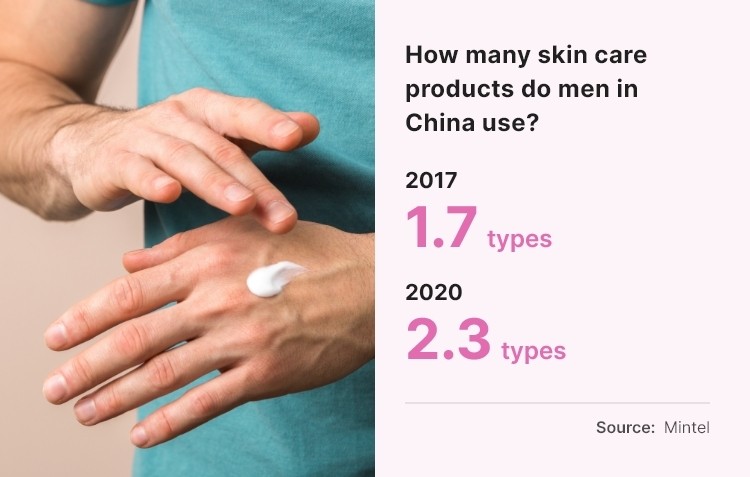
Tan Seng Hwee, founder of the Singapore-based retailer What He Wants, has observed this shift in consumer behavior. “What [men] are looking for are solutions, so the products must be effective and show fast results. In the last two years, we’ve noticed our customers becoming more knowledgeable in terms of ingredients. They are researching ingredients and are becoming close to having women’s knowledge about skincare.”
Gaurav Modi, co-founder of the Indian male personal care brand Braavoking, emphasizes that creating a comprehensive experience is crucial for winning over male consumers. “Before 2015, if an Indian went to get lunch or dinner, he simply looked at how good the food was. However, within the last five years, the Indian consumer has started to consider other factors like good parking and ambience. Likewise, male consumer behavior has shifted from product-driven to experience-driven. People are starting to spend on the experience aspect.”
Modi elaborates that the consumer experience encompasses various facets, including the duration of using a product and the interactions during pre-purchase, actual purchase, and after-sales. Additionally, Braavoking allocates a portion of its sales to support social causes, allowing consumers to feel they are contributing to society.
Exploring the Potential of Men’s Make-Up: A New Frontier
When it comes to make-up, many men approach it similarly to skincare, viewing it as a practical solution to specific problems. This perspective is reflected in Shakeup‘s best-selling product, Let’s Face It BB Tinted Moisturiser, which provides coverage for blemishes while delivering hydration and sun protection. This multitasking product has resonated well with male consumers.
Shakeup’s strategy of creating hybrid make-up products that combine skincare benefits has proven highly effective, as evidenced by the brand’s impressive revenue of £1.6m (U$1.96m) in 2021, representing a staggering 300% year-on-year growth. The brand anticipates continued growth, aided by its global expansion into markets such as Australia.
“We are seeing more and more interest from markets globally. This is very encouraging, and it’s become very obvious to retailers and distributors that this is a sector that will add sizable incremental revenue to their existing offerings, without the risk of cannibalization.”
https://www.youtube.com/watch?v=nuYaC0E-qAA[/embed>
In the previous installment of this series, we delved into individuality and self-expression as key drivers for Gen Z beauty consumers. With a diminished regard for traditional gender norms, Gen Zs are dismantling preconceived beauty ideals and instigating profound changes in the beauty industry.
Given this cultural shift, it is only a matter of time before men fully embrace the aesthetic allure of make-up, leading to the widespread acceptance of products such as eyeshadow and lip tints among male consumers.
“Cosmetics are no longer just a women’s category, but a manifestation of aesthetic sense and values regardless of gender. The number of men who enjoy make-up more actively is increasing, especially among Generation Z,” states Yuko Sakaguchi, senior marketing manager at FIVEISM x THREE.
The Japanese brand identifies its core consumer base as men who are “interested in new values, have a high sense of fashion, and are sensitive to trends.” They anticipate a rise in male consumers adopting eyeshadow, lipstick, mascara, and nail polish, which are already part of their product offerings.
Since its inception, the company has steadily expanded in Japan and is now venturing into overseas markets, including Thailand. They are also exploring potential opportunities in Asian markets such as China, Taiwan, and Korea.
“South Korea and Thailand have a higher sense of aesthetics than other countries, which is why the make-up culture has penetrated. In China, a similar situation has been observed in recent years, and the market is expanding rapidly. It’s said to be the world’s second-largest men’s cosmetics market after South Korea. We have great expectations that the men’s beauty market will continue to flourish,” Sakaguchi remarks.
Campbell disclosed that the development of color cosmetic products is in the pipeline. “That’s where I think the next shift and the next boom will be. I have noticed through keywords that men are starting to actively look for [color] cosmetics. That is an area that we will be expanding our product range into over the next 12 to 18 months.”
Some of the products they are considering developing include concealers, bronzers, and lip balms, indicating a growing interest in color cosmetics among male consumers.
The Rise of Genderless Beauty: A New Era
As traditional gender norms dissipate and cosmetic products become integral to everyday routines for all individuals, Campbell believes that beauty will no longer be confined or marketed within binary frameworks. Numerous gender-neutral beauty brands have emerged, including the make-up brand Laka and the skincare brand Mauve Fantasticever, both hailing from South Korea.
Additionally, celebrities like Harry Styles and Pharrell Williams have launched gender-neutral cosmetic lines, with the latter’s brand, Humanrace, promoting inclusivity by creating products “for humans.”
While this sentiment is commendable, brands must remain cognizant of the physiological differences between male and female skin. A 2018 review published in the International Journal of Women’s Dermatology highlighted critical differences, concluding that men typically have higher sebum content and thicker skin due to hormonal variations.
CosmeticsDesign-Asia confirmed these findings with Belinda Carli, director of the Institute of Personal Care Science, who emphasized that men’s skincare needs vary at all life stages. She stated that men cannot achieve the same desired outcomes using products designed for women and vice versa.
The Future of Men’s Beauty: Opportunities Ahead
With an expansive view of beauty and diminishing stigmas, the men’s beauty and personal care segment is poised for continued growth. “Men around the world continue to be more receptive than ever when it comes to expanding their grooming routines. As male taboos continue to fade, more markets will display interest in investing in personal care, and that growth is exciting,” Tran asserts.
There is no doubt that a significant opportunity exists for beauty companies to expand their customer base. To harness this burgeoning market, education is paramount. Brands eager to capitalize on this trend must prioritize educating their consumers.
“To be a pioneer in a new category also means a slower path to growth and substantial investments in education. In many markets, we believe the potential is there, and the needs are present, but many of our customers lack the education necessary to make informed decisions regarding their skincare journey,” Xu explains.
Tran emphasizes that brands should concentrate on fundamental principles for success. “Identify your brand’s unique selling points. Build your community. Earn your customers’ trust. Listen to their feedback… Once men understood they could trust us for groin grooming care, they continued to look to us for quality products to meet all their grooming and hygiene needs.”
Currently, the men’s beauty and personal care landscape lags behind women’s, but it is swiftly catching up due to brand-led education and the erosion of gender norms. There is a collective interest in this market, yet the true breakout stars will be innovative brands that can deliver effective solutions to address unmet needs.
Additional reporting by Nurul Ain Razali
