


[ad_1]
I believe Juniper berry is a unique botanical ingredient because it enhances both culinary and perfumery applications with its distinct flavor and aroma. At CosmeticsUrgeryNews, we specialize in cosmetics, beauty, body care, hair care, and perfume, helping enthusiasts achieve a deeper understanding of ingredients like juniper berry. Our platform monetizes through affiliate partnerships and product recommendations, guiding users to make informed purchases. This guide covers the history, botanical properties, culinary uses, health benefits, and fragrance applications of juniper berry.
- Historical significance in perfumery
- Botanical characteristics and species
- Culinary applications and flavor profiles
- Health benefits and nutritional content
- Fragrance notes and popular perfumes
What is the History of Juniper Berry in Perfumery?
The story of the juniper berry begins long before it found its way into perfume bottles. Used for centuries in herbal medicine and rituals, it was often added to botanical tinctures for its fresh, clean properties. People once hung juniper branches near doors, burned them in rituals, or soaked them in spirits for tonic blends. For Native American tribes, juniper was a sacred plant, valued for both its aromatic wood and the healing properties of its fruit.
Its connection with spirits is what helped modern perfume houses take note. The signature aroma of gin made juniper berries noticeable on the nose, giving them a new place in the world of fragrance. That dry, bracing green tone quickly stood out against sweeter or spicier ingredients. Any gin distiller will tell you that without the juniper berry, the drink simply wouldn’t exist, as it provides the distinguishing flavor that defines the spirit.
What are the Botanical Characteristics of Juniperus Communis?
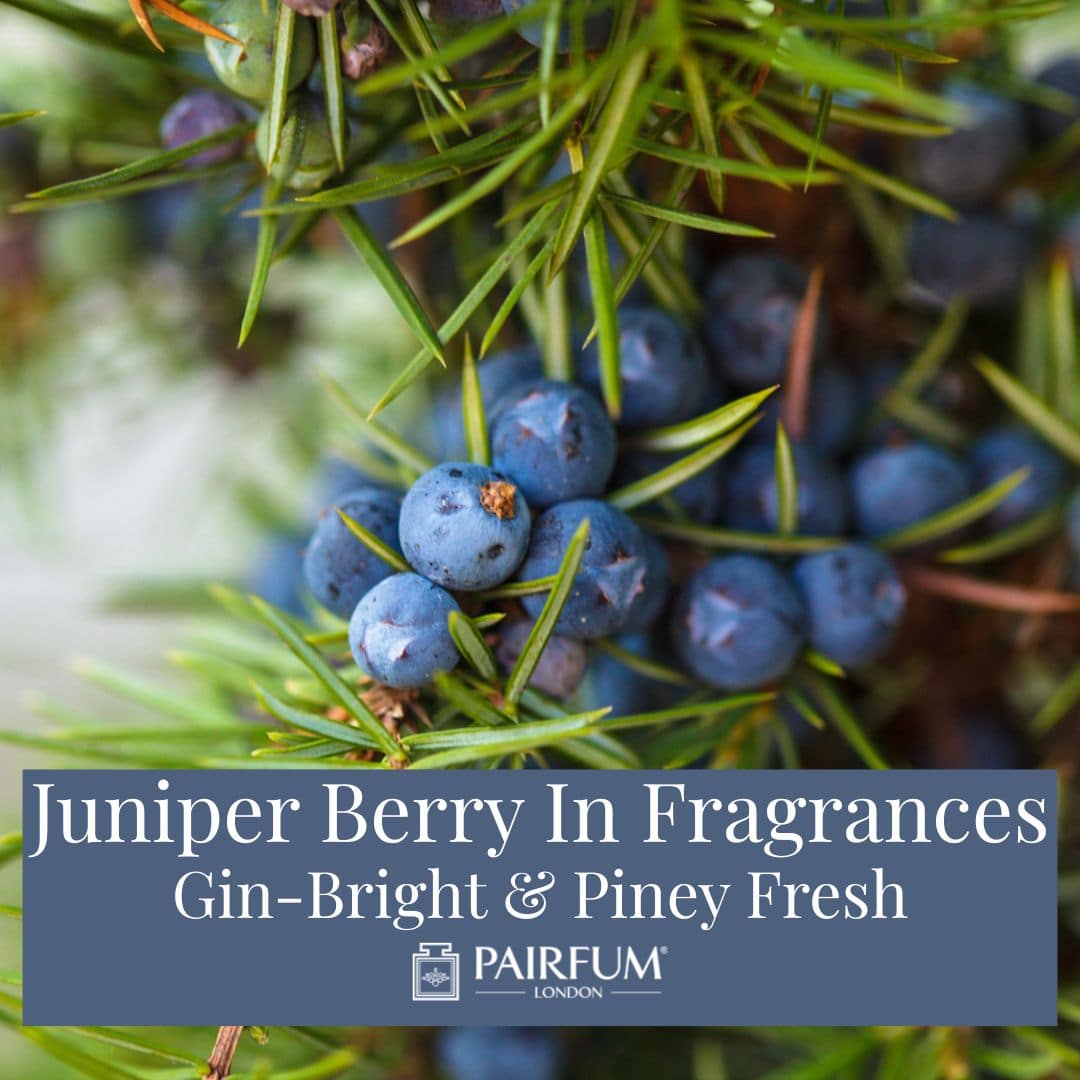
To appreciate the juniper berry, one must understand that it is not a true berry in the botanical sense. It is actually a female seed cone with unusually fleshy and merged scales, which gives it a berry-like appearance. The most common species used in the fragrance and food industry is Juniperus communis, often referred to as the common juniper. This shrub or small juniper tree has the largest range of any woody plant, growing across the Northern Hemisphere from North America to Europe and Asia.
While Juniperus communis is the star of the perfume world, there are many other juniper species, such as Juniperus virginiana, also known as Eastern Red Cedar. However, it is the common juniper that provides the specific flavor and scent profile we crave. The green berries take two to three years to ripen. Only the ripe berries are harvested for their high concentration of oils and aromatic compounds.
What are the Culinary Uses and Flavor Profiles of Juniper?
The juniper berry is just as famous in the kitchen as it is in the perfume lab. It is a vital spice in European cuisine, particularly in Scandinavian and Alpine regions. Because of its rich, hearty flavors, it is frequently used to flavor meat dishes that might otherwise be too heavy. It is the traditional choice to flavor venison and other game meats, as the resinous quality of the juniper cuts through the fat.
Beyond venison, you will find dried juniper used to flavor sauerkraut or added to casseroles and stews. While it is rarely used in sweet dishes, it provides a wonderful flavor contrast in certain fruit-based preserves. Unlike other dried fruits, the dried juniper berries are usually crushed juniper berry by crushed juniper berry to release their oils before being added to a pot. This ensures the spice permeates the entire dish.
| Culinary Uses | Typical Dishes | Flavor Profile |
|---|---|---|
| Flavoring Game Meats | Venison, Wild Boar | Resinous, Hearty |
| Flavoring Sauerkraut | Traditional Sauerkraut | Pine-like, Peppery |
| Flavoring Stews | Hearty Stews | Bittersweet, Earthy |
What are the Health Benefits and Nutritional Content of Juniper Berry?
The juniper berry is more than just a scent or a flavor; it is a powerhouse of health-promoting compounds. It is a significant source of vitamin C, essential for immune health, collagen synthesis, and blood vessel function. Furthermore, a juniper berry is packed with antioxidant compounds. These include flavonoid antioxidants, which help neutralize harmful free radicals in the body.
Many people enjoy juniper berry tea for its antioxidant and anti-inflammatory properties. Using a juniper berry extract in wellness products is also common due to these protective qualities. Whether consumed as fresh berries or as dried berries, juniper offers a unique medicinal profile.
| Nutritional Content | Health Benefits |
|---|---|
| Vitamin C | Boosts Immune Health |
| Flavonoid Antioxidants | Neutralizes Free Radicals |
| Antibacterial Properties | Fights Bacterial Infections |
What is the Aroma Profile of Juniper Berry?
Describing the aroma of a juniper berry takes more than one word. It smells of pine trees, but not like a Christmas tree. It’s drier, crisper, with a quiet pepper note that adds structure. When blended, it wears well with colder ingredients like eucalyptus or fir, but can also freshen warmer bases like resins or smoke.
Compared to rosemary, it’s less herbal and softer on the nose. Compared to cypress, it’s cooler and slightly more peppery. It holds its shape without taking over the whole composition. You’ll find it often in perfumes that aim for clean, tonic starts.
Why Does Juniper Work for Winter and Early Spring?
After rich perfumes full of spice and sugar in late December, many of us need a break. The juniper berry is perfect for January and February, right when we want clarity over comfort. It cuts through the warmth with a breath of fresh air without being overly cold or sharp.
The juniper shrub survives harsh conditions, and its seed cone remains resilient through frost, which is perhaps why we associate the juniper berry so strongly with this time of year. It’s a note we reach for when we want to:
- Lighten up woody perfumes without making them feel summery
- Add freshness to darker, smoky oils like patchouli or leather
- Keep a winter perfume from feeling too heavy or sweet
How is Juniper Berry Used in Niche and Luxury Perfumes?
In some perfumes, juniper berry is the star. In others, it’s the quiet line that helps keep things tidy. Perfumers love how it blends with both fresh and warm notes, which is rare. When you look at the required fields of a fragrance formula, juniper is often there to provide that elusive “gin” accord.
Common pairings include:
- Citrus, like grapefruit or lemon, for a clean open with a tart finish
- Lavender, for a sweet-meets-sharp combination often used in modern colognes
- Cedarwood or vetiver, to ground the piney facets and bring dry balance
- Frankincense adds depth and a quiet spice
What are Iconic Juniper Berry Fragrances?
- Penhaligon’s – Juniper Sling: A crisp, atmospheric tribute to London Dry Gin that opens with a chilled blast of juniper and soft black pepper.
- Maison Francis Kurkdjian – Gentle Fluidity (Silver): An ultra-modern scent where a high concentration of juniper berry creates a vibrant, metallic, and refreshing “gin frappé” effect.
- Byredo – Gypsy Water: A cult favorite that blends the juniper berry with pine needles and incense to evoke the earthy, nomadic aroma of a forest floor.
What are the Heart Notes of Juniper Berry in Cedar Noir Home Fragrances by Pairfum London?
This Noble Perfume of Black Cedarwood is enhanced with the elegance of Amber Wood. The heart contains Vetiver, Cypress, and Juniper Berry. The base fond is rich with Aromatic Leather and Frankincense.
How to Enjoy Juniper Berry with Cedar Noir – Large Bell Shape Reed Diffuser by Pairfum London?
To bring the invigorating essence of the juniper berry into your home, the Large Reed Diffuser Bell offers the perfect solution. Much like a juniper berry provides clarity in fine fragrance, this artisanal diffuser uses a natural, non-VOC oil serum to envelop your space in a crisp, uplifting atmosphere for up to nine months. Presented in a stunning Italian glass decanter, it diffuses ‘Eau de Parfum’ quality scents such as Cedar Noir, which balances juniper with vetiver. It is a sophisticated, healthy way to enjoy the piney freshness of the common juniper within your own living environment.
