


[ad_1]
Most guides on tooth remineralization offer similar advice.
Incorporate more calcium into your diet. Use remineralizing toothpaste. Reduce sugar intake.
While these oral hygiene practices are essential, they often overlook a critical factor that influences whether enamel can regenerate or continues to deteriorate.
The pH level indicates the acidity or alkalinity of saliva. Saliva typically maintains a pH between 6.7 and 7.4. The pH of your mouth plays a vital role in balancing demineralization and remineralization processes. When the pH falls below 5.5, the minerals are depleted from the enamel faster than saliva can replenish them.
This pH threshold is fundamental to every oral care strategy discussed in this guide.
Key Takeaways for Tooth Remineralization
- When oral pH drops below 5.5, enamel shifts from a repair state to a damage state.
- Brushing and dietary changes are effective only if the mouth’s pH remains above 5.5.
- Remineralizing gels restore 63% of lost enamel hardness, compared to 38% with no treatment.
- Tooth sensitivity diminishes in 2–4 weeks, visible white spots may fade in 6–12 weeks, and full structural repair typically takes about 90 days.
- Nighttime poses the greatest risk for mineral loss, as saliva production decreases during sleep.
Understanding Tooth Remineralization
Tooth remineralization refers to the body’s natural process of repairing weakened enamel. Saliva transports essential minerals, such as calcium and phosphate, to areas of the tooth that have been damaged. These minerals help to fill in the gaps within the enamel’s crystalline structure that were created by acid exposure.
Research from the NIH on enamel remineralization indicates that this repair process occurs in several stages of mineralization before becoming solid enamel. Saliva often contains more dissolved calcium and phosphate than it can hold, allowing the excess to flow back into the enamel.
The processes of demineralization and remineralization occur in a continuous cycle. Acidic substances from foods, bacteria, and beverages strip minerals from the enamel, while saliva works to restore them.
If acid exposure exceeds the repair rate, the balance shifts toward damage.
Remineralization can reverse early-stage decay and white spot lesions, but it cannot restore enamel that has been physically removed by acid or abrasion.
Indications That Your Teeth May Require Remineralization
Mineral loss in enamel often begins before you notice any symptoms. Most early signs of decay are either cosmetic or go unnoticed until a dentist brings them to your attention.
Here are common signs that indicate a need for remineralization:
- White or Chalky Spots: Dull white patches represent the earliest visible indicators of enamel mineral depletion. Acid exposure creates porosity beneath the surface, which may still appear smooth.
- Tooth Sensitivity: Sharp pain when consuming hot, cold, or sweet foods indicates thinning enamel. The mineral layer has diminished, exposing the underlying dentin.
- Translucent or Glassy Edges: The biting edges of front teeth become see-through as enamel thins. Healthy enamel appears opaque, while translucent edges suggest that the mineral layer no longer effectively blocks light.
- Rough or Pitted Texture: Enamel that was once smooth may develop a gritty or uneven surface. Acid exposure can create small pits and rough patches detectable by the tongue.
- Dull or Yellow Appearance: As enamel thins, teeth may lose their brightness or develop a yellow hue due to the darker dentin beneath becoming more visible.
Both sensitivity and visible white spots are clear signs that enamel erosion has begun. Proper oral hygiene combined with regular remineralization can reverse these symptoms before decay progresses to the dentin.
Natural Methods for Remineralizing Teeth
You can remineralize your teeth by supplying lost minerals to the enamel and maintaining a healthy oral pH. This process involves a combination of diet, the right toothpaste, consistent saliva production, and some nutritional supplements.
Incorporate Mineral-Rich Foods into Your Diet
Calcium and phosphorus are crucial minerals required for enamel rebuilding. Dairy products such as cheese, yogurt, and milk provide these minerals in forms that your body can easily absorb.
Consuming dairy increases calcium and phosphorus levels in plaque, facilitating remineralization, as noted in an oral health review. Calcium plays a pivotal role in enamel repair, often more so than additional phosphate sources. ensuring sufficient calcium intake is more impactful than merely increasing phosphate.
If you follow a dairy-free diet, you can still obtain calcium from sources like kale, spinach, almonds, and sesame seeds, all of which provide this essential mineral in an absorbable format.
Minimize Consumption of Acidic and Sugary Foods
Foods high in sugar and acidity can drop oral pH below the 5.5 threshold, leading to enamel damage. Common culprits include citrus fruits, sodas, and vinegar-based items. Sugar also fuels the bacteria that produce harmful acids as part of their metabolic processes.
The American Dental Association advises waiting 30–60 minutes after consuming acidic foods before brushing your teeth. Acid temporarily softens the outer layer of enamel. Brushing too soon can wear away the softened minerals that saliva needs time to re-harden.
Use Fluoride or Hydroxyapatite Toothpaste
There are two effective types of remineralizing toothpaste. Fluoride transforms the natural minerals in enamel into fluorapatite, a denser crystal that offers better acid resistance than natural enamel.
Nano-hydroxyapatite (nHA) fills the pores in enamel with the same mineral that makes up the teeth. Both types of toothpaste help restore lost enamel hardness.
CariFree Gel 1100 combines fluoride with nHA, while CariFree Fluoride-Free Gel contains only nHA for those wishing to avoid fluoride.
Utilize a pH-Neutralizing Mouth Rinse
While toothpaste strengthens enamel during brushing, that protection diminishes between meals. A pH-neutralizing rinse helps maintain a safe pH throughout the day.
After eating, acidic foods can lower pH enough to erode enamel. Although saliva naturally restores pH levels, this process can take 30 minutes or longer.
A mouth rinse can expedite this recovery. CariFree Maintenance Rinse supports oral pH levels and includes xylitol, which helps reduce acid production between meals.
Opt for Xylitol Gum
Chewing xylitol gum offers dual benefits for enamel. The act of chewing stimulates saliva production, which raises pH and delivers minerals to the tooth surface. The American Dental Association recommends chewing sugar-free gum for 20 minutes after meals to minimize the risk of decay.
Xylitol provides an advantage that regular sugar-free gum lacks. The bacteria responsible for tooth decay utilize sugar to generate acid; however, they cannot metabolize xylitol. This lack of fuel results in reduced acid production.
Maintain Adequate Hydration
Saliva serves as the primary delivery system for minerals to your teeth. The National Institute of Dental and Craniofacial Research has linked dry mouth with an increased risk of tooth decay. Insufficient saliva allows acid to remain on enamel for longer periods.
Rinsing your mouth with water after meals can help wash away acid and restore pH levels more rapidly. The NIDCR recommends consuming 8–12 cups of water daily to support saliva production.
Include Vitamins D and K2 in Your Diet
Vitamin D is essential for the absorption of calcium from food into the body. A study based on NHANES data indicated that individuals with significant vitamin D deficiency were 2.22 times more likely to have untreated cavities. This correlation remained even after adjusting for sugar intake and body mass index (BMI).
Vitamin K2 plays a crucial role in directing absorbed calcium to the teeth and bones, rather than soft tissues. Combining vitamins D3 and K2 enhances the mineral pathway that supports enamel repair.
While the research on K2’s role in dental health is still evolving, the connection between vitamin D and lower cavity rates is well established.
Apply a Remineralizing Gel at Bedtime
Saliva production decreases during sleep, which in turn lowers pH levels in the mouth. The hours spent sleeping represent a vulnerable period for enamel, as the natural mineral delivery cycle is compromised.
Without sufficient saliva, bacteria can produce acid that lingers on the enamel for an extended period. Using a remineralizing gel before bed helps to bridge this gap. A study from the NIH indicates a link between reduced nighttime saliva flow and increased cavity risk.
CariFree Gel 1100 provides minerals to your enamel while you sleep, helping to maintain pH within a safe range despite decreased saliva flow. This time becomes a prime opportunity for enamel repair.
Understanding the Role of Oral pH in Enamel Repair
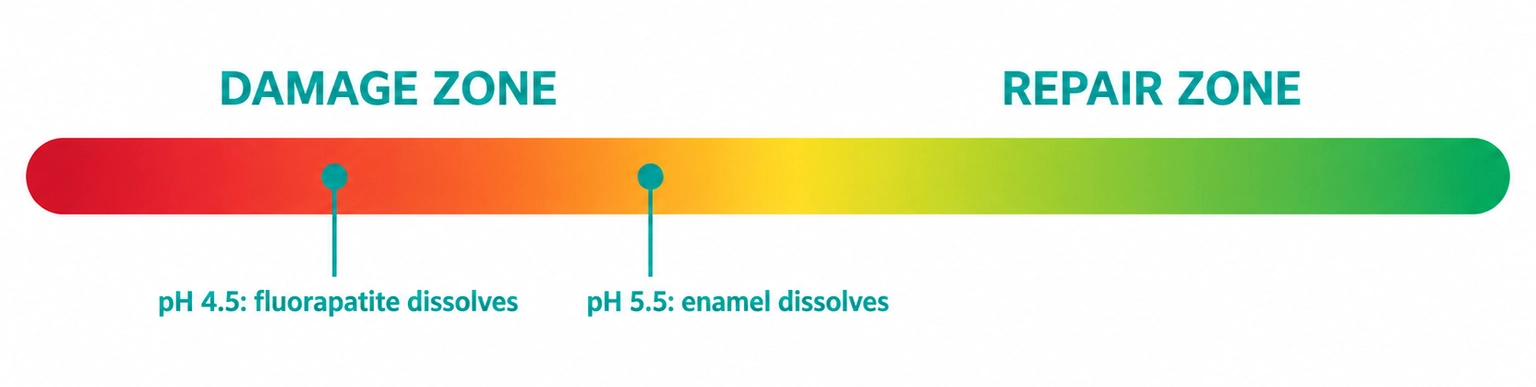
Every remineralization product has one essential requirement: the mouth must maintain a safe pH range for enamel to regenerate.
Fluoride enhances enamel by converting its natural minerals into fluorapatite, which can withstand acidic conditions down to pH 4.5. This adjustment provides approximately one additional pH point of protection, but it does not render enamel immune to acid damage.
After consuming food, bacteria can quickly lower plaque pH from a resting level of around 7.0 to nearly 5.0 within just a few minutes. Saliva requires approximately 30–40 minutes to neutralize the acids produced by plaque bacteria. Frequent snacking, dry mouth, and acid reflux can prolong the duration that enamel is under attack.
CariFree has conducted tests on the effects of pH through an independent laboratory. In a study by Intertek on pH buffering, untreated plaque pH dropped from 6.9 to 5.3 during a 20-minute sugar challenge, a level acidic enough to leach minerals from enamel.
In contrast, CariFree-treated plaque maintained a stable pH of 7.2 throughout the challenge, outperforming the control group at every phase of the test.
This illustrates why certain remineralizing products may not work in some individuals. If the environment remains too acidic, minerals cannot effectively settle. correcting oral pH is the first step.
For more information, refer to the oral pH FAQ.
Evaluating the Effectiveness of Remineralizing Toothpaste
Remineralizing toothpaste is indeed effective, with both laboratory testing and clinical trials confirming its efficacy.
In a study performed by Intertek on enamel remineralization, CariFree’s nHA gel restored 63% of lost enamel surface hardness, while the control group achieved only 38%. This results in a remarkable 67% increase in enamel recovery within the same 3-day test window.
The quicker recovery of hardness allows enamel to resist subsequent acid attacks more effectively.
Clinical evidence corroborates these laboratory findings on a larger scale. A randomized trial monitored 171 adults over 18 months, revealing that hydroxyapatite toothpaste prevented cavities at a rate comparable to fluoride toothpaste.
Nearly 90% of participants in both groups reported no new cavities. A separate study focusing on children’s teeth demonstrated that biomimetic hydroxyapatite performs similarly to fluoride.
Professor Elzbieta Paszynska, who co-led the 18-month trial, described hydroxyapatite as a safe and effective alternative to fluoride for daily use, extending previous pediatric research findings to adults.
Not all nHA products are equal; particle size, shape, and source can significantly impact results.
CariFree utilizes nanoXIM from FLUIDNOVA, a 20 nm rod-shaped nHA approved by the EU SCCS for use in oral care. CariFree’s founder, Dr. Kim Kutsch, co-authored a comprehensive paper on nanoparticle hydroxyapatite.
For an in-depth comparison of these two formulations, refer to the fluoride vs. hydroxyapatite guide.
Timeline for Tooth Remineralization
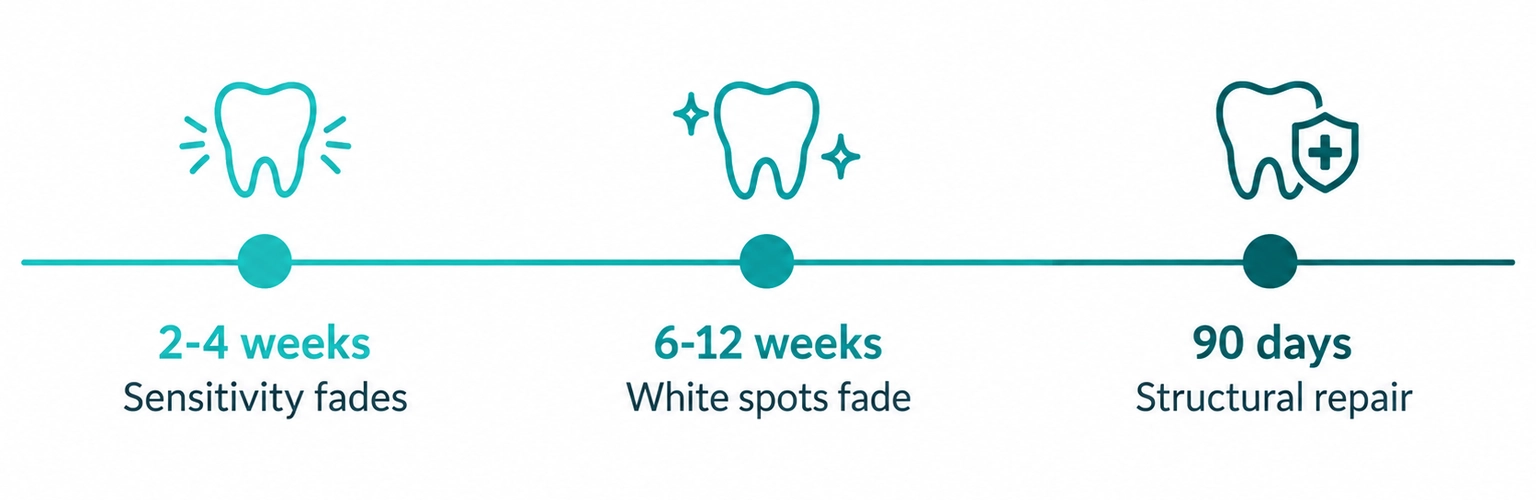
The remineralization process for teeth typically takes between 2 weeks and 3 months. Initially, sensitivity may improve within 2–4 weeks. the repair of white spots and full structural hardening may require 6–12 weeks of consistent daily care.
As new mineral layers form, exposed dentin tubules become sealed. Most individuals notice improvements within the first month.
Visible changes in white spot lesions may take longer, with improvements expected in 6–12 weeks. Moderate white spots might require 3–4 months of treatment for significant results.
Achieving full structural repair usually takes about 90 days, as mineral crystals reorganize into a dense, acid-resistant structure. A clinical study on CPP-ACP paste reported significant remineralization at both 6 and 12 weeks.
Repair compounds tend to build with continued use rather than plateauing early. Each week contributes additional mineral density to the previous results.
These timelines assume two conditions: you consistently use a remineralizing product daily and maintain your mouth’s pH above 5.5.
Missing days resets the repair cycle. If oral pH remains acidic, the remineralization process halts, regardless of the products utilized.
Safety of Tooth Remineralization
Absolutely, remineralizing teeth is a safe process. It is a natural function that your saliva performs daily without any products. Remineralization products contain two primary active ingredients: nano-hydroxyapatite and fluoride, both of which have established safety records at the concentrations used in everyday products.
Nano-hydroxyapatite boasts a strong safety profile. The EU Scientific Committee on Consumer Safety has permitted nHA in toothpaste at concentrations up to 29.5% in its 2025 final opinion. Most everyday products utilize far less than this maximum level.
Any nanoparticles ingested during regular use dissolve in stomach acid. Clinical studies indicate no adverse effects, even in children.
Fluoride is safe at typical toothpaste concentrations. The fluorosis risk primarily affects children under 6 who may swallow excessive amounts during their tooth development. The CDC advises using a pea-sized amount for ages 3–6 and supervising them to encourage spitting.
CariFree provides both options: Gel 1100 includes fluoride and nHA, while the Fluoride-Free Gel contains nHA alone.
Recognizing When to Consult a Dentist
While remineralization can reverse early mineral loss, it cannot repair decay that has penetrated through the enamel into the dentin.
Consult a dental professional if you experience persistent pain, visible cavities, or dark spots on any tooth. Early decay often does not present with pain.
The NIDCR notes that cavities detected during routine dental visits are significantly easier to treat. Dentists can apply fluoride varnish in concentrations that over-the-counter products cannot match.
Are you ready for a professional evaluation? Find a dentist near you who carries CariFree products to address decay that home dental care cannot reverse.
Begin Your Tooth Remineralization Journey with CariFree
Many remineralization products address the symptoms of enamel loss. CariFree, however, tackles the root cause. It replaces lost minerals and neutralizes the acids that deplete them.
The CariFree assessment quiz evaluates your acid risk and recommends the most suitable oral care products for your needs.
Take the Free Assessment Quiz
Frequently Asked Questions About Tooth Remineralization
Discover quick answers to common inquiries regarding methods to remineralize your teeth.
Can Fluoride Help Remineralize Teeth?
Fluoride does aid in remineralizing teeth by forming fluorapatite within weakened enamel. This compound enhances enamel’s resistance to acid and prevents future mineral loss. CariFree Gel 1100 combines fluoride with nano-hydroxyapatite to bolster your teeth and reduce cavity risks.
Does Xylitol Contribute to Tooth Remineralization?
Xylitol does not directly remineralize teeth. Instead, it reduces the acid-producing bacteria that damage enamel and promotes saliva flow. Saliva then delivers the necessary calcium and phosphate to repair early mineral loss. Xylitol is most effective when combined with active remineralizing agents such as fluoride or nano-hydroxyapatite.
Is Hydroxyapatite Effective for Remineralizing Teeth?
Hydroxyapatite does indeed play a role in remineralizing teeth. This mineral constitutes 97% of tooth enamel. Nano-hydroxyapatite (nHA) particles penetrate microscopic enamel pores and bond to the tooth surface. CariFree Fluoride-Free Gel utilizes nHA as its primary remineralizing component.
For further reading: Explore the benefits of hydroxyapatite toothpaste.
Is It Possible for Remineralization to Reverse a Cavity?
Remineralization can effectively reverse early-stage tooth decay but cannot repair an established cavity. Visible white spots and surface-level mineral loss respond well to consistent daily care, while decay that has breached enamel into the dentin requires a dental filling. Remineralization cannot regenerate lost tooth structure.
For more information: Can You Reverse a Cavity?
What Are the Signs of Tooth Remineralization Before and After Treatment?
The process of tooth remineralization is gradual rather than dramatic. Weakened enamel may initially show signs such as white spots, dull edges, or sensitivity. With weeks of consistent care, these white spots may fade, and sensitivity can lessen as the surface re-hardens. This process only reverses early damage. Full cavities and lost tooth structure require professional dental intervention.
Can Teeth Remineralize Overnight?
Teeth can remineralize overnight, but saliva production decreases during sleep. Less saliva means fewer minerals reach the enamel, and acid persists longer. Applying a remineralizing gel before bedtime can help mitigate this issue by preventing acid from dissolving enamel while you sleep.
This article is intended for general informational purposes and should not be considered a substitute for professional dental advice. Consult your dentist for diagnosis and treatment tailored to your specific situation.