


[ad_1]
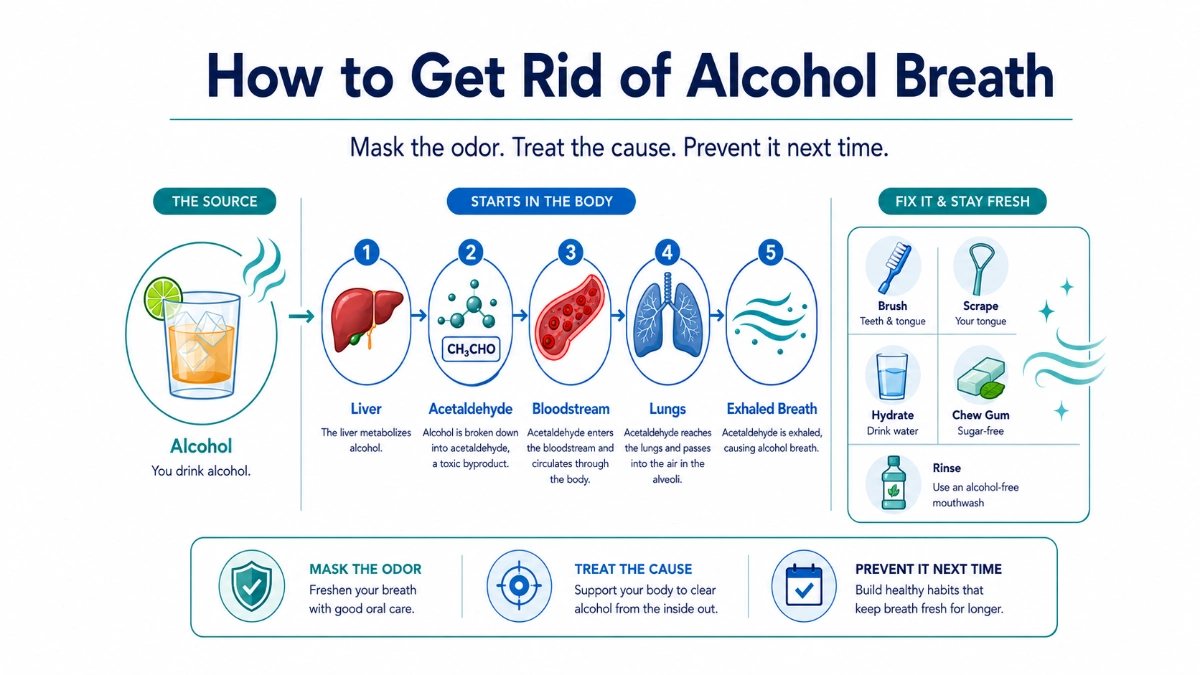
Alcohol breath originates not in your mouth, but in your liver, which metabolizes alcohol into acetaldehyde. This compound is then expelled through your lungs with every breath you take.
While brushing your teeth may eliminate surface residue, it cannot address the odor released from your lungs. Several oral health issues contribute to the persistence of this smell, including dry mouth, bacterial imbalances, and pH imbalances that continuously feed the odor.
Temporary solutions may only mask the smell of alcohol for a short period. Addressing the underlying causes is essential to prevent the smell from returning.
This guide will explore effective masking techniques, the scientific explanation behind alcohol breath, and a comprehensive plan to achieve fresher breath.
Key Takeaways on Eliminating Alcohol Breath
Here are five essential points for quickly eliminating alcohol breath effectively and permanently.
- Hydration, chewing gum, and mints can temporarily mask alcohol breath but do not eliminate it.
- The odor of alcohol breath primarily comes from acetaldehyde in your lungs, not from your mouth.
- Alcohol breath can linger for 12–24 hours, depending on your consumption levels.
- Dry mouth, shifts in your oral microbiome, and pH imbalances contribute to the persistent smell.
- Implementing a three-step approach (mask, treat, prevent) is more effective than relying on a single solution.
Effective Remedies to Quickly Reduce Alcohol Breath
The following five remedies can significantly diminish alcohol breath within minutes. These solutions target the surface odor rather than the root cause. Keep in mind that no single tip can completely eliminate alcohol from your breath.
Stay Hydrated with Water
Drinking water helps rinse away alcohol residues from your mouth and throat. Since alcohol acts as a diuretic, it dehydrates your body, leading to a dry mouth.
Approximately 20 minutes after your first drink, you may notice increased urine output and decreased saliva production. While hydration won’t eliminate the odor from your lungs, it can alleviate the dry mouth that exacerbates breath issues by morning.
To combat dehydration, sip water between drinks and consume a full glass the next morning to stimulate saliva production.
Opt for Sugar-Free Gum
Chewing gum stimulates saliva production, which serves as your mouth’s natural cleanser. Increased saliva helps wash away bacteria and neutralize the acids responsible for the unpleasant smell. A more saliva-rich environment leads to a cleaner and less acidic mouth.
Choose a sugar-free gum containing xylitol. Research published in Frontiers in Nutrition indicates that xylitol effectively reduces Streptococcus mutans, a major acid-producing bacterium, by inhibiting its ability to ferment sugars into acid.
On the other hand, sugary gum feeds these bacteria and exacerbates the problem.
Thoroughly Brush Your Teeth and Tongue
To reduce odor, start by brushing your teeth to remove food particles and surface bacteria. Don’t forget to scrape your tongue, which harbors a dense layer of bacteria that contributes significantly to bad breath.
A Cochrane review revealed that tongue scraping can decrease volatile sulfur compounds by 40–42%, compared to 33% for brushing alone. One study even reported a remarkable 75% reduction using a scraper. Tongue scrapers effectively remove what toothbrushes often miss.
Morning is the optimal time to perform this routine since bacteria accumulate overnight.
Choose Alcohol-Free Mouthwash
After consuming alcohol, it’s best to avoid alcohol-based mouthwashes. These products can strip moisture from the soft tissues in your mouth, exacerbating the dry mouth already caused by alcohol consumption.
According to a study published in the Australian Dental Journal, alcohol-based mouthwash can dry out and irritate oral tissues. In contrast, alcohol-free rinses clean effectively without causing a rebound effect.
Choosing the right mouthwash becomes especially crucial the morning after a night of drinking.
After a night out, your mouth may already be low on saliva. CariFree Maintenance Rinse is alcohol-free and utilizes pH+ technology to restore balance while refreshing your breath.
Incorporate Strong-Flavored Foods
Foods like peanut butter, parsley, and coffee beans contain potent aromatic oils that can temporarily mask the scent of acetaldehyde.
Peanut butter is often highlighted for this benefit due to its thick, oily consistency, which coats the mouth and throat. this effect typically dissipates within about 20 minutes.
While these foods can mask the smell of alcohol, they do not address the underlying cause. Do not fall for the myth that peanut butter can fool a breathalyzer, as these devices detect alcohol, not odor.
What Causes Alcohol to Make Your Breath Smell?
Alcohol breath originates in your lungs rather than your mouth. The smell arises because your liver converts alcohol into acetaldehyde, which is then exhaled with each breath.
Acetaldehyde has a sharp, sweet chemical scent, with minimal contribution from your mouth.
Brushing your teeth can clear surface debris but cannot prevent what is expelled from your lungs. Alcohol breath is a unique form of halitosis that begins internally, distinguishing it from everyday bad breath caused by oral bacteria.
Your body metabolizes alcohol at a gradual pace. The more alcohol you consume, the more acetaldehyde is produced. A larger quantity results in a more potent and longer-lasting odor.
Genetics also play a role in why some individuals emit a stronger smell than others after consuming the same alcoholic beverages. Those with an ALDH2 gene variant metabolize acetaldehyde more slowly, leading to a more noticeable odor.
What is the Duration of Alcohol Breath?
Alcohol can linger on your breath for 12–24 hours after your last drink. Your body typically metabolizes about one standard drink per hour. Drinking heavily can push the smell closer to the upper end of this range.
For light drinking—one or two drinks—the smell may dissipate in 6–12 hours. consuming six or more drinks can result in detectable alcohol breath lasting beyond 24 hours. This timeline varies and is not a strict measure.
Various factors can extend or shorten this duration. Body weight, the quantity of alcohol consumed, and the type of alcoholic beverage can all influence this timeline. Consuming food and water throughout the night can help reduce it.
Eating before drinking can lower your peak blood alcohol level. A light meal can reduce that peak by approximately 28%, while a heavier meal can decrease it by around 65%. Consuming less alcohol means the smell fades more quickly.
Alcohol odor may persist even after you feel sober. Be mindful of this timeline when planning for morning commitments. A late night of heavy drinking can still be detectable by breakfast.
Why is Alcohol Breath Difficult to Eliminate?
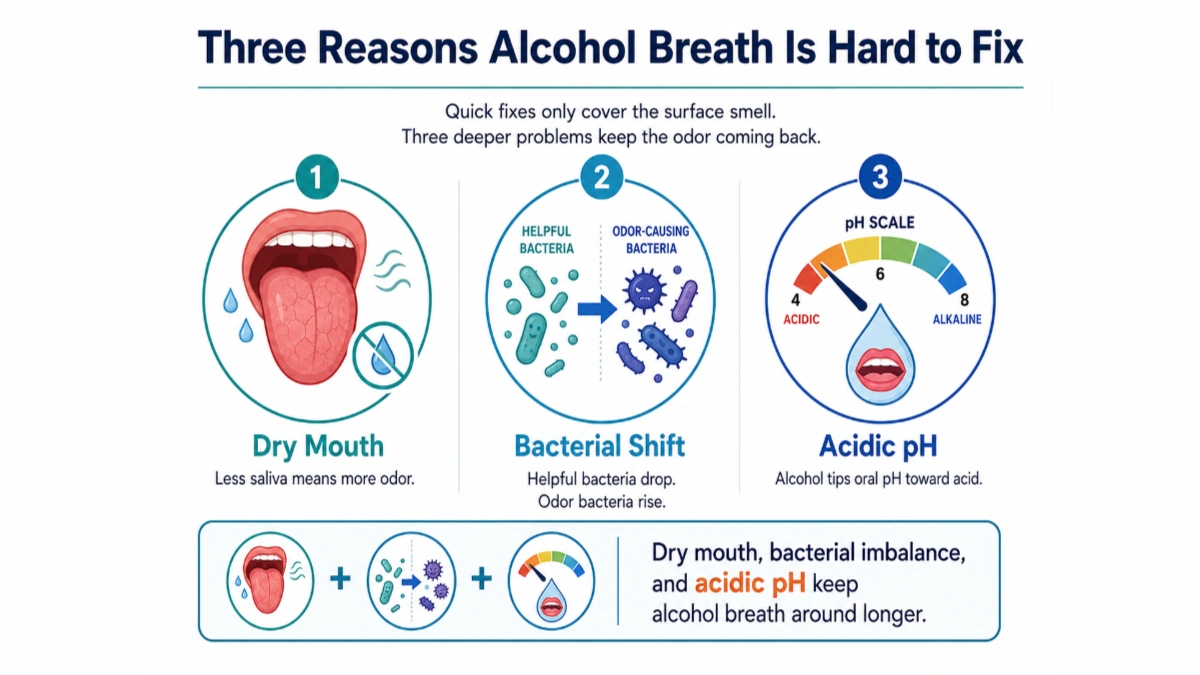
Quick fixes tend to wear off because they merely mask the surface odor. Three underlying issues perpetuate the smell.
Alcohol causes dryness in your mouth, disrupts your oral bacteria, and shifts your mouth’s pH toward acidity. These effects can keep the unpleasant odor present long after you’ve finished drinking.
The Impact of Dry Mouth and Reduced Saliva
Alcohol inhibits the release of antidiuretic hormone (ADH), which normally signals your kidneys to retain water. Without this hormone, your body flushes out fluids more rapidly, leading to a dry mouth.
A lack of saliva eliminates your primary defense against bad odors. Saliva acts as a rinse that washes away bacteria and neutralizes acids.
When saliva levels drop, odor-causing bacteria thrive, breaking down proteins into volatile sulfur compounds (VSCs), which contribute to the unpleasant smell.
A study published in Scientific Reports identified the threshold for bad breath at 65.79 ppb for women and 79.94 ppb for men. Notably, 90.6% of individuals with bad breath also exhibited signs of gum disease.
This same dryness reinforces the connection between alcohol and bad breath.
Disruption of the Oral Microbiome
Alcohol disrupts the balance of bacteria in your mouth. A study in Frontiers in Cellular and Infection Microbiology demonstrated that alcohol exposure nearly doubled oral microbial diversity.
While increased diversity may seem beneficial, in this context, it is not. The rise in diversity is attributed to pathogenic species overtaking a once-stable oral environment.
Beneficial bacteria such as Haemophilus and Streptococcus decline, while harmful groups like Romboutsia and Bacteroidota flourish. The Shannon diversity score leaped from 2.319 to 3.908.
Alcohol-induced suppression of neutrophils, the immune cells responsible for managing harmful bacteria, leads to an increase in odor-producing microbes.
This new bacterial composition generates more volatile sulfur compounds, explaining why masking techniques are ineffective. A rinse that promotes a healthy oral environment addresses this root cause.
The connection between alcohol and bad breath extends beyond the lungs alone, reaching into the microbial community of your mouth.
Understanding pH Imbalances in Your Mouth
Alcohol shifts your oral pH toward acidity. A healthy resting mouth typically maintains a pH around 6.7–7.4. Reduced saliva and acidic beverages can lower this pH level.
Anaerobic bacteria thrive in an acidic, low-oxygen environment, producing sulfur gas. The more acidic your mouth becomes, the higher their production levels.
Restoring a neutral pH can starve the bacteria responsible for the odor. Correcting pH levels addresses the cause rather than just the symptom. CariFree’s pH+ technology helps restore a balanced mouth, diminishing the odor.
Acidity can also contribute to dental issues that worsen bad breath. When pH drops below 5.5, enamel begins to lose minerals. Maintaining a balanced mouth protects both breath and dental health.
Comprehensive Strategies to Eliminate Alcohol Breath Permanently
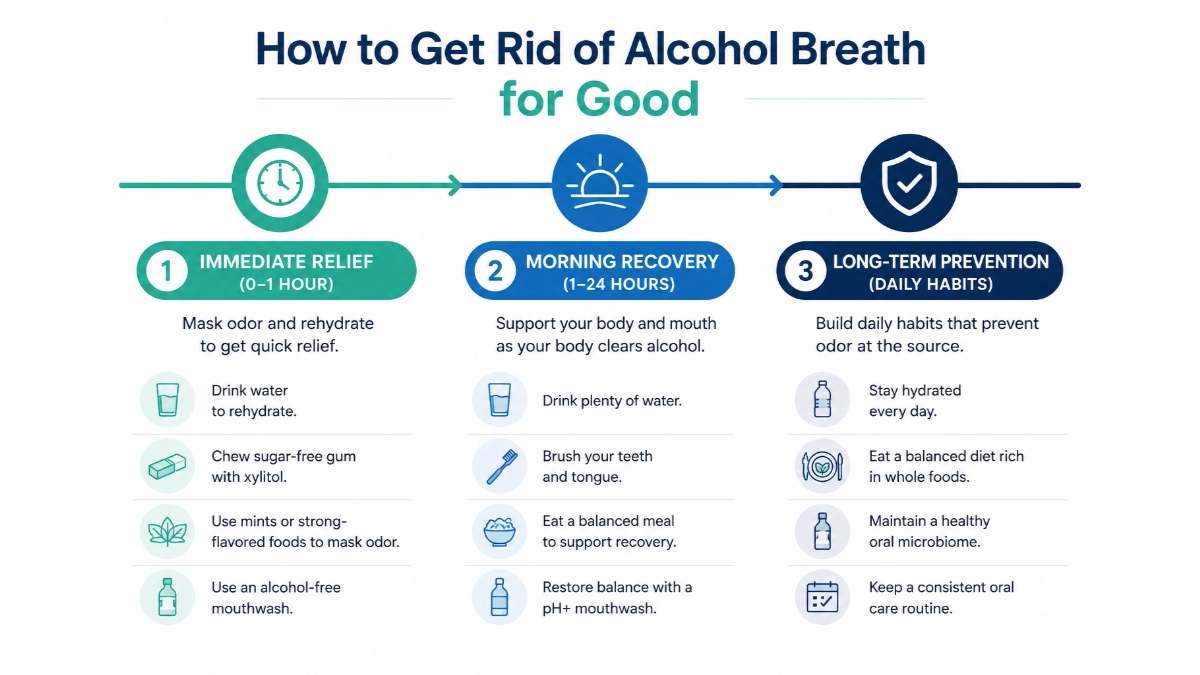
Eliminating alcohol breath requires a multi-faceted approach since the odor has several sources. The most effective strategy consists of three stages.
First, mask the immediate odor. Second, address the underlying causes of bad breath. implement preventive measures for the future.
Achieving Immediate Relief
Start your prevention efforts during the event rather than waiting until the next morning. Drink water between each alcoholic beverage to combat dry mouth. Chew xylitol gum and carry CariFree Breath Mints to support saliva production and maintain pH balance.
Eating before and while drinking is also crucial. Consuming food slows absorption of alcohol into the bloodstream and reduces the quantity of acetaldehyde produced.
This practice is particularly beneficial for combating morning breath. A smaller acetaldehyde load tonight means a milder odor the next day.
Recovery Strategies for the Morning After
Begin with a thorough oral care routine upon waking. Brush your teeth and scrape your tongue to eliminate the bacterial film accumulated overnight. Tongue scraping is especially important in this process.
Why is it important? It effectively removes bacteria that have built up during the night when saliva production has slowed. Follow up with an alcohol-free mouthwash like CariFree Maintenance Rinse, which targets dry mouth and maintains pH balance simultaneously.
Drink a full glass of water as your first action after waking. Then, have breakfast to stimulate saliva production and support your liver. Food provides essential nutrients for your body to metabolize any remaining acetaldehyde.
Avoid using coffee as a remedy, as it can exacerbate dryness. For further relief, consider additional tips for alleviating dry mouth.
Strategies for Long-Term Prevention
Alcohol breath can be more pronounced when your mouth is already in poor condition. A dry, acidic environment sets the stage for bacteria to thrive each time you drink. To prevent alcohol breath long-term, develop a daily routine that stabilizes your pH levels.
Prioritize alcohol-free oral care as your default, even when you are not consuming alcohol. Alternate each alcoholic drink with water during social events to encourage saliva production. Healthy saliva and a balanced pH reduce the disruptive effects of alcohol on your mouth.
Keep a travel-sized rinse available for nights spent away from home. While prevention may not completely eliminate lung odors, it will significantly shorten the duration of the smell.
Revitalize Your Breath with CariFree
Dr. Kim Kutsch has over 40 years of dental experience and founded CariFree. This alcohol-free product line helps avoid further drying of the mouth. Its pH+ formula restores an acidic environment while supporting beneficial bacteria that alcohol may deplete.
Start with the Maintenance Rinse for daily use and morning-after care. Pair it with Breath Mints for convenient fresh breath on the go.
Explore CariFree’s product range to find the perfect fit for your personal oral care routine.
Shop CariFree
Frequently Asked Questions About Alcohol and Bad Breath Remedies
Here are concise answers to common inquiries about alcohol consumption and methods to prevent alcohol breath.
Is Vodka Detectable on Someone’s Breath?
Yes, vodka can be detected on someone’s breath. Although vodka has a milder scent compared to beer or wine due to the distillation process that removes aromatic compounds called congeners, the ethanol still emits a subtle odor when close.
Can Coffee Help Diminish Alcohol Breath?
Coffee may temporarily mask alcohol breath with its strong aroma, but this effect is short-lived. As a diuretic, coffee can contribute to dry mouth, making water a better option for clearing the smell.
Can Alcohol Eliminate Bad Breath?
No, alcohol does not eliminate bad breath. While alcohol-based mouthwash kills some surface bacteria, it dries out your mouth and accelerates their return. In contrast, an alcohol-free rinse cleans effectively without creating that rebound effect.
What Steps Can You Take to Eliminate Alcohol Breath the Next Morning?
To eliminate alcohol breath the next morning, follow a complete oral care routine. Tongue scraping is particularly effective in removing the bacterial film that accumulates overnight. Rinse with an alcohol-free mouthwash, drink water, and have breakfast to support recovery.
Can Regular Alcohol Consumption Lead to Long-Term Bad Breath?
Yes, habitual drinking can result in long-term bad breath. Alcohol disrupts the oral microbiome and causes dryness over time. Incorporating daily alcohol-free, pH-balanced care can mitigate both the damage and the odor.
