


Let’s be honest—hyaluronic acid is everywhere in the world of skincare. You can find it in serums, creams, masks, and a variety of other products. It’s often touted as the ultimate solution for dry, dull skin, claiming to deliver that coveted plump and glowy appearance we all desire. However, there has been increasing debate recently regarding whether it truly lives up to its hype and claims.
With discussions surrounding terms like “molecular size” and “skin penetration,” it can quickly become overwhelming. To clarify this topic, we’ve decided to delve deeper. In this article, we will thoroughly analyze the true benefits of hyaluronic acid, separating fact from fiction, and provide you with actionable tips on how to effectively incorporate it into your skincare routine.
Understanding Hyaluronic Acid: Its Functions and Benefits
Hyaluronic acid, commonly referred to as HA, may sound complex, but it is, in fact, a substance that your body produces naturally. This clear, gel-like compound is predominantly present in your skin, eyes, and joints, where it plays a crucial role in maintaining hydration and cushioning. Think of hyaluronic acid as your body’s natural moisture magnet, working tirelessly to keep your tissues adequately hydrated.
In the realm of skincare, hyaluronic acid functions as a humectant, which means it attracts water to the skin and retains it effectively. This quality makes it a popular choice for enhancing hydration and achieving that fresh, plump appearance. It is no surprise that you will find it in a multitude of moisturizers, serums, and hydrating treatments, as it contributes significantly to making your skin feel soft, smooth, and resilient.
Understanding Molecular Size: How It Affects Skin Penetration
Not all hyaluronic acid is created equal—its molecules vary in size, which significantly influences their effectiveness on your skin.
High molecular weight HA typically remains on the skin’s surface, providing immediate smoothing and hydration benefits to the outer layer.
Low molecular weight HA, on the other hand, has the ability to penetrate more deeply, delivering longer-lasting moisture to the skin.
Nano HA represents the smallest form and is engineered to penetrate even further, although its efficacy and safety are still under ongoing research.
Our skin serves as a natural barrier, meaning only specific ingredients, particularly smaller molecules, can effectively penetrate. Some experts argue that low molecular weight HA is more effective for long-term hydration, while high molecular weight HA tends to offer quick, surface-level benefits. However, very small molecules like nano HA may not be suitable for everyone, particularly those with sensitive skin, as they can sometimes be overly stimulating.
To maximize hydration, many skincare brands now formulate products that combine various molecular weights. Thus, seeking out products labeled as “multi-weight HA” can be a wise choice for achieving optimal results.

Surface Hydration vs. Deep Hydration: What You Need to Know
When discussing hyaluronic acid, it’s easy to misconceive that a plump, dewy complexion indicates deep hydration; however, this is often misleading.
Hyaluronic acid primarily hydrates the uppermost layers of the skin, which contributes to that fresh, plump appearance. Yet, surface-level hydration does not guarantee that moisture is penetrating the deeper layers.
To optimize its effectiveness, hyaluronic acid should ideally be applied to damp skin and followed by a moisturizer. This technique helps seal in the moisture, preventing it from inadvertently drawing water out of your skin.
While an instantly dewy appearance is wonderful, true and lasting hydration depends on how you layer your products and whether your hyaluronic acid can effectively reach beneath the surface.
Research-Backed Benefits of Hyaluronic Acid for Skin Health
The benefits of hyaluronic acid are not merely marketing hype; there is substantial research supporting its skin-enhancing claims. Studies indicate that it effectively increases skin hydration and enhances elasticity, particularly with consistent use. Many users report a noticeable temporary reduction in fine lines and rough texture, primarily due to the plumping effect it imparts to the skin’s surface.
Additionally, when applied correctly, hyaluronic acid can enhance the skin’s ability to absorb other active ingredients, functioning similarly to a hydration primer. It is crucial to follow up with a quality moisturizer to ensure that these benefits are locked in.
Strategies to Optimize the Hydration Benefits of Hyaluronic Acid in Your Skincare Routine
Utilizing hyaluronic acid effectively can significantly enhance your skincare results. Always apply it to damp skin—right after cleansing or misting—to provide the water it needs to pull into the skin. Following up with a moisturizer is essential to lock in the hydration, particularly one that contains emollients or occlusives such as squalane, glycerin, or ceramides.
Applying HA on dry skin without sealing it can lead to adverse effects. In arid environments, it may draw moisture from deeper skin layers—a process referred to as reverse osmosis—potentially leaving your skin drier than before.
For optimal outcomes, consider pairing hyaluronic acid with other hydrating ingredients, and always finish your routine with a barrier-sealing moisturizer to maintain that radiant glow.
Debunking Common Myths About Hyaluronic Acid
Despite the widespread acclaim surrounding hyaluronic acid, confusion persists. Let’s dispel some prevalent myths:
Myth 1: All hyaluronic acids penetrate deeply into the skin.
This is a misconception. The majority of HA molecules are too large to penetrate beyond the surface. Only smaller variants, such as low molecular or nano HA, have the potential for deeper absorption, and even then, their effectiveness is limited by the skin’s inherent barrier.
Myth 2: More HA means more hydration.
Not necessarily. Excessively high concentrations can sometimes result in a sticky texture or even draw moisture away if not used properly. It is more important how you incorporate hyaluronic acid into your routine than simply the quantity present in the formula.
Myth 3: Overusing HA is impossible.
That is not accurate. Overusing hyaluronic acid—particularly in dry conditions or without proper sealing—can lead to tightness, irritation, or increased dryness over time. Like most skincare ingredients, achieving balance and practicing proper layering techniques is essential.
Optimal Timing and Skin Types for Effective Use of Hyaluronic Acid
Hyaluronic acid is a versatile ingredient that is suitable for nearly everyone, but certain skin types and conditions can benefit even more from its application.
It is particularly advantageous for those with dry, dehydrated, sensitive, or aging skin, thanks to its remarkable ability to soothe and bind moisture. It is also an excellent option after exfoliation or sun exposure, when your skin requires additional hydration and support for repair.
You can incorporate hyaluronic acid into your routine year-round, but it is wise to adjust your approach slightly. During colder, drier months, opt for richer formulas and consistently layer them with an effective moisturizer to prevent moisture loss. In warmer seasons, a lightweight serum may suffice.
Explore 100% PURE’s Hyaluronic Acid-Infused Skincare Collection
If you’re eager to experience the benefits of hyaluronic acid but prefer clean, plant-based options, 100% PURE offers some excellent selections. Their formulations combine HA with natural actives that hydrate, soothe, and promote skin health, free from synthetic chemicals or harsh additives. Here are a few standout products:
Rose Hyaluronic Acid Serum– A gentle, daily hydrator enriched with rose hydrosol, calendula, and chamomile, perfect for sensitive or easily irritated skin.
Restorative Sea Culture Replenishing Serum– Formulated with nutrient-rich seaweed and hyaluronic acid to firm, hydrate, and revitalize dull, tired skin.
Watermelon Cucumber Water Locking Serum– A lightweight yet effective serum that blends HA with watermelon, cucumber, and aloe for a refreshing, antioxidant-rich boost.
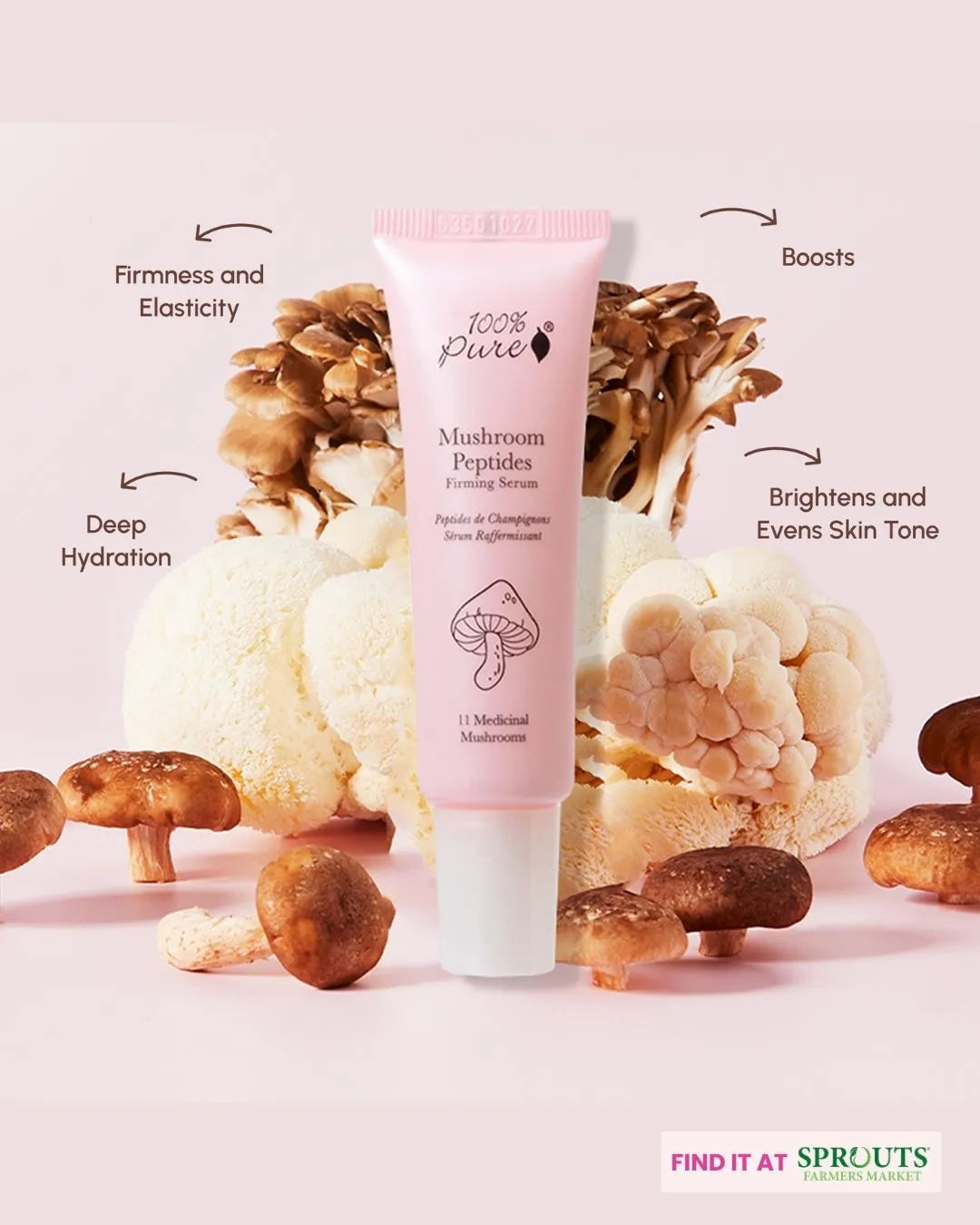
Mushroom Peptide Moisturizer– Infused with 11 types of adaptogenic mushrooms, peptides, and HA for deep hydration while calming stressed or aging skin.
Wrinkle Smooth Sheet Mask– A weekly treatment mask soaked in HA, vitamin C, and CoQ10 for deep hydration, brightening, and smoothing fine lines.
Unlock the Full Potential of Hyaluronic Acid for Your Skin
Hyaluronic acid is not just a passing trend—it provides genuine hydration when utilized correctly. While its primary action occurs on the skin’s surface, the visible results are both impressive and supported by scientific research. With the right formulation and routine, hyaluronic acid can serve as an effective and straightforward enhancement to your skin’s moisture levels.
Frequently Asked Questions About Hyaluronic Acid
What is hyaluronic acid and how does it work?
Hyaluronic acid is a naturally occurring substance within the body that plays a vital role in moisture retention. In skincare, it acts like a sponge, drawing water into the skin to maintain hydration, plumpness, and smoothness.
Is low molecular weight HA superior to high molecular weight HA?
Not necessarily better—just different. High molecular weight HA primarily hydrates the surface, while low molecular weight (and nano) HA can penetrate slightly deeper layers. The most effective products often utilize a blend of both for comprehensive hydration.
Can I use HA serum on a daily basis?
Yes! Hyaluronic acid is gentle enough for daily application, even twice a day. Just remember to apply it onto damp skin and follow up with a moisturizer to lock in hydration effectively.
Does HA contribute to reducing wrinkles?
Yes, but predominantly by plumping the skin and enhancing moisture levels, which helps make fine lines appear softer. While it does not eliminate wrinkles, it can minimize their visibility and improve overall skin texture.
Should HA be applied before or after moisturizer?
Apply hyaluronic acid before your moisturizer. It should be applied to clean, damp skin to facilitate moisture absorption, followed by a cream or oil to prevent evaporation.
