


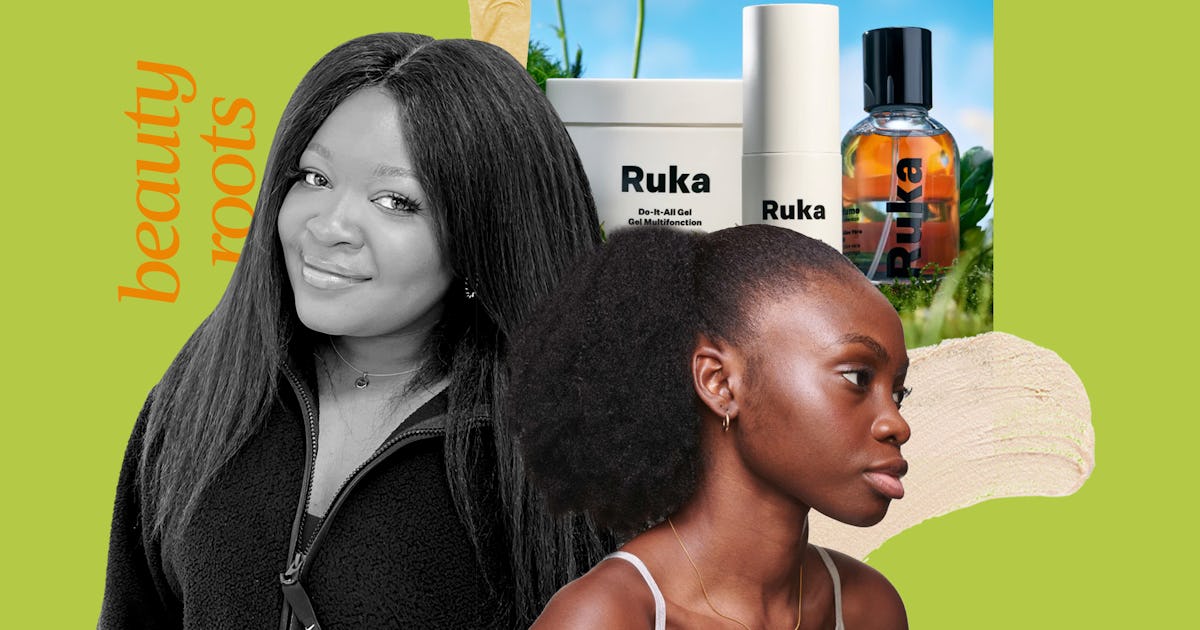
In Beauty Roots, Bustle chats with diverse creators in the beauty industry about how their heritage has influenced their businesses and routines. Here, Ruka Hair founder Tendai Moyo explains how her African ancestry influenced her hair journey and the direction of the game-changing brand.
Like any beauty lover, Ruka Hair founder Tendai Moyo clearly remembers one of her earliest beauty buys: a dusty eyeshadow palette. And while she would quickly come to learn that the eyeshadow didn’t suit her complexion, it was still a deeply important purchase. It represented the starting point for Moyo learning about the tones and texture that complimented her skin tone. The same thing happened when Moyo began exploring skincare. She had fun experimenting with all different formulas until she found the one that suited her best.
However, when it came to haircare, the journey was a far less joyous. Finding the product that would bring out the best of her afro-textured hair was a painful process, leading to all sorts of mistakes and mistakes. When Moyo was small, her mother would look after hair, tending to her tight coils in the living room of her South London home. As she grew older, however, Moyo had to figure out a routine of her own.
“I loved the closeness and comfort of my mother’s touch as she performed the ritual of gently brushing and braiding my hair,” Moyo tells me. “But as I got older and started exploring chemical treatments to make my hair more manageable, there were disasters .” The struggles she had with hair damage while at university influenced her decision to embrace her natural texture.
The dearth of high-quality products, expertise, and representation within mainstream led Moyo – like many women with afro-textured hair – to YouTube, where members of the natural hair community were sharing styling methods, ingredients, and inspiring images.
However, soon Moyo faced another problem: she found it difficult to buy extensions that matched the texture of her natural strands, meaning there were limitations when it came to replicating the length and volume of the styles she wanted to create. frustration, she decided to take matters into her own hands. In 2021, she shifted from a career as a strategy consultant and launched her game-changing ethical extension brand Ruka Hair.
“With Ruka, I wanted to bring the joy back to Black women as they explore their hair, from the very start,” Moyo says. Below, she explains more about her aspirations for the brand, including her hope that it will inspire future generations to cherish their curls and coils.
What are some of your earliest memories when it comes to looking after your hair?
My earliest experiences of getting my hair done professionally were quite traumatic. My mum would take me to hairdressers, who struggled with my long, thick, tightly coiled hair, which they would yank into submission. It made me cry and plead for them to stop hurting me. Or they would simple refuse to touch it because they didn’t know what to do with it. It was the same situation whether it was London, Wiltshire, or visiting Nigeria. So, naturally, it wasn’t something to look forward to. I only felt relaxed when my family members were caring for my hair and the comfort, trust and safety surrounding those moments was what I wanted to bring to the Ruka experience.
How did your own haircare journey inspire you to launch Ruka Hair?
When I was younger, I thought that texturising my hair would mean less hassle and more options, but it forced me to learn and understand my hair like never before as I dealt with breakdown, scalp dryness, and thinning. It’s sad that, during those years, there just wasn’t access to the expertise and support that my friends from different cultures had when it came to haircare. And it was the same situation throughout university and whilst working in the corporate world. My colleague’s experience of going to salons and getting hair extensions was so simple and seamless, whilst finding high-quality extensions to match my textured hair was a challenging experience, which wasted a lot of time and money on products that didn’t deliver. It was those frustrations which lead me to take matters into my own hands and take Ruka from an idea to a business.
How did you come up with the name Ruka?
‘Ruka’ comes from Shona, one of the main languages spoken in Zimbabwe. It means “to do hair” or “to braid, thread and weave.” Much of African identity has its roots in expressing yourself through hair styling and it’s definitely something that I experienced throughout my childhood as my mother plaited my hair into single plaits, cornrows, and twists. These traditional looks and techniques continue to be passed down through generations and, alongside the intimacy of braiding, influence everything from our brand through name, Our mission to keep the spirit and joy of Black hair alive, and down to the formula of Ruka Hair Perfume, which refreshes and moisturizes extensions.
What impact did discovering the natural hair movement have on your confidence and how did it influence the concept behind your brand?
YouTube has always been a great source of knowledge and inspiration, particularly whilst embracing my natural hair texture. However, even then, there was still pressure when it came to my 4C hair, which wasn’t as celebrated, and the debate about whether you could explore texturing treatments and hair extensions whilst being ‘natural’ felt conflicting and distracting. Black women should be allowed to express themselves through their hair anyway they want and Ruka was designed to give them the resources to do that. , which have always been a part of African culture, with yarn and wool traditionally used within styling. However, because the hair extension industry has reflected Western beauty ideals for so long, it created this idea that, if you wear extensions, you don’ t love yourself, which isn’t the case for our customers, who love switching styles while also protecting their hair through our products.
Ruka was launched thanks to investment from high-profile angel investors. How did the idea of your latest round of crowdfunding come about?
Despite their spending power, our customers have been locked out of conversations about what they want and need from haircare products but, at Ruka, we’re on a mission to treat outsiders as insiders. With the Ruka Cocreator Crowdfund, we want to create a community of consumers whose seat at the table means they’re able to share their thoughts and hold us accountable. It also means Ruka can move towards ownership of the whole manufacturing process which, within a sadly unregulated industry, means we’re able to maintain standards of safety, quality, and compliance, which are less likely to be a concern when less well-intentioned brands don’t have proximity to the consumers using their products everyday.
After a series of successful pop-ups, Ruka recently launched at Selfridges. Why is it so important for the brand to have this kind of physical presence?
Black women have been overlooked within the haircare industry for so many years, with purchasing hair extensions pushed into back alleys despite the expense and vulnerability surrounding the experience. It makes me proud to see Ruka alongside brands such as Estée Lauder and witness at cus’ seeing themselves represented so intentionally within such a prestigious, high-profile setting. They also love getting advice from our sales consultants and trichologists without feeling judged and dismissed, something that hasn’t always been the case when shopping for extensions.
