


You’ve likely encountered the buzz around double cleansing, and it’s easy to assume it merely means washing your face twice consecutively. While this skincare technique has gained considerable traction, many still find it challenging to grasp the logic behind this ‘extra step’ in their routine.
So, what exactly does double cleansing entail? In essence, it requires you to wash your face with two distinct cleansers. But is this dual-cleansing approach truly beneficial?
Join us as we delve into the double cleansing method, identify which skin types stand to gain the most, and explore the best natural cleansers to incorporate into your routine. Are you ready to embrace the double cleanse?
Understanding the Concept of Double Cleansing
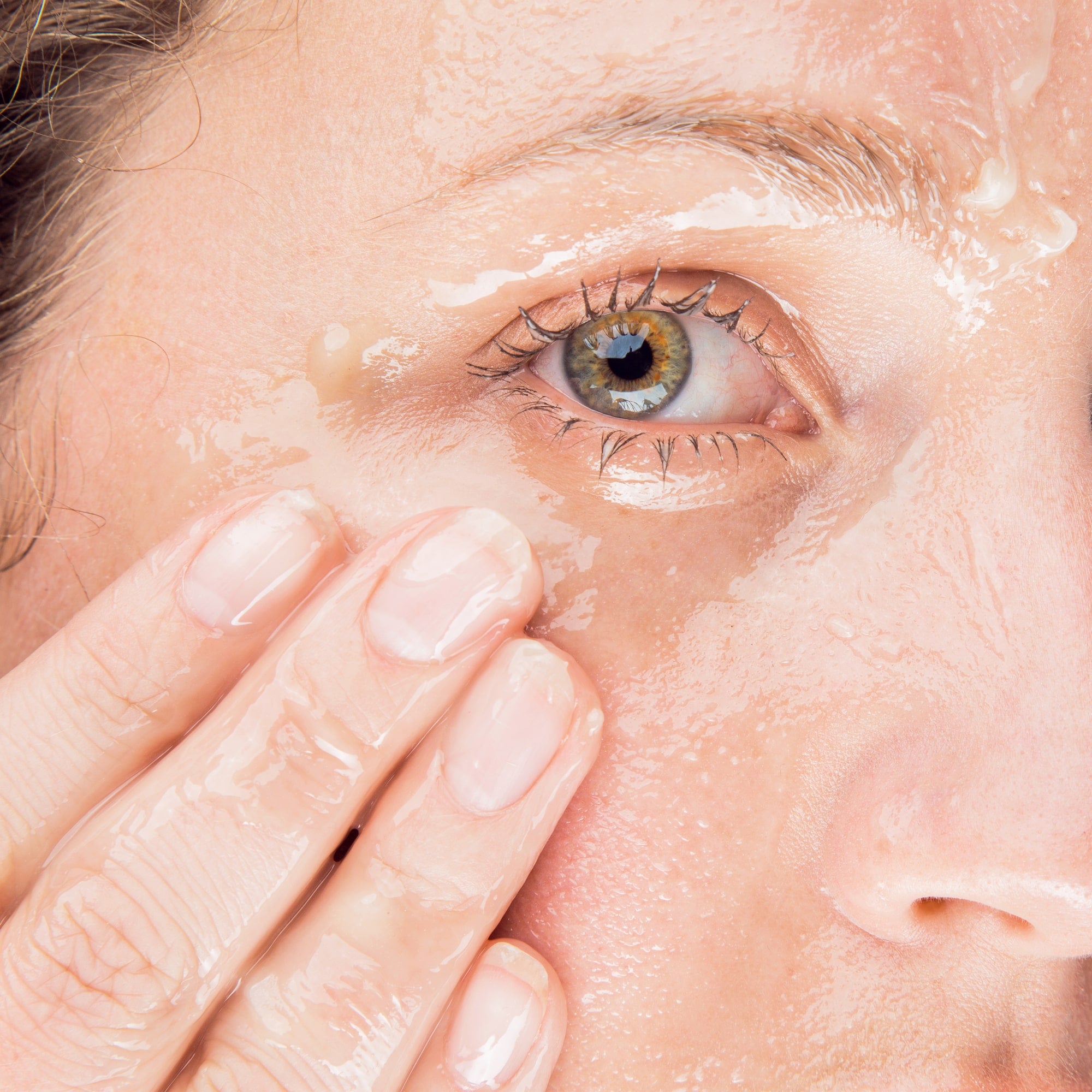
At first glance, washing your face might seem like a straightforward task. Therefore, the idea behind double cleansing could lead one to think that it involves simply cleansing your face two times in succession. While that notion holds some truth, it’s crucial to understand that double cleansing is not about leaving your skin feeling tight and uncomfortable.
In reality, double cleansing means using two types of natural cleansers: an oil-based cleanser, like a cleansing oil or balm, followed by a water-based cleanser. This practice originated from Korean skincare routines and has gained immense popularity, with many enthusiasts claiming it can transform your skin. It’s a method we wholeheartedly support!
Evaluating the Effectiveness of Double Cleansing
If you’re new to the concept of double cleansing, you might be using your typical facial cleanser to perform dual duties: cleansing your skin and catering to your specific skin type. But does this process of using an oil cleanser followed by a water-based cleanser truly enhance the effectiveness of your skincare routine? Absolutely!
The rationale behind double cleansing lies in its ability to thoroughly eliminate impurities from your skin. The first step, utilizing an oil-based cleanser, effectively attracts and removes oil-based impurities such as residual makeup, sunscreen, and environmental pollutants. The subsequent step, using a water-based cleanser, ensures the removal of any remaining sweat and dirt.
Consider this: neglecting to cleanse your skin properly can lead to a buildup of grime, which can clog pores and result in enlarged pores and a dull complexion. The double cleansing method acts like a magnet to draw out impurities, ultimately rejuvenating your skin over time.
Step-by-Step Guide to Mastering Double Cleansing
Before diving into the steps of double cleansing, let’s be honest for a moment. It’s entirely understandable that sometimes mustering the energy to wash your face feels like a daunting task. Whether you’re exhausted, just waking up, or simply lacking motivation, convincing yourself to wash your face twice can seem overwhelming!
But fear not! Embracing double cleansing can lead to skin that feels revitalized and balanced. Yes, you read that right! Double cleansing not only removes impurities but also helps to restore your skin’s natural equilibrium. The secret lies in tailoring your double cleansing routine to match your specific skin type, which we will elaborate on shortly!
Stay Updated – Subscribe to Our Newsletter
for more insightful blog content and exclusive discounts
Let’s explore how to achieve happy, healthy skin through double cleansing, regardless of your skin type:
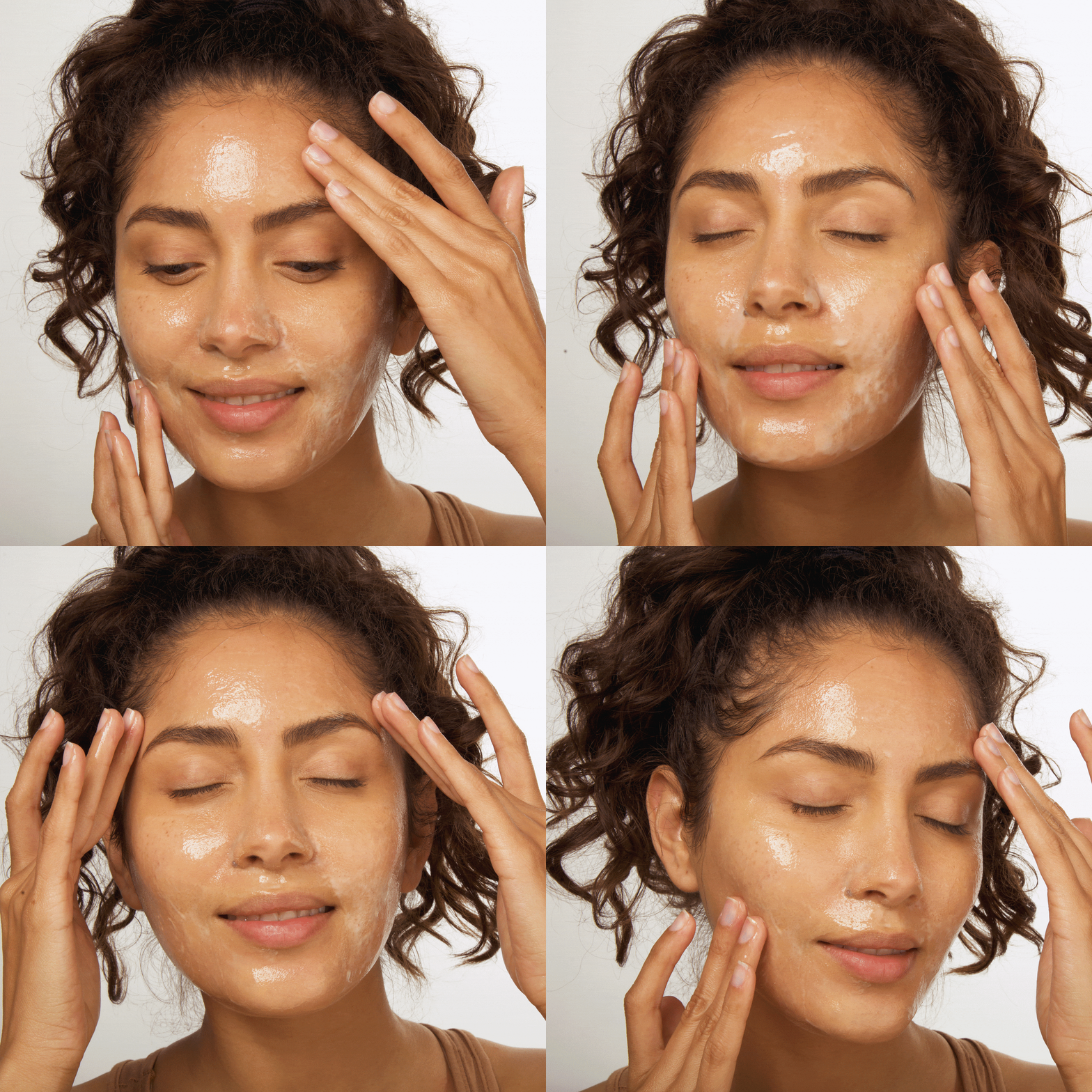
Step 1: Begin by applying a cleansing oil, balm, or cleansing milk directly onto dry skin.
Step 2: Using your fingers, a cotton pad, or a soft cloth, gently massage the first cleanser into your skin, focusing on breaking down makeup, sebum, and sunscreen residue. Rinse thoroughly with warm water.
Step 3: Next, apply a water-based cleanser and massage it into your skin. Rinse once more and gently pat your face dry.
PRO TIP: When it comes to double cleansing, the frequency can vary for everyone. Start with one to two times a week and adjust based on how your skin responds. If you notice any irritation or excessive dryness, reduce the number of times you double cleanse.
Choosing the Right Double Cleansing Technique for Your Skin Type
The double cleansing process can be tailored to suit your specific skin type and its unique needs. Here’s a breakdown of effective natural cleansers and techniques to consider:
For Oily or Acne-Prone Skin
Our luxurious Blood Orange Cleansing Balm is a fantastic choice for oily or acne-prone skin types, especially when removed with a warm, damp face towel. This oil-based cleanser, enriched with degreasing blood orange, effectively balances excess sebum production.
With added coconut and olive oils, this balm effortlessly removes even the most stubborn makeup, debris, and impurities. Additionally, its antibacterial essential oils and oil molecules work to bond with and eliminate excess oil, making it ideal for acne-prone skin.
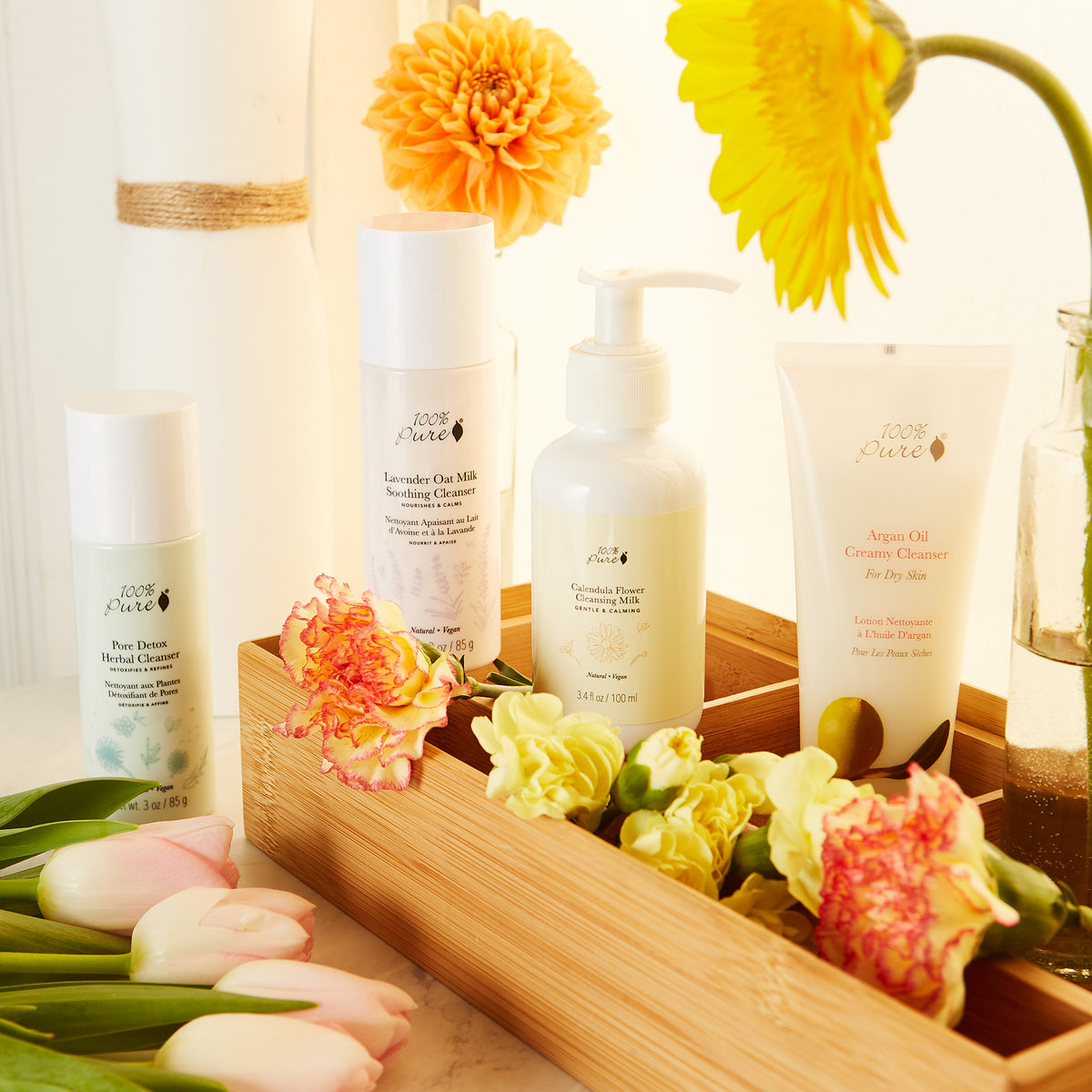
For the second step, try our Pore Detox Cleanser, which is a concentrated powder activated by water, allowing you to customize its texture. This cleanser, made with superfine colloidal oatmeal and baking soda, gently exfoliates and massages the skin for a thorough cleanse.
For Dry, Sensitive, or Mature Skin
For those with dry skin, it’s best to apply cleansing oils directly to dry skin. Instead of rinsing with water, use a warm, damp towel to wipe away the day’s impurities.
We recommend our Argan Oil Creamy Cleanser, which is rich in luxurious argan oil, anti-aging rosehip, and antioxidant-packed açai. This nourishing cleanser leaves your skin feeling soft and supple, without stripping away essential lipids or moisture.
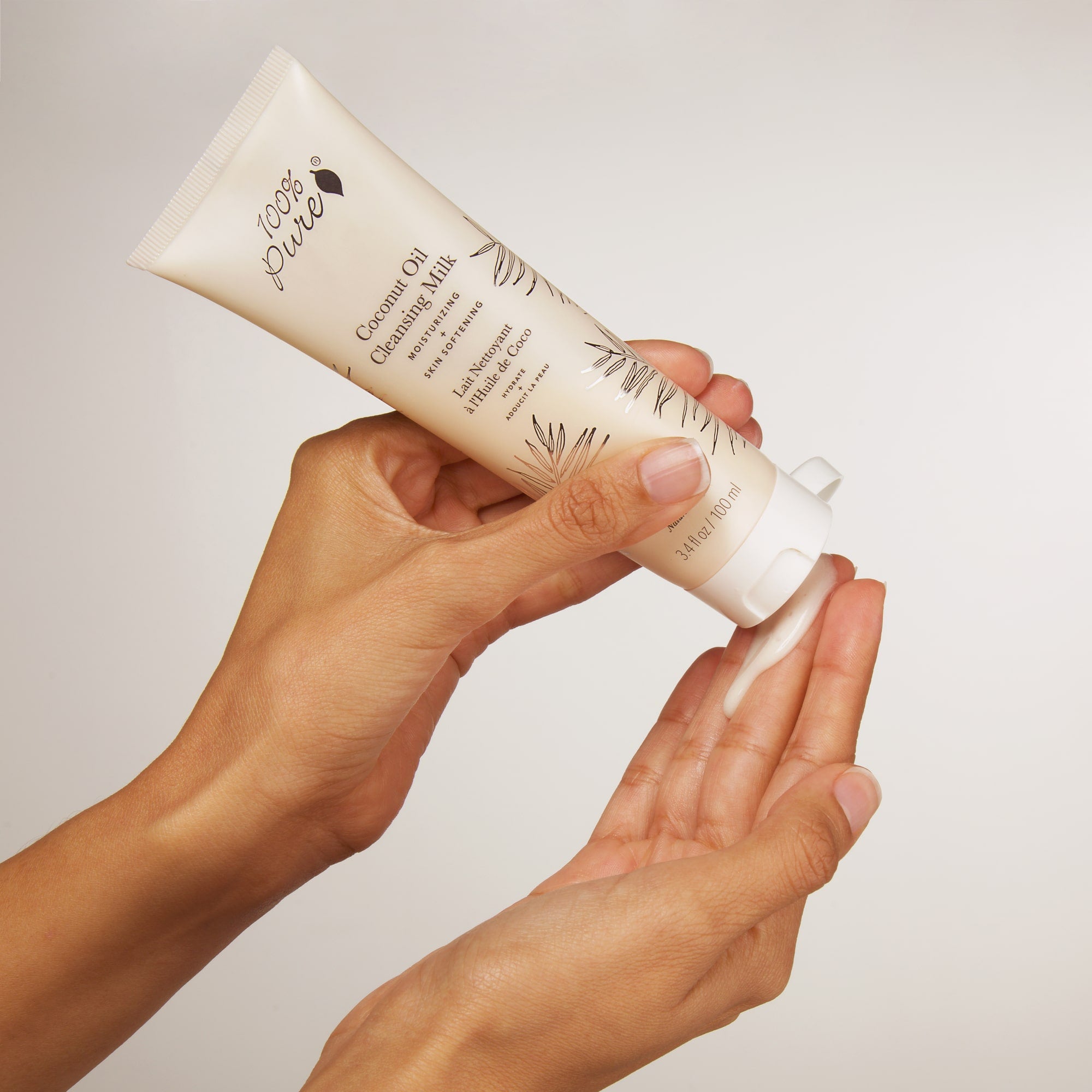
After using an oil-based cleanser, follow up with a water-soluble cleanser for a deeper clean. Our Coconut Oil Cleansing Milk is an excellent multitasking option, formulated with skin-softening coconut milk, hydrating coconut oil, revitalizing coconut water, and the delightful aroma of vanilla bean.
For Normal Skin
If you have normal skin, consider trying our Calendula Flower Cleansing Milk, a skin-balancing floral cleanser. With a lighter formula that retains the same delightful oil components, this cleanser is perfect for normal skin types. The soothing properties of calendula oil hydrate while rose and chamomile work to balance your skin’s pH.
This refreshing option glides effortlessly across your skin, creating a gentle foam. Massage it in to fully experience its benefits, and rinse your face with warm water for a truly refreshing experience. For added luxury, use our gentle Charcoal Konjac Sponge to elevate your cleansing routine.
Afterward, follow up with a balancing cleanser, like our Lavender Oat Milk Cleanser, a unique powder formula that combines baking soda and colloidal oatmeal for gentle exfoliation. Green clay absorbs excess oil without leaving your skin feeling dry or stripped. This blend of calendula, geranium, coneflower, and chrysanthemum flowers works to maintain your skin’s tone, texture, and hydration.
So, after considering all this information and expert tips, is it worthwhile to invest those extra moments to use two natural cleansers in one session? If you decide to incorporate double cleansing into your skincare routine, congratulations: you’re officially a double cleanse advocate! As the saying goes, teamwork makes the dream work!
Common Questions About Double Cleansing Answered
What exactly is double cleansing, and how does it differ from regular cleansing?
Double cleansing is a two-step process that begins with an oil-based cleanser, followed by a water-based cleanser. The oil cleanser effectively removes oil-based impurities such as makeup, SPF, and sebum, while the water-based cleanser eliminates water-soluble debris like sweat and dirt. This method provides a more thorough cleanse compared to traditional cleansing, particularly when dealing with heavy makeup or sunscreen.
Who should consider integrating double cleansing into their skincare routine?
Double cleansing is especially beneficial for individuals who wear heavy makeup, reside in high-pollution environments, or have oily or acne-prone skin. This method ensures that all impurities are effectively removed, preventing breakouts and promoting a radiant complexion. However, it may be excessive for those with very dry or sensitive skin.
Can double cleansing lead to dry skin?
When done correctly, double cleansing should not dry out your skin. It’s essential to select the right cleansers that are hydrating and suited for your skin type. Over-cleansing or using harsh products can strip the skin of its natural oils, leading to dryness.
How often should you practice double cleansing?
It’s generally recommended to double cleanse in the evening to thoroughly remove makeup and accumulated pollutants. Double cleansing twice daily may be excessive, especially for those with dry or sensitive skin. Pay attention to your skin’s needs and adjust the frequency accordingly.
What advantages does double cleansing offer for acne-prone skin?
For those with acne-prone skin, double cleansing can be particularly beneficial, as it thoroughly removes pore-clogging impurities like excess oil and dead skin cells, which are common contributors to breakouts. This approach promotes a deeper cleanse and can help reduce the occurrence of acne.
var windowWidth,lazyLink,lazyImages,lazySource,lazyBackground,lazyIframe,lazyScripts,navigator_platform,lazyLoadedJS,src,style,datasrc,urls,analytics,s,x,i,j,flag;
function init(){flag&&(flag=0,load_all_js(),lazyLoadImg(),lazyLoadBackground(),lazyLoadIframe(),lazyLoadSource())}
function isElementInViewport
var a=t.getBoundingClientRect();
return a.top>=0&&a.left>=0&&a.bottom<=(window.innerHeight||document.documentElement.clientHeight)&&a.right<=(window.innerWidth||document.documentElement.clientWidth)
}
function insertAfter(newNode, referenceNode) {
referenceNode.parentNode.insertBefore(newNode, referenceNode.nextSibling);
}
function isElementInView
var a=t.getBoundingClientRect();
return a.top(window.innerHeight/2||document.documentElement.clientHeight/2)
}
function lazyLoadLink(){
lazyLink.forEach(function
t.href=null==t.dataset.href?t.href:t.dataset.href
})
}
function lazyLoadImg(){
lazyImages.forEach(function
null!=(src=windowWidth<600?null==t.dataset.mobsrc?t.dataset.src:t.dataset.mobsrc:t.dataset.src)&&(t.src=src),t.classList.remove("lazy2")
})
}
function lazyLoadImg2(){
lazyImages.forEach(function
isElementInViewport
})
}
function lazyLoadSource(){
lazySource.forEach(function
t.srcset=null==t.dataset.srcset?t.srcset:t.dataset.srcset
})
}
function lazyLoadBackground(){
lazyBackground.forEach(function
lazybg=windowWidth<768?null==t.dataset.mobstyle?t.dataset.style:t.dataset.mobstyle:t.dataset.style,null!=lazybg&&(t.style=lazybg),t.classList.remove("lazybg")
})
}
function lazyLoadIframe(){
lazyIframe.forEach(function
t.src=null==t.dataset.src?t.src:t.dataset.src
})
}
function lazyLoadScripts(){
j!=lazyScripts.length&&("lazyload2"==lazyScripts[j].getAttribute("type")?(lazyScripts[j].setAttribute("type","lazyloaded"),void 0!==lazyScripts[j].dataset.src?((s=document.createElement("script")).src=lazyScripts[j].dataset.src,document.body.appendChild(s),s.onload=function(){j++,lazyLoadScripts()}):((s=document.createElement("script")).innerHTML=lazyScripts[j].innerHTML,document.body.appendChild(s),j++,lazyLoadScripts())):(j++,lazyLoadScripts()))
}
function lazyLoadCss
(s=document.createElement("link")).rel="stylesheet",s.href=t,document.getElementsByTagName("head")[0].appendChild(s)
}
function lazyLoadJS
if(lazyLoadedJS)return setTimeout(function(){lazyLoadJS
}
function wnwAnalytics() {
var script2 = document.querySelectorAll(".analytics");
script2.forEach(function(analyticsScript) {
trekkie.integrations=false;
s = document.createElement("script");
s.innerHTML = analyticsScript.innerHTML;
insertAfter(s, analyticsScript);
analyticsScript.parentNode.removeChild(analyticsScript);
});
}
document.addEventListener("DOMContentLoaded",function(){windowWidth=screen.width,lazyLink=document.querySelectorAll("link"),lazyImages=document.querySelectorAll("img.lazy2"),nolazyImages=document.querySelectorAll("img.lazy"),lazyBackground=document.querySelectorAll(".lazybg"),lazyIframe=document.querySelectorAll("iframe"),lazySource=document.querySelectorAll("source"),lazyScripts=document.getElementsByTagName("script"),navigator_platform=navigator.platform,i=0,j=0,flag=1,window.addEventListener("scroll",function(){init()}),window.addEventListener("mousemove",function(){init()}),window.addEventListener("touchstart",function(){init()}),"Linux x86_64"!=navigator_platform&&init(),setTimeout(function(){init()},60000)});
function load_all_js() {
lazyLink=document.querySelectorAll("link");
lazyLoadLink();
}
wnwAnalytics();
setTimeout(function() {
const wnw_load = new Event('wnw_load');
window.dispatchEvent(wnw_load);
}, 100);
setTimeout(function() {
var DOMContentLoaded2_event = document.createEvent("Event");
DOMContentLoaded2_event.initEvent("DOMContentLoaded2", true, true);
window.document.dispatchEvent(DOMContentLoaded2_event);
}, 60000);
j=0;
lazyScripts = document.querySelectorAll("script[type=lazyload2]");
lazyLoadScripts();
lazySource = document.querySelectorAll("source");
lazyLoadSource();
}
