


[ad_1]
I believe Oak is a key ingredient in perfumery because of its rich history and unique aromatic qualities. At CosmeticsUrgeryNews, we specialize in cosmetics, beauty, body care, hair care, and perfume, helping fragrance enthusiasts achieve a deeper understanding of scent profiles. Our platform provides insights into the world of fragrance, guiding users to make informed choices about their perfume selections. This guide covers the historical significance of oak in perfumery, its various uses, types of oak in fragrances, and popular perfumes featuring oak notes.
We will explore:
- The historical role of oak in perfumery
- The extraction methods of oak scents
- The different types of oak used in fragrances
- Popular perfumes that feature oak
- The cultural significance of oak
What is the History of Oak in Perfumery?
Oak has been intertwined with human culture for centuries, long before its incorporation into perfumes. In ancient Europe, oak trees symbolized strength and endurance. They were used in sacred ceremonies and festivals, while their wood was highly valued for construction and fuel. The common oak is deeply embedded in British culture, often seen as a guardian of the landscape.
In perfumery, oak took on new significance. The earliest use involved oak moss, a lichen that grows on oak bark. This ingredient became essential in traditional French perfumery, adding depth and mystery to fragrances. Oak moss remains a key component in classic styles like chypre and fougère.
What is the Natural Heritage of the Oak Tree?
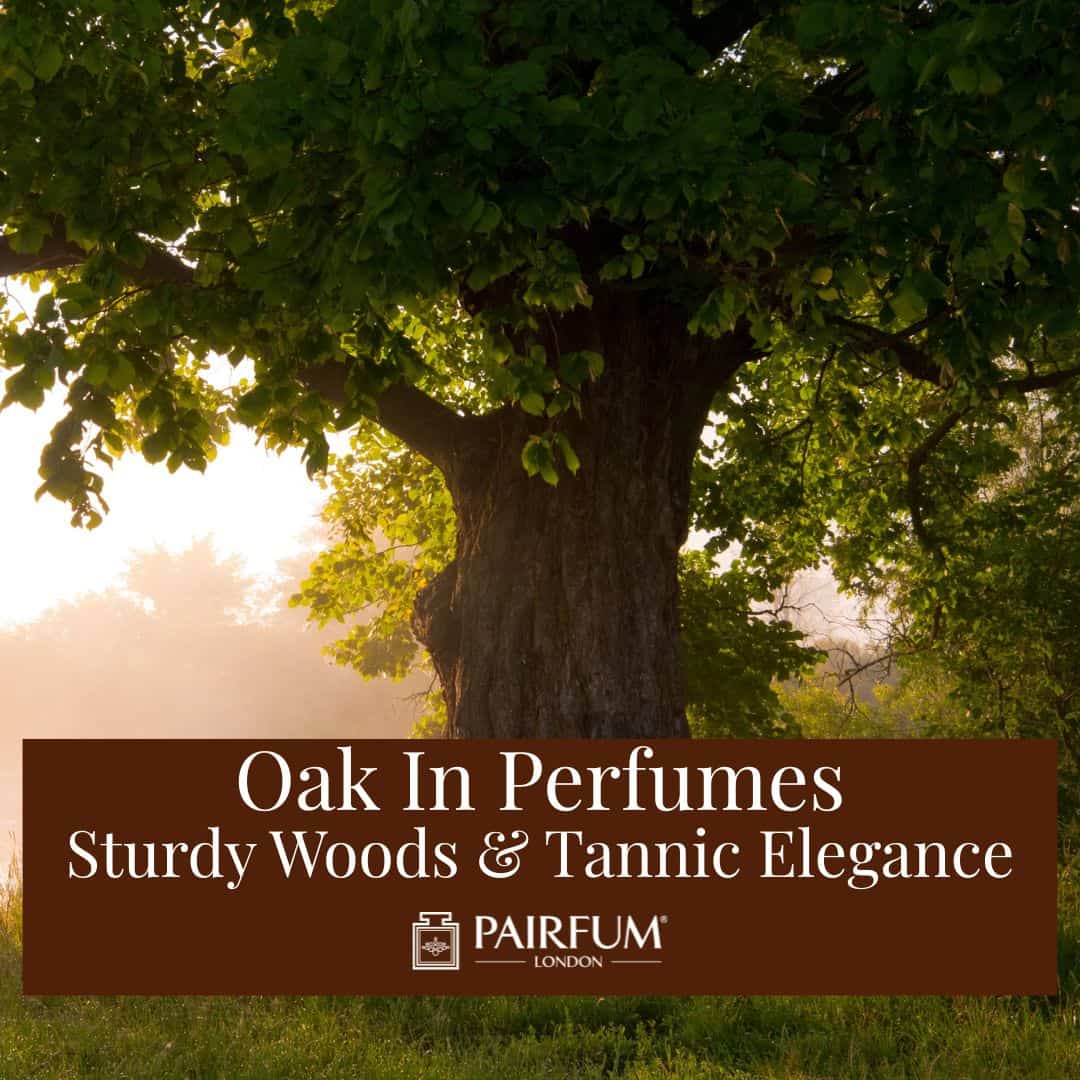
Understanding the scent of oak requires knowledge of the tree itself. The genus Quercus, part of the beech family Fagaceae, includes hundreds of oak species across the Northern Hemisphere. In the UK, the two most notable types are the English oak (Quercus robur) and the sessile oak (Quercus petraea).
Few sights in the British Isles are as iconic as a towering English oak. This legendary tree is linked to the ancient glades of Sherwood Forest. Folklore tells of Robin Hood finding refuge in the hollowed heart of the Major Oak, a living monument to survival. The timber from such giants formed the backbone of the British Navy, with thousands of trees used to construct the HMS Victory.
What is the Diversity Across Oak Species?
While the pedunculate oak is well-known, a remarkable variety exists globally. Some oaks are cultivated as ornamental trees, while others are harvested for specific industries.
- White Oaks: Prized for timber and liquid retention, essential for barrels.
- Red Oak: Known for faster growth and porous wood, offering different density and grain.
- Holm Oak: An evergreen species used in coastal landscaping.
- Turkey Oak: Introduced in the 1700s, grows quickly but has timber prone to cracking.
- Cork Oak: Vital for the wine industry, harvested for corks without harming the tree.
- Sessile Oak: Found in northern and western Britain, its acorns do not sit on stalks.
- Bur Oak: A hardy North American species known for massive acorns.
Interestingly, not all trees with the name “oak” belong to the Quercus family. For example, poison oak is unrelated, and silky oak is actually a silver oak from Australia. True oaks face challenges like acute oak decline, affecting timber quality and tree health across Europe.
How is Oak Used and Extracted in Perfumery?
Oak can appear in perfumes through various forms, primarily oak moss and oakwood extract. Oak moss, a lichen on oak bark, has a green, damp aroma with forest-like qualities. It grounds perfumes and adds softness to the base. In contrast, oakwood extract comes from the wood itself, offering nutty, dry, and tannic qualities, especially if aged with wine or spirits.
To bring these aromas to life, perfumers use extraction methods like steam distillation for essential oils or solvent extraction for oak absolutes. Each method produces different outcomes. The oil is lighter with dry wood notes, while the absolute adds richer, smokier tones.
What Types of Oak are Found in Fragrance?
The behavior of oak notes varies based on the type of tree and preparation method.
- White Oak: Smooth, dry, and clean, with slight vanilla tones, commonly used in wine or whisky barrels.
- Evergreen Oak: Offers a darker, drier quality, with herbal or balsamic aromas depending on extraction.
- Other Types: May present nutty, creamy, or slightly green aromas.
Oak harmonizes well with other notes, forming the backbone of chypre perfumes alongside bergamot and patchouli. It supports fougère blends, adding body to lavender, geranium, and coumarin. In woody-gourmand styles, oak provides depth beneath chestnut, hazelnut, or roasted vanilla notes.
What are the Cultural Roots of Oak?
The term “oak” has deep linguistic roots. In Old English, it was known as āc, evolving into the modern term through Middle English. This journey reflects the oak’s long-standing presence in daily life. Acorns symbolized potential, and oak groves were seen as places of wisdom. The Major Oak in Sherwood Forest stands as a testament to this rich history.
Which Perfumes Capture the Spirit of Oak?
Numerous perfumes highlight oak, using either moss, wood, or both. Some emphasize its raw, forest mood, while others showcase its toasty elegance.
- Earthy or green-focused perfumes often utilize oak moss, paired with herbs or citrus for a cool base.
- Leathery woods or smoky blends emphasize the tannic side of oakwood, revealing a textured, mature character.
- In unisex perfumes, oak serves as an anchoring note, providing comfort without being overly soft or strong.
The English oak (Quercus robur) delivers a scent that is both rugged and refined. Whether traditional or modern, oak-based perfumes maintain a steady, balanced, and quietly powerful presence.
