


[ad_1]
The “cosmetic surgery” industry needs shock therapy. The only way to get the large and urgent change needed to protect the public from serious injuries is for health ministers and the national regulator (AHPRA) to close down the entire industry for a period of three to six months. This would achieve real change quickly and help overcome the lethargy shown by all involved – practitioners, regulators, politicians – in dealing with the continuing dangers to consumers arising from current widespread dangerous malpractices.
Australians have been appalled at the dramatic footage and heartbreaking stories resulting from shocking, reckless and seemingly totally unregulated practices in the industry (yes, industry). What started as a small flow of complaints, mostly very serious, to the regulators was met with virtually no response other than a very small number of actions, some tokenistic, to deal with some of the extreme cases.
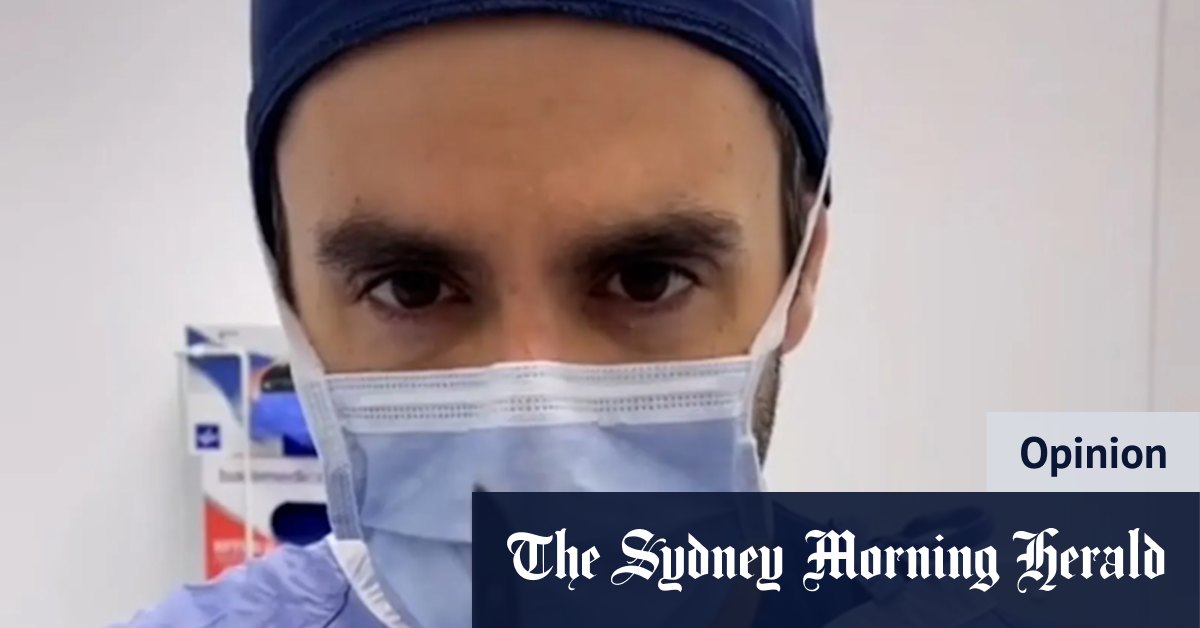
Cosmetic surgeons have been the subject of numerous complaints. Credit:TikTok
That small flow reflected a failure by the regulator to make its existence known and a lack of confidence of consumers in its effectiveness. Worse, practitioners have intimidated complainants. In fact, they are in the habit of trying to intimidate public commentators on the industry, including at times when they might appear before public inquiries. I myself received strong legal threats of defamation action seeking damages for a single article in this newspaper a few months ago, from the Australasian College of Cosmetic Surgery and Medicine.
It is not clear that the regulator recognises the seriousness of the problems. One recent indicator of that is its support for allowing cosmetic surgery personal testimonials despite strong opposition from the Australian Medical Association and many others.
Another indicator has been the absence of attempts to deal comprehensively, systematically, and forcefully with misconduct and poor practices.
The underlying system of regulation and associated legislation is weak. “Cosmetic surgery” has slipped through the regulatory net, partly because it is not a specialty at medical schools and partly because it is not a Medicare-funded item.
Loading
Its advocates trivialise the nature of the surgical work being done with language such as “tummy tucks”, “Brazilian butt-lift” and “saddlebags” procedures. Moreover, any doctor can practise cosmetic surgery with minimal special training requirements.
There is a culture of weak law enforcement by the regulator. A division of powers, especially federal and state ones, leads to unco-ordinated action, different rules and blame shifting. There is also a division of regulatory labour within each state.
[ad_2]
Source link
