

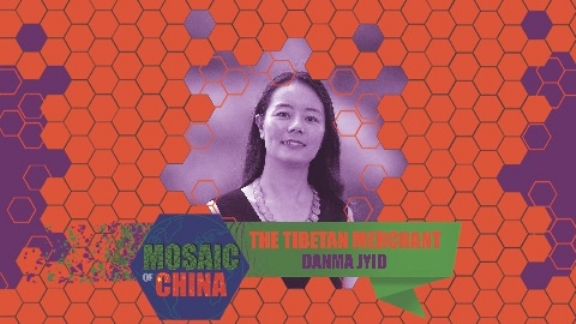
In this exciting episode, Danmajyid shares her inspiring journey of transforming nutrient-rich yak milk into luxurious beauty products through her social enterprise, YAKMA. Discover how this innovative venture is positively impacting her hometown in Tibet and empowering local women.
Original Date of Release: March 09, 2021.
[Trailer]
OF: When you encounter another Tibetan from a different region, do you find it easy to communicate with them?
DJ: Not really.
[Engaging Conversation Begins]
OF: Welcome to Mosaic of China, a podcast that highlights individuals who are making significant contributions in China. I’m your host, Oscar Fuchs.
This week, we shift our focus from Belgian beer to the world of Tibetan yaks as we welcome Danmajyid. In this episode, you’ll hear how I managed to get Danma to represent all things Tibetan, and I deeply appreciate her for handling this role so effectively. Additionally, stay tuned for her mention of Shanghai 交通 [Jiāotōng] University, the institution where I’m currently pursuing my Master’s degree. I bring this up because I was venting about writing my thesis in Episode 08 of Season 02 with Jovana Zhang, and since then, several listeners have inquired about my studies. My program is called Masters of Modern Chinese Studies, the only one of its kind in China, featuring a diverse curriculum that encompasses history, philosophy, literature, and linguistics. It’s taught in English and includes Chinese language lessons. My history professor, Chang Chihyun, who appeared in Episode 03 of this season, recently informed me that the scholarship application deadline for the next intake is at the end of March 2021. I thought I’d take a moment to promote this wonderful course because I’ve thoroughly enjoyed it. If you’re interested, simply search for Shanghai 交通 [Jiāotōng] University Masters of Modern Chinese Studies, and I’d be thrilled to know if anyone decides to apply.
Now, let’s shift gears and dive into the topic of yaks!
[Deep Dive into Yak Culture]
OF: Thank you so much for joining us, Danmajyid. You come from a fascinating region of China, don’t you?
DJ: Absolutely! I’m from northwestern China, specifically from 甘肃 [Gānsù] Province, which is a Tibetan area located just two hours from 兰州 [Lánzhōu] city, close to 甘南 [Gānnán] Prefecture. It’s a beautiful, nomadic region.
OF: Before we delve into our discussion, could you tell me about an item you brought that represents your life here in China?
DJ: I brought my yak milk soaps, which reflect my current business endeavor.
OF: Let me take a closer look. So, I see you have three different soaps here, correct?
DJ: Yes, that’s right.
OF: The yak logo stands out immediately.
DJ: Yes, it does.
OF: Can you explain what these products are?
DJ: These soaps are handcrafted in my hometown in 甘肃 [Gānsù], a Tibetan area. The primary ingredient we use is yak milk.
OF: Interesting.
DJ: Yak milk is a staple in Tibetan culture, as most families in the local community are engaged in herding animals. It’s readily available, which allows us to empower local women to produce these soaps using yak milk.
OF: The yak is such an iconic animal on the Tibetan Plateau, isn’t it?
DJ: Definitely! When I was a child, my grandparents herded livestock, especially yaks, and we had sheep roaming around. The landscape is vast and open grassland, where every yak has its own name.
OF: Really?
DJ: Yes, indeed! Each family also adorns their yaks with different colored earrings to identify which belong to which family.
OF: Now I’ll have to ask you for a picture of a yak wearing earrings!
DJ: Sure, I can provide that! Yes!
OF: Are these yaks being herded, or are there wild yaks as well?
DJ: Yes, there are some wild yaks, although not many. Some families willingly allow their yaks to roam free as mountain guardians, aligning them with the mountain gods.
OF: That’s fascinating!
DJ: They have the freedom to be wherever they choose, yes.
OF: Given your family’s background as yak herders, how many yaks did your family own?
DJ: At one point, we had around 200 yaks, but recently, we’ve reduced that number due to concerns over grassland over-grazing. People are beginning to understand the importance of protecting the environment.
OF: Plus, remembering the names of 200 yaks must be quite a challenge!
DJ: Absolutely! It was quite difficult to keep track of them all. Nowadays, families take photos of each yak to keep track, and when one goes missing, they can easily identify it. Additionally, with the popularity of WeChat, families can share photos in groups, making it easier to find lost yaks.
OF: That’s an innovative approach!
DJ: Yes, it is.
OF: Anyone familiar with the Tibetan Plateau must be aware of the prominence of yak milk. It’s everywhere, right?
DJ: Yes, indeed!
OF: What significance does yak milk have in your life up in 甘肃 [Gānsù]?
DJ: Yak milk is central to our diet. We often drink yak milk tea, especially when hosting guests or visiting someone’s home; they always offer butter tea and yak milk tea. This beverage plays a vital role in fostering community connections and spending time together. However, nowadays, many people are glued to their phones and don’t engage in conversation while drinking tea, which is a significant cultural shift.
OF: Is there a market for yak milk in China?
DJ: Unfortunately, not much. However, Tibetan yak milk is of exceptional quality compared to other types of milk. I conducted extensive research and found that yak milk is more nutritious than even camel milk. We traditionally used yak milk as a natural face cream because it is rich and creamy, excellent for skin care, especially for healing dry and cracked skin. That’s why we believe yak milk is particularly beneficial for making soaps.
OF: How does the soap-making process work? Is this a traditional practice, or is it a new concept?
DJ: For our community, this is a relatively new initiative. The skills were imparted to us by an American couple who run a soap-making project, teaching communities around the world how to make soap.
OF: That’s incredible!
DJ: I reached out to them via email, shared my story, and they came to our village for a month to teach local women how to make soaps. We strive to utilize local resources, including local herbs, rather than relying on purchases from Taobao.
OF: What does your setup look like in the village?
DJ: We don’t use many large machines; our operations are at a medium scale. Our goal is to create job opportunities for local people, which is why we avoid using big machines that could replace human labor.
OF: Did you have to construct a facility for this project, or where are you located?
DJ: Initially, we operated from home, then registered the business. A lot happened over time, including an experimental phase starting in 2015. We lacked confidence in our products, feeling they weren’t ready for the market, which led to local women losing interest. It was a challenging period, as people in the community are more pragmatic and less inclined to engage in lofty ideals. Eventually, only two women remained with me. However, the creative process of making soaps is enjoyable; they can experiment with colors and shapes, making it fulfilling. In 2016, the three of us began selling to friends who owned businesses in Lhasa, which helped us gain confidence.
OF: How interesting! What is your current setup now?
DJ: Today, we have 12 women involved, and we’ve relocated to a primary school in the village.
OF: Oh, that’s a unique choice!
DJ: Yes! The school had been unused for many years, and the government allowed us to utilize the space.
OF: Fantastic!
DJ: We also want the community to use it.
OF: Who do you primarily sell to?
DJ: Previously, most of our customers were foreigners, but this year, we aim to focus on the Chinese market as well. There’s a growing preference for natural products among Chinese consumers.
OF: I love the packaging you use; it features Tibetan writing, which is beautiful! This is your first language, correct?
DJ: Yes, it is.
OF: Does Tibetan share any similarities with Mandarin?
DJ: Not at all.
OF: I see!
DJ: Yes, Tibetan and Mandarin are entirely different languages, with three main dialects: Amdo, Khams, and Ü-Tsang. I speak the Amdo dialect.
OF: And the other two are located where?
DJ: Khams is in 四川 [Sìchuān], and Ü-Tsang is situated in central Tibet.
OF: Got it. If you were to meet another Tibetan from a different region, would you be able to communicate?
DJ: Unfortunately, no.
OF: That’s surprising!
DJ: Yes, those who have studied can communicate in an academic sense, but understanding each other in dialects is incredibly challenging. Even within the Amdo dialect, my own village dialect can be difficult for others to comprehend.
OF: What’s the name of your village?
DJ: It’s called Daichen.
OF: And in terms of cultural differences across the Tibetan Plateau, what else stands out?
DJ: Various regions have their distinct traditional costumes. In my hometown, we incorporate materials like coral and conch.
OF: Conch? How interesting!
DJ: Yes, conch and coral, which is surprising since we are so far from the ocean. They are often used to create necklaces and other ornaments.
OF: It makes sense considering the nomadic lifestyle; valuable items would be carried along, right?
DJ: Exactly, though I’m not entirely sure why they are valued.
OF: Now you find yourself in Shanghai; what prompted your relocation?
DJ: It was a challenging decision, but I appreciate the opportunities here, especially as a businesswoman.
OF: Given your market presence, Shanghai makes sense!
DJ: Yes, it allows me to travel easily between major cities like Beijing and Shanghai. I have also made friends here, gradually connecting with the community.
OF: I envision the Tibetan Plateau as a vast, serene landscape, quite different from the bustling Shanghai. How do you adjust?
DJ: It typically takes me a month to acclimatize whenever I return to Shanghai.
OF: That’s understandable.
DJ: Especially on the subway, I feel overwhelmed by the crowd.
OF: That sounds intense.
DJ: It takes around three weeks before I feel comfortable enough to go out again.
OF: Do you maintain any rituals or practices to help cope?
DJ: Yes, I still perform my morning chanting.
OF: What does that entail?
DJ: I have a mantra book, and I chant every morning. It’s become a part of my daily routine.
OF: That’s beautiful. It’s lovely to hear about your journey, including your childhood in 甘肃 [Gānsù]. How did you arrive at your current position?
DJ: I completed middle school and then attended an English training program in 青海 [Qīnghǎi], which significantly changed my life.
OF: 青海 [Qīnghǎi] is the neighboring province to 甘肃 [Gānsù], correct?
DJ: Yes, I attended 青海 [Qīnghǎi] Normal University, where I learned English. After graduating, I worked for various international companies in 香格里拉 [Shangri-La] and 成都 [Chéngdū]. Seeking unique subjects not easily found in China, I began exploring overseas universities. I met some Australians in 香格里拉 [Shangri-La] who recommended a university, and I applied and was accepted.
OF: That’s wonderful!
DJ: Yes.
OF: Your time in Australia eventually led to that TED Talk, right? I believe you’re a bit shy about watching it now?
DJ: Yes, that’s true.
OF: Can you share what you discussed in that TED Talk?
DJ: I spoke about a water project I initiated in my village back in 2008 during my English training program at university. In winter, water access becomes extremely challenging due to freezing conditions, making it difficult for both people and livestock to obtain water. They had to travel considerable distances to find reliable sources, often relying on small, unstable springs. The burden fell heavily on women, who spent substantial time fetching water. I thought of a solution involving pipes to transport water directly from the spring to each household, benefiting around 60 families, including a primary school, which totals about 200 individuals. I wrote a grant proposal with support from my teachers at the training program. It took a year to secure funding, ultimately provided by an exchange program at 交通 [Jiāotōng] University in Shanghai.
OF: That’s impressive! How old were you at that time?
DJ: I was just 19, which might have contributed to skepticism about my capability to manage such a significant project.
OF: So, to summarize, you successfully implemented the pipeline project, correct?
DJ: Yes, it took two years to complete, and we did an excellent job!
OF: That’s remarkable! You managed to balance it while studying?
DJ: Yes, every weekend, I returned home to monitor the project.
OF: That’s a great commitment!
DJ: Now, the local water bureau has taken over the project, ensuring its ongoing maintenance.
OF: That’s fantastic to hear!
DJ: Yes, indeed.
OF: Looking ahead, what are your future aspirations? Do you have any major projects in the pipeline for your soap business, or other ideas in mind?
DJ: Our soap business is set to expand, and we aspire to involve more local women, particularly younger individuals.
OF: This aligns perfectly with your mission to empower women through your project.
DJ: Absolutely! We aim for financial independence and reducing gender inequality through our work.
OF: It’s fascinating how the dynamics shift; women gather to create soaps, while their husbands take on more household responsibilities.
DJ: Yes, it happens organically—it’s an interconnected process.
OF: Your vision seems to be evolving into a larger natural cosmetic company.
DJ: Yes, that’s our aim!
OF: Thank you so much for sharing, Danma.
DJ: Thank you!
OF: Let’s transition to Part 2.
DJ: Sure!
[Fun Segment: Quickfire Questions]
OF: Are you ready for the ten questions?
DJ: Sort of! I apologize in advance.
OF: These questions may seem straightforward, but they can be tricky.
DJ: Yes.
OF: Question 1: What is your favorite fact about China?
DJ: I would say my hometown is famous for its unique white yaks. Our yaks are predominantly white, which is not found in other Tibetan regions. Occasionally, people attempt to bring white yaks to their areas.
OF: I’ve spotted white yaks in northern Yunnan Province!
DJ: Yes, that’s likely from our region.
OF: What is your favorite word or phrase in Chinese?
DJ: I would say 四海为家 [sìhǎi wéijiā].
OF: 四海 [sìhǎi] translates to ‘the four seas’, right?
DJ: Yes, 为家 [wéijiā] means ‘to make your home.’
OF: So it conveys ‘wherever you go is home’?
DJ: Exactly! I aspire to be a traveler, and since I live in Shanghai for work, this mindset helps me feel more comfortable here.
OF: That’s lovely. When asked about home, I often struggle to find an answer. Perhaps I’ll adopt 四海为家 [sìhǎi wéijiā].
DJ: Yes!
OF: What is your favorite destination within China?
DJ: I truly enjoy Lhasa, central Tibet.
OF: That sounds beautiful!
DJ: When I visited Lhasa, I felt a deep connection to the culture and tradition.
OF: I would love to visit Lhasa someday. If you were to leave China, what would you miss the most, and what would you miss the least?
DJ: I would miss Tibetan food, especially momo.
OF: What are momos?
DJ: Momos are similar to dumplings, often steamed and filled with various ingredients.
OF: So they’re like 馒头 [mántou]?
DJ: Yes, but with delicious fillings like yak meat.
OF: I had a feeling it would be yak meat!
DJ: Yes, along with herbs sometimes.
OF: What about what you would miss the least?
DJ: Snow.
OF: Snow? What was it like growing up with heavy snowfall?
DJ: We received significant snowfall, sometimes taking a week to melt. Occasionally it would snow for a month straight.
OF: That must have made traveling difficult.
DJ: Yes, the roads would often become blocked.
OF: Is anything about modern life in China still surprising to you?
DJ: Yes, quite a bit! In my village, people are actively engaged on social media and purchasing items through apps like Taobao and 拼多多 [Pīnduōduō]. The 快递 [kuàidì] delivery service often drops off parcels at our soap production space for convenience, as families live far apart in the nomadic region.
OF: That’s a clever solution!
DJ: Yes, our location has become a central collection point, and families often ask us to deliver their packages to them.
OF: Since your space is the most recognized address in the village, right?
DJ: Right! The delivery person prefers dropping everything at our location rather than traveling to each household.
OF: What’s your favorite place to eat, drink, or hang out? This could be in Shanghai or anywhere in China.
DJ: I really enjoy Charu in 成都 [Chéngdū].
OF: What’s that?
DJ: Charu is a Tibetan co-working space in 成都 [Chéngdū]. If you happen to visit, I highly recommend checking it out.
OF: That sounds lovely!
DJ: It’s a great spot where you often run into familiar faces, and it’s a cozy place to enjoy a cup of coffee.
OF: Yak milk coffee sounds unique!
DJ: Yes, it tastes delightful.
OF: I’ll have to try it one day!
DJ: You definitely should if you ever visit 成都 [Chéngdū].
OF: What’s the best or worst purchase you’ve made recently in China?
DJ: I once bought a jacket, but the color didn’t match the picture at all. When I tried to return it, the seller insisted I chose that color. I commented that the color was different, and he offered to let me return it if I deleted my comment.
OF: Did you comply?
DJ: No, I accidentally removed the tag, so now I still have that jacket.
OF: That’s a valuable lesson learned!
DJ: Definitely!
OF: What’s your favorite WeChat sticker?
DJ: I often send a cute little happy monk sticker.
OF: A Buddhist monk sticker, right?
DJ: Yes, exactly.
OF: What’s your go-to karaoke song?
DJ: I haven’t been to KTV in years.
OF: Perhaps it’s because you don’t drink alcohol?
DJ: Yes, that’s likely the case.
OF: But with enough yak milk, you might just find your rhythm!
DJ: Hopefully!
OF: Lastly, what other China-related media or sources of information do you rely on?
DJ: WeChat is my primary source, but I also enjoy WeChat Channels. It’s fascinating because

Sienna Blake is a licensed aesthetic consultant and beauty writer specializing in cosmetic surgery advancements and non-invasive treatments. With a background in dermatology and over eight years of industry experience, Sienna is passionate about helping people achieve confidence through informed beauty decisions. She holds a Bachelor's degree in Health Sciences and regularly collaborates with top plastic surgeons to stay at the forefront of aesthetic innovations. Outside of her work, Sienna enjoys traveling, skincare research, and practicing Pilates.
