


Despite the widespread awareness regarding the importance of sun protection, a staggering one-third of adults admit to suffering from sunburn at least once within the past year. While the immediate effects of a sunburn might be fleeting, the long-term consequences can be dire, potentially manifesting years later. This comprehensive guide will delve into effective care for sunburned skin, spotlighting the symptoms, stages of sunburn, and actionable strategies to prevent it from occurring altogether.
Understanding Sunburn Causes | The Dangers of Sunburns | Sunburn Severity Levels | Recognizing Symptoms | Effective Skin Protection Strategies | Essential Ingredients for Treatment
Understanding the Causes of Sunburn: How UV Rays Harm Your Skin
Sunburn is primarily the result of skin damage induced by ultraviolet (UV) radiation emanating from the sun. When your skin comes into contact with these UV rays, it responds by producing a pigment known as melanin, which serves as a natural defense mechanism. Melanin functions like a sunscreen by absorbing and redistributing harmful UV energy. However, its protective capabilities are limited; prolonged sun exposure can swiftly transform a golden tan into a painful sunburn.
Upon experiencing a sunburn, your body releases chemicals termed inflammatory mediators, which trigger increased blood flow to the affected areas. This physiological response is responsible for the characteristic symptoms of a sunburn, including redness, warmth, and swelling. Often, the initial signs of sunburn may appear mild, but it can take up to 24 hours for the full extent of the damage to reveal itself. Thus, it is common for what seems like a minor burn to escalate into a more severe condition by the following day.
The Impact of UVA and UVB Rays on Your Skin Health
When discussing UV radiation, it is essential to differentiate between the two main types that contribute to skin damage: UVA and UVB rays. Each type has distinct characteristics and effects on the skin.
UVA Rays: The Silent Agers of Your Skin
UVA rays constitute up to 95 percent of the UV radiation that reaches the Earth’s surface. Unlike UVB rays, they maintain consistent intensity throughout the day and penetrate the skin more deeply. This type of radiation is a significant contributor to photoaging, as it damages the DNA within skin cells located in the dermis. Consequently, it weakens crucial structural proteins like collagen and elastin, leading to sagging skin and the premature formation of fine lines and wrinkles.
UVB Rays: The Primary Culprits of Sunburn and Skin Cancer
UVB rays primarily inflict damage on the skin’s surface layers and are the main cause of sunburn and skin reddening. Additionally, they are closely linked to the onset of skin cancer. The intensity of UVB rays fluctuates depending on the season, geographical location, and time of day, peaking between 10 AM and 4 PM from April to October. Unlike UVA rays, UVB rays do not penetrate glass and can reflect off surfaces such as water, snow, and sand, significantly increasing the risk of skin damage.
The Dangers of Sunburn: Understanding Long-Lasting Skin Damage
Understanding the dangers of sunburn is crucial. Beyond the immediate discomfort and pain associated with sunburn, it can lead to lasting damage that affects skin health over time. Sunburns accelerate the aging process, resulting in visible signs such as fine lines, wrinkles, sagging skin, and the appearance of sunspots. More alarmingly, they significantly contribute to the risk of developing skin cancer. The Skin Cancer Foundation reports that individuals who experience more than five sunburns increase their risk of melanoma by twofold, with one in five Americans diagnosed with skin cancer by the age of 70.
Assessing Sunburn Severity: Understanding Your Skin’s Condition
Sunburns can vary widely in severity, ranging from mild cases that resolve quickly to severe burns that may necessitate medical attention:
Mild Sunburn: Quick Recovery and Minimal Discomfort
Mild sunburns generally last between three to five days. Symptoms typically include slight redness, tenderness, and minimal pain, allowing for a relatively quick recovery.
Moderate Sunburn: More Painful and Longer Healing Time
Moderate sunburns tend to be more intense and can take up to two weeks for complete healing. These burns are characterized by vibrant redness, noticeable swelling, heat, and the emergence of small blisters.
Severe Sunburn: Medical Attention Required
Severe sunburns require prompt medical attention. These burns present with red to purplish discoloration, large painful blisters, and can induce additional symptoms such as chills, nausea, and dehydration.
Recognizing Symptoms of Sunburned Skin: What to Look For
The symptoms associated with sunburned skin are:
- Redness
- Pain and/or tenderness
- Heat
- Itchiness
- Swelling
- Small blisters
If you experience any of the following serious symptoms, it is advisable to seek medical attention promptly:
- Fever
- Faintness
- Rapid pulse
- Nausea
- Chills
- Confusion
- Large, painful blisters
Identifying Risk Factors for Sunburn: Who is Most Vulnerable?
Sun exposure affects everyone differently, and several risk factors can increase your likelihood of experiencing sunburn:
- A fair complexion
- Freckles and/or red hair
- UV exposure between 10 AM and 4 PM
- High altitudes
- Proximity to the equator
- Medications that cause photosensitivity
Understanding the Stages of a Sunburn: What Happens to Your Skin?
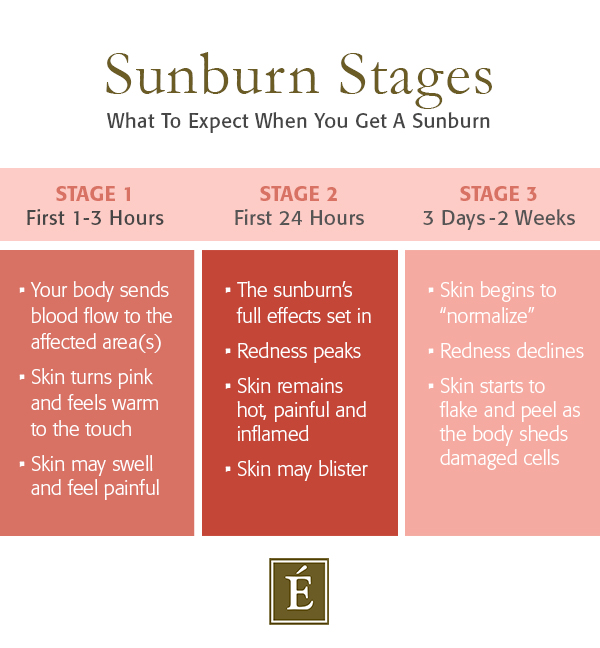
Typically, a sunburn progresses through three distinct stages:
Stage 1: Immediate Response (1-3 Hours)
In the initial hours following sun exposure, your body reacts by increasing blood flow to the sunburned areas. This inflammatory response manifests as pinkness, swelling, and warmth to the touch, indicating the body’s defense mechanisms are at work.
Stage 2: Peak Effects (First 24 Hours)
The full effects of a sunburn typically become evident within 24 hours. During this time, the skin retains heat, and discomfort escalates. Redness and pain reach their peak, and small blisters may form as the skin reacts to the damage.
Stage 3: Healing Process (3-14 Days)
The healing duration for a sunburn can span from three days to two weeks. During this period, the skin begins to return to its normal state. Symptoms such as redness, swelling, and pain gradually subside, although itchiness may arise as the skin starts to peel and flake.
Fun fact: Ever wondered why sunburned skin peels? The answer lies in the accelerated skin cell turnover caused by sun damage, which shortens the time young cells have to mature and separate. As a result, these cells cling together like layers of tissue paper, leading to the peeling that occurs during the healing process.
Effective Skin Protection Strategies: Preventing Sun Damage
Fortunately, there are numerous effective strategies for protecting your skin before, during, and after sun exposure.
Before Sun Exposure: Essential Preparations
The first rule of sun protection is to always apply a suitable sunscreen, whether it be chemical or physical. But how do they differ? Both are effective, but they operate through different mechanisms. Chemical sunscreens absorb UV rays and transform them into heat that is then expelled from the skin. In contrast, physical sunscreens form a protective barrier that reflects and scatters UV rays away from the skin’s surface. Opt for a broad-spectrum formula that provides protection against both UVA and UVB rays for maximum effectiveness.
When it comes to SPF, or Sun Protection Factor, it determines how long your skin remains protected from UVB rays, which are primarily responsible for sunburn. For extended sun exposure, The Skin Cancer Foundation recommends using a sunscreen with an SPF of at least 30, which filters out approximately 97 percent of UV radiation. Always apply at least one teaspoon of sunscreen to each area of your body, ensuring to cover often-overlooked areas such as the tops of the ears, the back of the neck, and the hands and feet. For those active outdoors, our Lilikoi Mineral Defense Sport Sunscreen SPF 30 is a fantastic choice, while the Lilikoi Daily Defense Moisturizer SPF 40 is ideal for everyday use.
During Sun Exposure: Ongoing Protection Tips
Sun protection does not stop once you’ve applied sunscreen. To effectively minimize sun damage, you must remain vigilant throughout the day. Here are several best practices to follow:
- Seek shade between 10 AM and 4 PM, when UV rays are at their strongest.
- Beware of reflective surfaces: Water, snow, and sand can reflect UV rays, increasing the risk of sunburn.
- Wear a wide-brimmed hat, sunglasses, and sun-protective clothing with a UPF (Ultraviolet Protective Factor) of 40 or higher.
- Reapply sunscreen at least every two hours, or more frequently if you are swimming or sweating.
- Retreat indoors at the first sign of sunburn.
After Sun Exposure: Effective Remedies for Sunburn Relief
Most of us have been in a situation where we accidentally overexpose ourselves to the sun, leading to an unavoidable sunburn. The key takeaway is that even with proper precautions, you may still end up with a burn. Here’s what to do if you do find yourself sunburned.
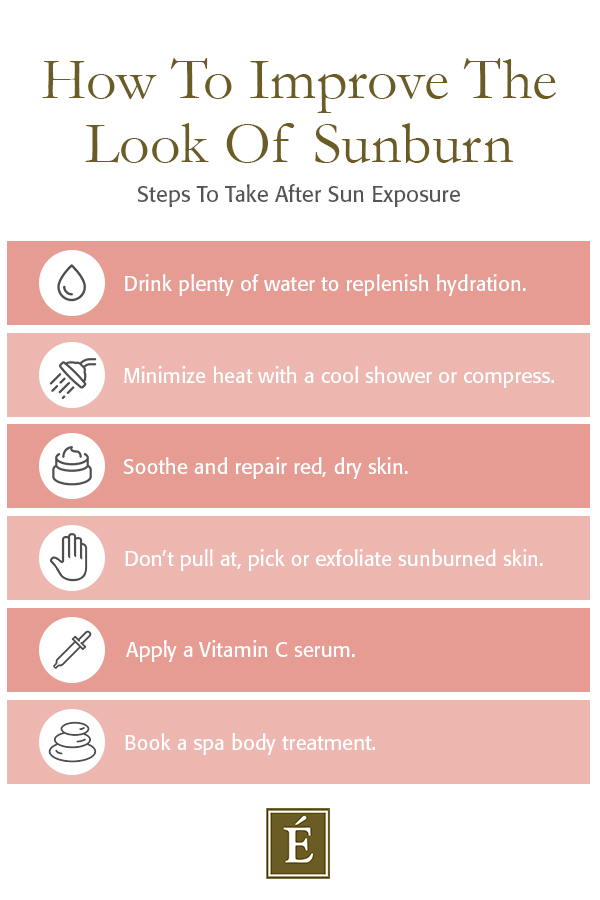
Stay Hydrated: Importance of Internal and External Hydration
According to dermatologist Whitney Bowe, MD, “Severe sunburns result in a process called vasodilation, which causes your blood vessels to expand, leading to a rapid loss of water from your skin.” To combat the dehydrating effects of sunburn, it is crucial to drink plenty of water and consume hydrating fruits and vegetables, such as cucumber, watermelon, and cantaloupe, which can help replenish lost moisture.
Cool Your Skin Down: Soothing Techniques for Relief
One of the most effective relief methods for sunburn is taking a cool bath or shower, which can help alleviate redness and dryness. However, it’s advisable to avoid using soap as it may further irritate already sensitive skin. If a cool shower isn’t enough, applying a cold compress can provide additional relief. Simply mix water and ice in a bowl, soak a cloth in the mixture, and gently hold it over the burn. These techniques will help pull heat away from the skin and minimize swelling.
Soothe & Repair: Targeting Red, Dry Skin Post-Sunburn
After sun exposure, your skin may feel red, dry, and raw. To alleviate these symptoms, utilize moisturizing oils and lotions that contain soothing ingredients such as rosemary, arnica, and rosehip. It is important to avoid products with petroleum, as they can trap heat and worsen your discomfort.
Avoid Picking Your Skin: Let Nature Take Its Course
It may be tempting to pick at or exfoliate your sunburned skin, but it’s crucial to resist the urge. Your skin is already in the process of healing itself. As new, healthy skin cells rise to the surface, the damaged cells will naturally flake and peel off. These new cells are delicate and easily irritated; any picking or pulling can exacerbate the appearance and discomfort of your sunburn, prolonging the healing process.
Apply a Vitamin C Serum: Combatting Sun Damage
One of the primary contributors to premature aging of the skin is sun exposure. UV rays stimulate the production of free radicals, which are unstable molecules that damage essential proteins like collagen and elastin. To mitigate the visible effects of sun exposure, consider incorporating a Vitamin C serum into your skincare routine. This powerful antioxidant not only shields skin cells from free radical damage but also boosts collagen production, helping to reduce fine lines and wrinkles.
Seek Professional Treatment: Full Body Recovery Options
If traditional remedies like aloe vera aren’t providing enough relief, you might want to consider a professional body treatment at a local spa. Many establishments

Sienna Blake is a licensed aesthetic consultant and beauty writer specializing in cosmetic surgery advancements and non-invasive treatments. With a background in dermatology and over eight years of industry experience, Sienna is passionate about helping people achieve confidence through informed beauty decisions. She holds a Bachelor's degree in Health Sciences and regularly collaborates with top plastic surgeons to stay at the forefront of aesthetic innovations. Outside of her work, Sienna enjoys traveling, skincare research, and practicing Pilates.
