


Welcome to Entrepreneur‘s annual 100 Women list! Each year, we meticulously examine hundreds of inspiring and accomplished women to determine those who will be featured, guided by a specific question. This year, we focused on identifying the most influential figures. To delve deeper, we divided that question into five critical areas: Who is shaping the industries that significantly impact our lives? Who is influencing our culture and our self-perception within it? Who is affecting our access to equity and vital resources? Who is steering our purchasing behaviors and daily routines? Lastly, who is actively shaping our future?
As you explore the profiles of the remarkable women listed below, you’ll gain insights from cultural icons, including our cover star, Jennifer Lopez, who shares her perspective on the essence of influence. You will hear from the original influencer, Kim Kardashian, discussing strategies to maintain influence over time. Insights from Oscar-winning filmmaker Ava DuVernay and Wall Street pioneer Sallie Krawcheck will equip you with strategies to overcome barriers to influence. Leaders from innovative companies such as Apple, Instagram, Reformation, Stax, FIGS, Waymo, and Uber Health will recount pivotal moments in their careers and how they are committed to altering the status quo. Furthermore, you’ll discover founders who are transforming how we eat, dress, reduce waste, heat our homes, diagnose illnesses, respond to natural disasters, and develop environmental policies. They are finding mentors, securing funding, navigating parenthood, ensuring children receive quality education, and even creating sustainable protein sources. The key takeaway from the women on this year’s list is that they are actively creating change and influencing our world in tangible, impactful ways. We hope their stories motivate you to harness your own influence effectively.
Image Credit: Chantal Anderson | Trunk Archive
Jennifer Lopez: More Than Just a Star—A Pioneering Influencer
Jennifer Lopez vividly recalls the moment, many years ago, when her debut fragrance crossed the billion-dollar threshold. Glow by JLo, with its elegantly curvy frost-glass bottle, adorned with delicate chains featuring her initials, had become the best-selling fragrance in the United States and was on the path to generating $2 billion in sales. Her partners in the venture were ecstatic. But upon hearing this news, Lopez’s mind turned to reality, and she reflected, “Wait a minute,” she says. “I only received 0.01% of that.”
She contemplated her journey to that milestone and recognized that her creative vision was the driving force behind the perfume’s success. She had meticulously crafted its scent, devised its marketing strategy, and, crucially, established the cultural platform that made the product possible: herself. “I’m here, building this brand on my back — through films, music, and defining myself through my style and personal choices,” she explains. This realization fueled her drive to reclaim her narrative and emphasize her contributions to her brand’s successes.
Lopez acknowledges that she wasn’t tricked or exploited; she welcomed the opportunity with gratitude. “When you start as an artist, you’re simply thrilled to seize any opportunity,” she reflects. “You can’t believe your luck. I remember my early days, thinking, ‘Sure, I’ll do the perfume! Yes, I love fashion; let’s create a clothing line!’ I was just delighted to be here.”
Read the full cover story here.
The Women Entrepreneurs of Grameen America: Empowering Latina Entrepreneurs
As of July this year, Grameen America has disbursed an impressive $2.6 billion in capital through 800,000 microloans aimed at women entrepreneurs within communities of color. In addition to these loans, they offer essential financial education courses that help participants develop robust business strategies and improve their credit scores, boasting an outstanding loan repayment rate of 99.8%. Partnering with Lopez, Grameen America aims to distribute an astounding $14 billion in loans alongside 6 million hours of financial education to empower 600,000 Latina entrepreneurs by 2030. Below, we introduce five inspiring Latina women from the New York City area who have thrived through Grameen’s impactful program.

Diana Larrazabal; Aroma D’Angel
Diana Larrazabal and her husband began their entrepreneurial journey by selling perfume door-to-door throughout Manhattan. Unfortunately, their lack of credit had previously disqualified them from obtaining loans. However, their determination saw them persistently carrying perfume samples in backpacks or under the stroller of their three-year-old son. After securing multiple loans from Grameen, they now operate a successful clothing and accessories store named Aroma D’Angel in East Harlem.

Priscilla Martinez and Lissette Martinez Mims; Bella Chic LisSette
Martinez Mims rose through the ranks to become the lead esthetician at a Bronx spa but soon discovered that she was being vastly undercompensated. She decided to leave and open her own spa but lacked the necessary capital. After receiving a $1,300 loan from Grameen, she launched Bella Chic from her home, inspiring her daughter Priscilla to apply for a loan to pursue eyelash extension training. Martinez Mims plans to open her first storefront location in October.

Esmeralda Villacis; Elegant Decorations
Esmeralda Villacis established her party supply store, Elegant Decorations, out of a passion for creating custom displays for special events. However, her business faced challenges when the COVID-19 pandemic led to the cancellation of major events. As social gatherings transitioned to smaller outdoor meetups, a Grameen loan provided her with the flexibility to innovate and offer merchandise that catered to these new social dynamics.

Leticia Ortega; Super Cemitas La Fortaleza
Leticia Ortega had dedicated 20 years to running her vibrant restaurant, Super Cemitas La Fortaleza, renowned for its authentic cemitas, a traditional sandwich from Puebla, Mexico, when the pandemic struck. Traditional banks denied her loans due to her insufficient credit history. After securing two years’ worth of support through four Grameen loans, her credit score has significantly improved, and she is now saving to obtain a liquor license.
Image Credit: Photographs Courtesy of Grameen America
Trailblazing Leaders Shaping Their Industries
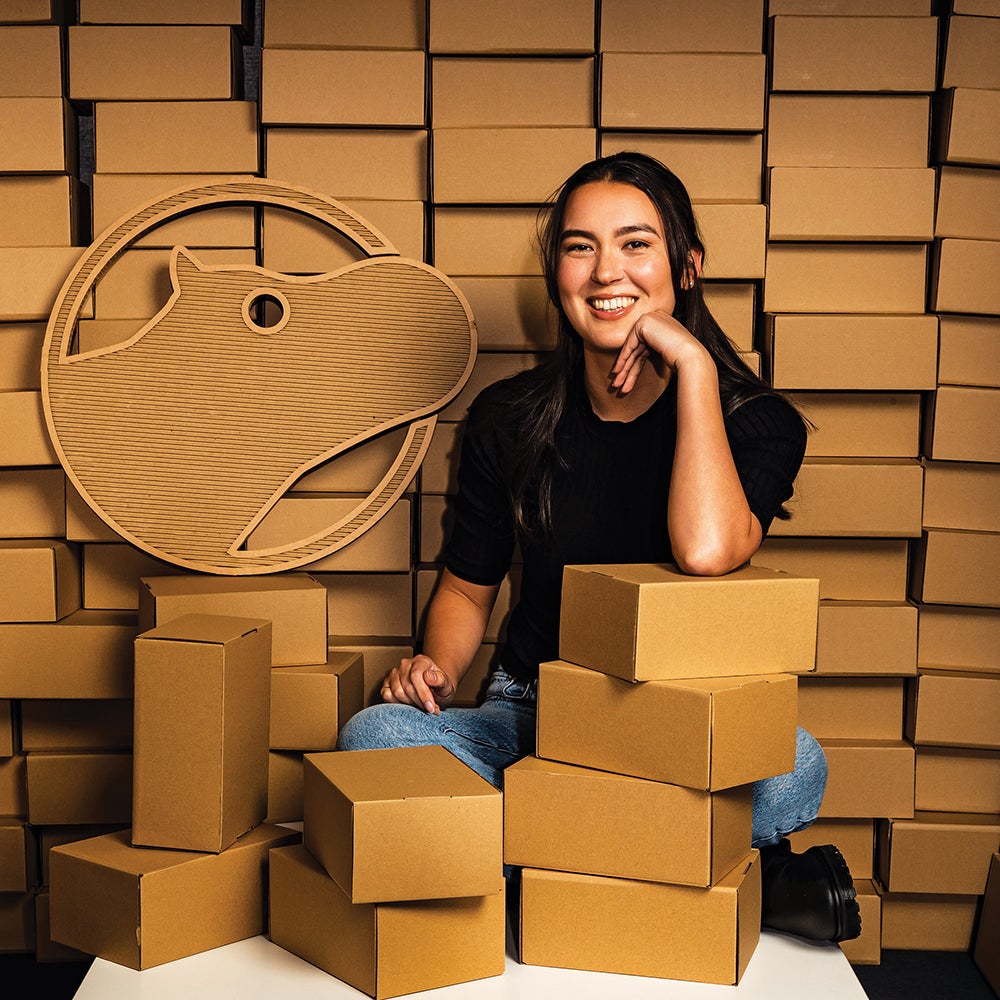
Image Credit: Courtesy of Eric Millette
Laura Behrens Wu; Cofounder; Shippo
Laura Behrens Wu initially set out to ship handbags in 2013, alongside her cofounder, Simon Kreuz, who launched an online store featuring bags from emerging designers. They found an abundance of tools available to facilitate sales and payment processing, such as Shopify and Stripe, but struggled to find an effective shipping solution. The process was fraught with long lines at the post office and difficulties in comparing alternative carriers. “Shipping is essential for every e-commerce store, and we couldn’t find a workable solution,” recalls Behrens Wu. However, they eventually shelved their handbag business to focus on solving this pressing issue. Today, their shipping software company, Shippo, is utilized by over 120,000 online retailers and has reached a valuation of $1 billion.
“As a child, I never envisioned myself as someone addressing the world’s shipping conundrum,” Behrens Wu admits. Nevertheless, her fascination with the industry’s intricacies grew. Shippo began as a platform that essentially functioned like an Expedia for shipping labels, comparing prices across different carriers. Gradually, it expanded to tackle numerous complexities — negotiating and coordinating with various carriers, ensuring compliance with carrier certification, integrating with platforms like Shopify, and even pondering why all carriers use different barcode systems? Their platform streamlined these processes into intuitive choices, enabling small and medium businesses to significantly reduce their shipping costs.
Read the full story here.

Image Credit: Courtesy of Hillsman S. Jackson
Claire Babineaux-Fontenot; CEO; Feeding America
In the United States, an astonishing 108.4 billion pounds of food were wasted in 2019, while in 2020, approximately 38 million individuals lived in households facing food insecurity. By 2021, one in six Americans relied on food banks or pantries, creating an urgent need for mobilization from hunger relief organizations. Claire Babineaux-Fontenot, CEO of Feeding America, has taken the lead in this crucial effort. As the nation’s second-largest charity, managing nearly $4 billion in grants and contributions, Feeding America wields significant influence within the nonprofit sector. Last year, the organization provided 6.6 billion meals to those in need and established a fund aimed at directing investment into communities of color disproportionately affected by food insecurity. The inaugural round of grants from this fund was distributed earlier this year to 24 food banks collaborating with 59 community organizations serving communities of color. “My hope is that this fund serves as a model and a testing ground for our organization, our sponsors, and beyond,” Babineaux-Fontenot states as she looks forward to expanding their efforts.
Since taking on the role of CEO in 2018, Babineaux-Fontenot has prioritized listening to the communities she aims to assist. This past summer, the nonprofit’s food banks conducted over 100 listening sessions, distributed more than 20,000 questionnaires, and engaged in dialogue with 100,000 individuals grappling with food insecurity. “Imagine the transformative impact,” Babineaux-Fontenot posits, “if the nearly 40 million people with invaluable expertise were more actively involved in this work alongside policymakers, charitable organizations, community groups, schools, faith-based institutions, and the general public.”

Image Credit: Courtesy of Heather Hasson & Trina Spear
Heather Hasson and Trina Spear; Cofounders; FIGS
A little over a decade ago, Heather Hasson connected with a nurse friend who expressed frustration over the discomfort of her scrubs. Curious, Hasson asked which brand was considered the go-to for healthcare apparel, akin to Nike or Lululemon for the industry. To her surprise, she learned that no such brand existed. This revelation led to the inception of FIGS. Together with her cofounder, Trina Spear, they began selling stylish, comfortable scrubs directly out of the back of Hasson’s car outside emergency rooms.
Today, FIGS stands as a publicly traded company valued at an impressive $2 billion. The path to success was not without its challenges; early on, they faced a significant hurdle when the inseam on an order of thousands of scrubs was incorrect. Rather than allowing this setback to derail them, they donated the flawed scrubs and learned invaluable lessons: never compromise on quality control, measure everything meticulously, and avoid placing blame on vendors. This initial mistake spurred a significant initiative, and in 2021, FIGS donated over 55,000 scrubs, 300,000 masks, and $900,000 to underserved communities. They have also recently announced a $500,000 equity investment in an interventional radiology practice in Houston. “By empowering our community to become entrepreneurs,” the founders expressed, “we believe we can create a measurable impact and transform healthcare in the long run.”

Image Credit: Courtesy of Edward Jones
Penny Pennington; Sixth managing partner; Edward Jones, a financial services firm celebrating its 100th year.
At present, our nearly 19,000 financial advisors cater to over 8 million clients across 3,000 communities in North America, managing an impressive $1.7 trillion in assets. Our industry is currently undergoing significant transformation, particularly regarding clients’ evolving needs and expectations for guidance. During the pandemic, we established a principle to maintain consistent communication with our clients and colleagues, irrespective of circumstances. In 2020, we initiated our Financial Fitness program aimed at younger generations, reaching more than 25,000 students across 575 high schools last year. A crucial aspect of our role for clients is to provide a steady, reassuring presence.

Image Credit: Courtesy of Tekedra Mawakana
Tekedra Mawakana; Co-CEO; Waymo, Alphabet’s autonomous driving technology company, valued at approximately $30 billion in 2021.
With over 1 million fatalities occurring annually on roadways worldwide, the opportunity to enhance safety is undeniably crucial. The tragic, often preventable loss of life is intolerable. Our driver can observe 360 degrees — spanning the length of more than three football fields, even in darkness — tracking objects and predicting the movements of other road users. We have conducted tests in over 25 cities and accumulated more than 20 million miles driven on public roads. Trust is paramount. We recognize the challenges associated with introducing this technology to the public and are steadfast in our commitment to advancing safely.

Image Credit: Courtesy of Davida Herzl
Davida Herzl; Cofounder; Aclima, a pioneering climate tech company utilizing sensors to map and analyze air pollution.
When we initiated Aclima, the term ‘climate tech’ was not commonly recognized, and discussions around ‘climate change’ often faced resistance. Our first significant contract was with Google, and as we deployed our sensors on Google Street View vehicles, our mobile mapping efforts gained momentum. Today, we stand as the only company globally capable of measuring air quality on a hyperlocal, block-by-block basis, as well as across entire states. Earlier this year, Aclima partnered with New York’s Governor Hochul to launch the first statewide air quality and greenhouse gas mobile monitoring initiative.

Image Credit: Courtesy of Spate
Yarden Horwitz; Cofounder; Spate, a data-driven company tracking consumer trends and behaviors in the beauty and wellness sectors.
My cofounder and I initiated Spate as a side project while employed at Google. Many brands relied on focus groups and panels to gauge consumer preferences but often overlooked quantitative data. Throughout the pandemic, we harnessed machine learning to analyze over 20 billion search signals and became the first data source to identify the surge of interest in self-care. We uncovered consumer trends that may have been subconscious or even embarrassing. Notable trends we identified included turmeric, cold brew, and face masks. Over the past year, we have expanded into global markets, including Japan and Korea.

Image Credit: Courtesy of Clipboard Health
Wei Deng; CEO and Founder; Clipboard Health, an online healthcare staffing marketplace valued at $1.3 billion.
As an immigrant, I am driven by a passionate mission to uplift individuals along the socioeconomic ladder. I developed a software solution allowing healthcare facilities to post their staffing needs on our platform, enabling nurses to select shifts on a per-job basis. We ensure our healthcare workers receive same-day payment following their shifts. Numerous healthcare facilities have encountered challenges with staffing agencies that provide unqualified or tardy nurses. However, once our clients experience the quality of the nurses available on our platform, coupled with an affordable price, they feel more confident in utilizing our services.

Image Credit: Courtesy of Bubble Skincare
Shai Eisenman; Founder; Bubble, a skincare brand catering to Gen Z, available in nearly 8,000 Walmart and CVS stores nationwide.
Research indicates that 80% of Gen Z consumers prefer to purchase their skincare products in retail outlets, yet they have historically been limited to the same drugstore brands their mothers have relied upon for years. To address this gap, we collaborated with 6,000 Gen Z advisors who provided input on everything from product formulations to packaging. Recognizing that skin conditions such as acne can impact mental health, our website offers valuable resources and tips, while our partnership with BetterHelp provides access to discounted counseling services. The essence of Bubble would have been drastically different without the input from our customers.

Image Credit: Courtesy of A Legence Company
Deborah Cloutier; Founder; RE Tech Advisors, specializing in sustainability consulting for real estate firms.
The built environment is responsible for nearly 40% of global greenhouse gas emissions. At RE Tech, we support over $1 trillion in assets, assisting clients in decarbonizing their real estate portfolios. For many years, the industry experienced steady growth, but in the past two years, the commitment of business leaders to address climate change has surged. The primary challenge has been scaling efforts effectively. Consequently, I partnered with Blackstone to create Legence, an Energy Transition Accelerator that provides advisory and implementation services focused on financing, designing, building, and servicing high-performance facilities.

Image Credit: Courtesy of Mammoth Biosciences
Jennifer Doudna and Janice Chen; Cofounders; Mammoth Biosciences
In early 2020, prior to the coronavirus pandemic being officially named, Mammoth Biosciences received samples from some of the first confirmed cases in the Bay Area. Utilizing CRISPR-based diagnostics, they successfully detected SARS-CoV-2 in patient samples and quickly pivoted to focus entirely on COVID testing. The journey for cofounders Janice Chen and Jennifer Doudna began when Chen, a PhD student in Professor Doudna’s lab, discovered that CRISPR technology — which Doudna was awarded a Nobel Prize for co-inventing — could be applied to diagnostic testing, a realm it had not previously entered.
Founded in 2017 with the intent of developing diagnostics for various diseases, Mammoth found itself at the forefront of the COVID crisis, which validated their efforts. While the financial incentives for COVID testing were substantial — quadrupling their workforce and securing approximately $100 million in contracts and grants from major pharmaceutical companies — the founders remained committed to their broader vision of creating diverse CRISPR products.
The decision proved fruitful: In September 2021, Mammoth announced $195 million in financing from Amazon and others, elevating its valuation to $1 billion. Chen envisions a future where sustainable healthcare focuses on prediction and prevention, rather than solely reactive medical interventions. However, significant challenges remain. “Change in the healthcare industry is often slow,” notes Chen, “and achieving health equity presents numerous obstacles.”
When an industry has long adhered to traditional methods, how do you persuade others to embrace a better way?</i

Sienna Blake is a licensed aesthetic consultant and beauty writer specializing in cosmetic surgery advancements and non-invasive treatments. With a background in dermatology and over eight years of industry experience, Sienna is passionate about helping people achieve confidence through informed beauty decisions. She holds a Bachelor's degree in Health Sciences and regularly collaborates with top plastic surgeons to stay at the forefront of aesthetic innovations. Outside of her work, Sienna enjoys traveling, skincare research, and practicing Pilates.