


Discover the Enchanting World of Jasmine: The Heart of Perfumery
every year it seems
the jasmine
creeps back
into my life
just when I begin to worry
nothing will smell sweet
anymore— Samantha Rae Lazar
Throughout history, the jasmine flower has been revered for its remarkable properties, including its antidepressant, anti-inflammatory, and relaxing effects, as well as its captivating aphrodisiac qualities. The scent of jasmine is especially potent during the night, where it reveals its rich and complex character. This exquisite fragrance brings a delectable sweet floral note intertwined with a sultry muskiness, creating an alluring olfactory experience. When exploring the concentrated ‘absolutes’ derived from jasmine flowers, you’ll discover a spectrum of scents: some exhibit medicinal qualities, while others are sweet, musky, or even green, showcasing the versatility of this extraordinary flower.
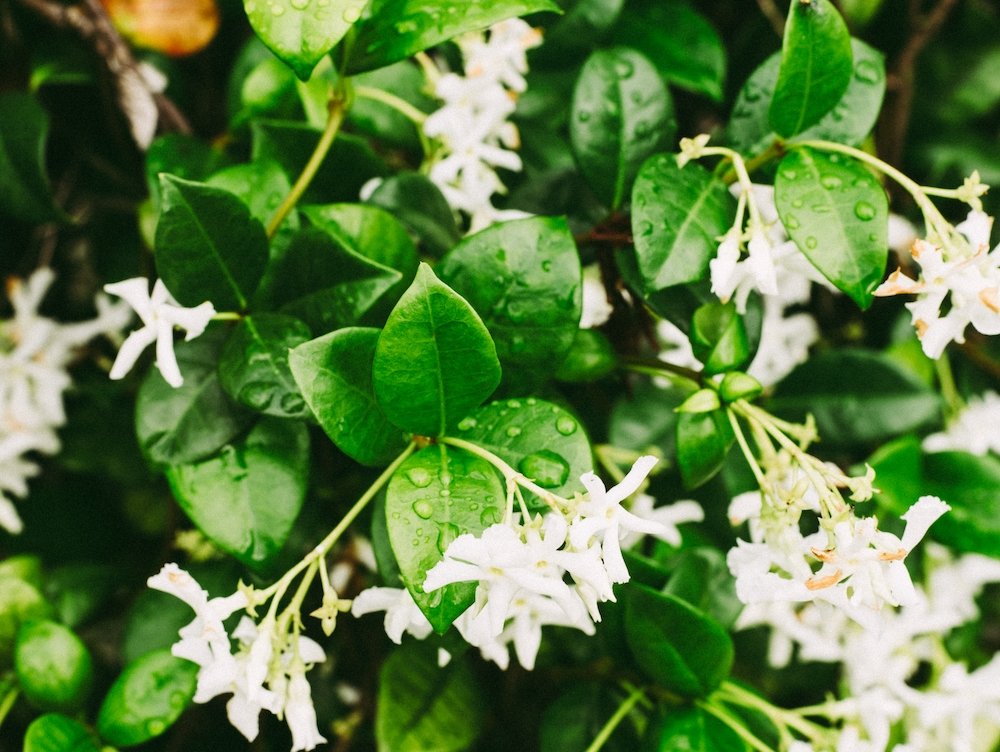
- The enchanting jasmine flower is often celebrated as both ‘the Queen of Flowers’ and ‘the King of Flowers’. Across various cultures, it symbolizes love, romance, weddings, passion, seduction, and beauty. Its significance is so profound that perfumers refer to it simply as ‘La Fleur’—the flower—highlighting its central role in the world of fragrances.
- Even if jasmine is not explicitly listed in a fragrance’s ingredient pyramid, it’s highly likely that a hint of it is present. This is due to its status as one of the most frequently used ingredients in perfumery, enhancing countless scents with its charm.
- The very name ‘jasmine’ has Persian origins, meaning ‘a gift from God’, reflecting the flower’s revered status.
- In ancient cultures such as Persia, Greece, and Egypt, the healing properties of jasmine were already acknowledged. Today, aromatherapists continue to utilize this precious flower for its benefits, which include aiding digestion, promoting weight loss, enhancing metabolism, and its well-known aphrodisiac effects.
- There are over 200 species of jasmine, but two varieties stand out in the realm of perfumery: Jasminum grandiflorum, known as ‘big-flowered jasmine’, and Jasmine sambac, commonly referred to as ‘Arabian jasmine’, despite its roots in Southeast Asia.
- Originating from regions in China and India, jasmine is a fascinating member of the olive family, adding another layer of intrigue to this beloved flower.
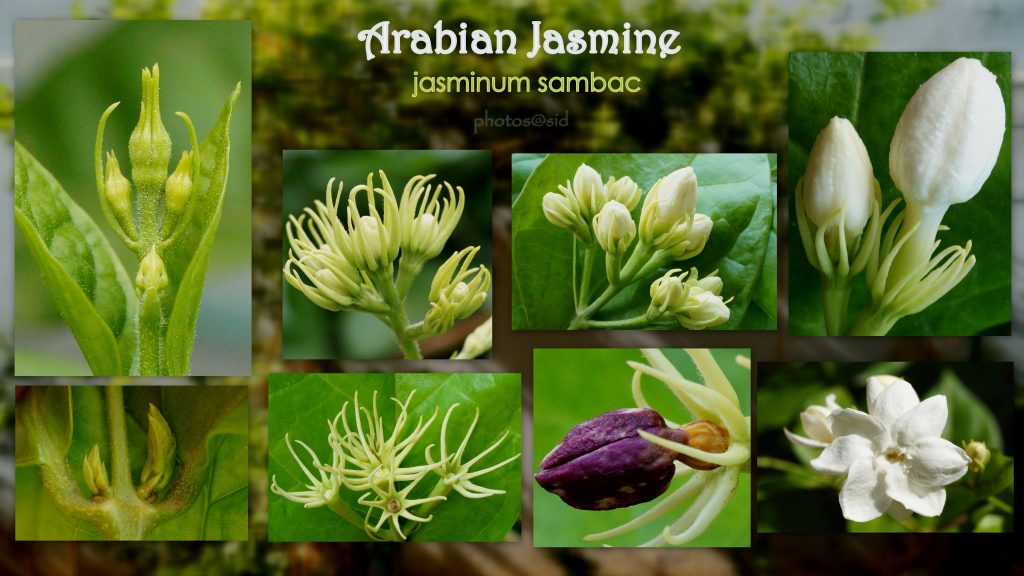 The lifecycle of Arabian jasmine – from Wikipedia.org
The website jardineriaon.com shares fascinating insights into the mythology surrounding jasmine, including this enchanting tale…
‘…the meaning of the jasmine flower occupies an important space within Arab mythology. In this mythology, it is said that a beautiful young nomad named Jasmine used large amounts of veils to shield herself from the harsh sun rays in the desert. A prince from a North African lineage was captivated by Jasmine’s beauty, as described by those who had seen her. He embarked on a quest through the desert to discover her true existence. Upon finding her gracefully walking amid the sands and dunes, he was mesmerized by her elegance, reminiscent of mythological goddesses, and fell deeply in love, despite her face always being concealed. The prince soon proposed, and she accepted, leaving the desert to reside in his palace. Over time, however, she realized that her freedom was lost, and one night she escaped on horseback, returning to her desert home. There, she opened her arms to the sun and released all the veils that shrouded her, leading the sun to immortalize her in the exquisite flower we now know as jasmine.’
It’s truly remarkable how a single plant can exhibit such diverse aromas, influenced by its growing conditions. The skill of perfumers lies in their ability to expertly blend these various jasmine essences into perfectly crafted fragrances for our enjoyment. Stay tuned as we bring you the finest suggestions for jasmine-infused perfumes in the upcoming weeks.
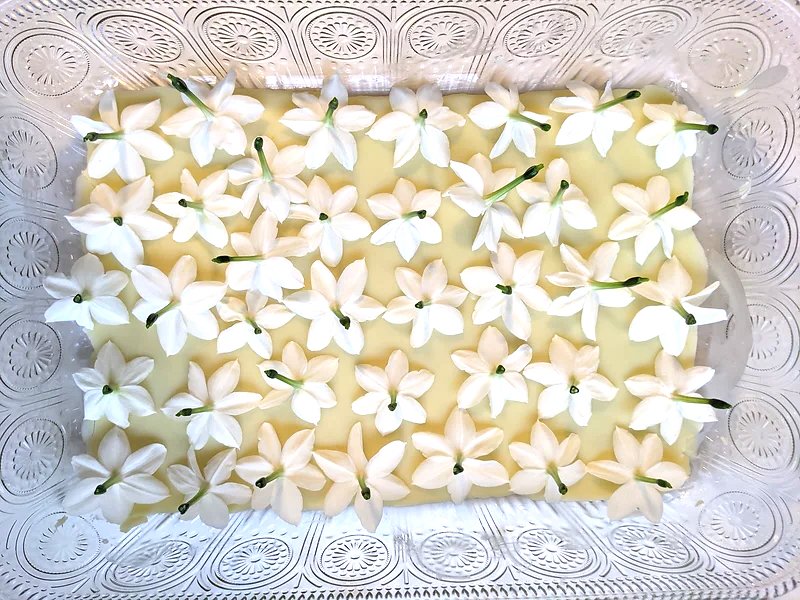 Jasmine enfleurage
For millennia, the captivating scent of jasmine has been extracted for perfumes through the intricate technique of enfleurage. This labor-intensive process involves meticulously pressing countless jasmine flowers into layers of fat, allowing the delicate scent to gradually permeate the fat with each new layer added. This traditional method reflects the artistry and dedication required to capture the essence of jasmine.
Observe
the jasmine lightness
of the moon.— William Carlos Williams
As the solvent evaporates from the mass of petals, the resulting semi-solid mass is referred to as a ‘concrete’: a wax-like substance with an impressive shelf life. To create just one kilogram of this concrete, approximately 400 kilos of jasmine flowers are required—equating to around 8,000 hand-picked blooms for a mere milliliter (1 ml) of the concentrated ‘absolute’. This immense effort contributes to the high cost associated with genuine jasmine products.
However, jasmine can also be synthesized using aroma chemicals and other ingredients to create an ‘accord’. While these synthetic versions can mimic the scent, aficionados assert that the authentic jasmine essence remains unmatched, which is why renowned fragrance houses are eager to share their aromatic tales.
The smell of jasmine makes people tell their secrets.
— Jandy Nelson
Captivating artists, writers, poets, and fragrance enthusiasts alike, jasmine is a scent that deserves intimate exploration. Keep an eye on this space for more fascinating facts about jasmine, its rich history, and fragrance recommendations in the days and weeks to come.
Written by Suzy Nightingale
