



In Currituck County, located on the northern Outer Banks, the maritime forests are lush with southern live oaks. These majestic trees can thrive for up to 300 years, their gnarled trunks emerging from the sandy soil that characterizes the Carolina coast. Over centuries, they have silently observed the evolution of communities and landscapes, adapting to both natural and human-induced changes in their environment.
This remarkable 11-mile stretch, known as “Carova” or “the 4×4,” extends from the North Carolina-Virginia border to the beginning of the paved road in Corolla. Here, a rich tapestry of ecosystems thrives. On the eastern side, the Atlantic Ocean roars and fierce winds batter the homes that stand exposed on the barrier island. Transitioning westward toward Currituck Sound, the forests become denser before giving way to marshy wetlands interspersed with man-made canals. Approaching the northern entrance to False Cape State Park in Virginia, the towering trees can make you forget the nearby beach, creating a serene yet vibrant atmosphere.
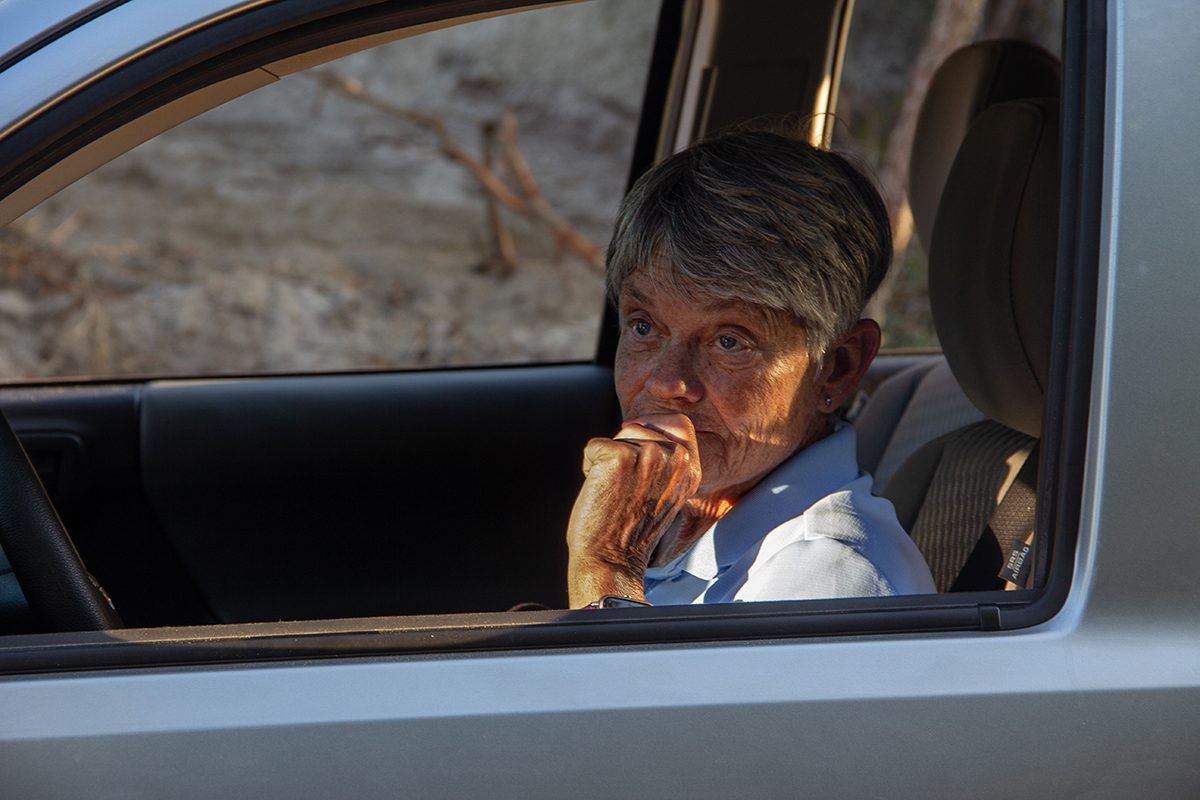
It was the stunning natural landscape and tranquil ambiance of Carova that inspired Edna Baden and Elizabeth White, who have been residents since 1994 and 2004, respectively, to make this place their permanent home.
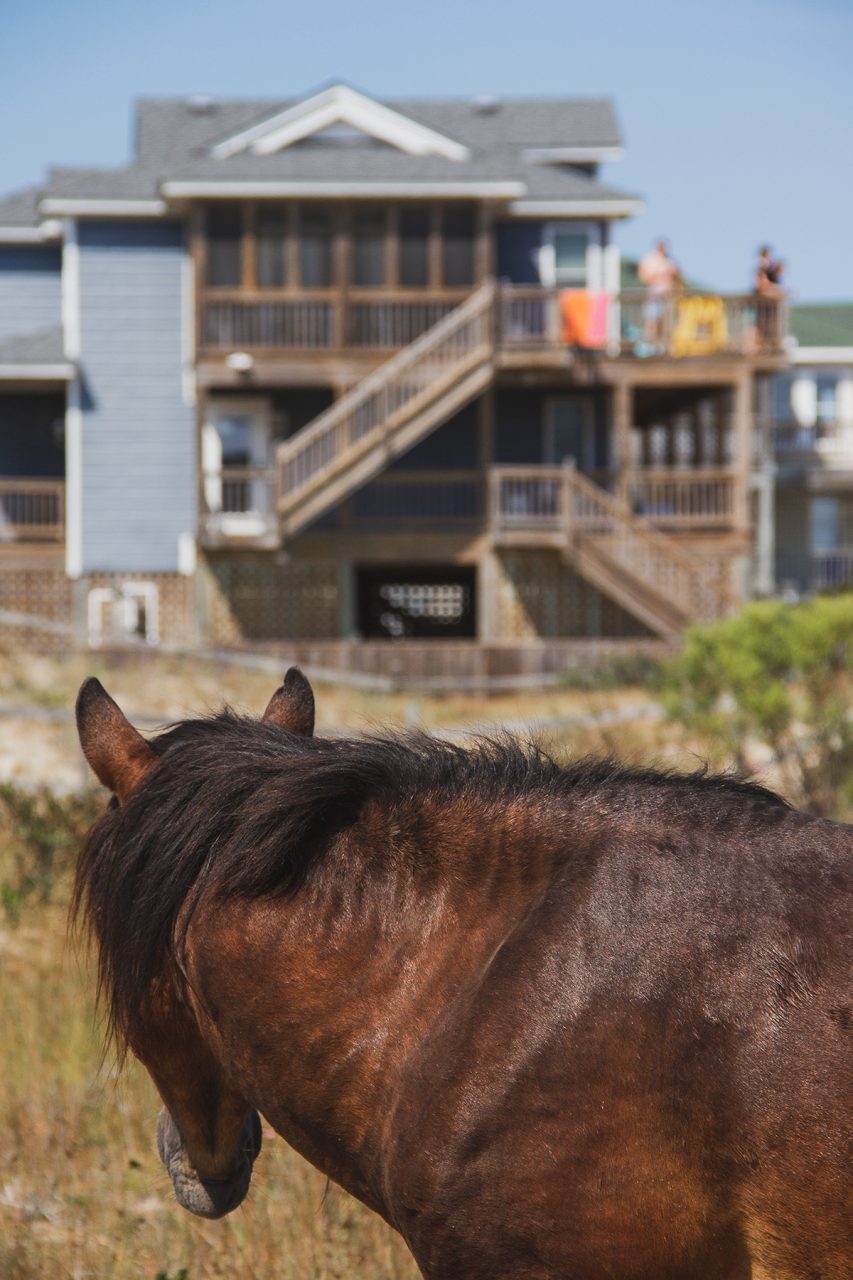
Preserving these undisturbed natural areas is crucial for the survival of a unique herd of wild Colonial Spanish mustangs, which has roamed the 7,544 acres of beach, wetlands, and forests surrounding the 700 homes dotting the landscape for over 500 years. This rare breed relies on the protection of their habitat to thrive in this environment.
According to local legend, today’s herd descends from horses left behind by Spanish settlers who arrived on the North Carolina coast in the late 1500s. Genetic testing conducted by the Corolla Wild Horse Fund, a nonprofit organization established in 1989 to safeguard these horses, lends credibility to this story. Their research indicates that the Corolla wild horses are genetically distinct from other wild horse populations, such as the wild ponies of Chincoteague and Assateague islands.
Historically, the herd roamed freely from the town of Duck all the way to the Virginia border. However, following the expansion of the paved road north to Corolla in the 1980s, the Corolla Wild Horse Fund documented over 30 fatalities among the horses due to increased traffic on N.C. Highway 12. In response, the organization established a sanctuary in the off-road area in 1997 to protect the remaining 20 horses. Today, the herd’s population has grown to approximately 100 individuals.
Meg Puckett, a native Virginian, has served as the herd manager for the Corolla Wild Horse Fund since 2016. She remains on call 24/7 to address emergencies and monitor the horses’ behavior, migration patterns, and overall health. Due to the close-knit community, residents often recognize the horses by name and frequently share updates about their activities with Puckett. This connection illustrates how deeply intertwined the horses have become with the local community.
Despite this bond, Puckett emphasizes that these horses are indeed wild animals, distinct from domesticated breeds. Consequently, the fund strives to minimize its intervention in their lives. However, the changing environment poses significant threats to the horses, prompting the fund to intervene on several occasions in recent years to ensure their survival.
“We had one mare that succumbed to a disease known as Potomac Horse Fever, which is caused by mayfly larvae in the water. This disease typically would be eliminated by deep freezes, which are no longer occurring,” Puckett explained. “Another horse recently died from heat stroke while on the beach.”
Additionally, the past two years have witnessed three confirmed cases and one suspected case of equine pythiosis, colloquially known as swamp cancer, including one mare that had to be evacuated and now resides on the mainland. The Chincoteague herd also experienced losses due to this disease a few years back. “Historically, this infection has only been observed in more tropical climates,” Puckett noted.
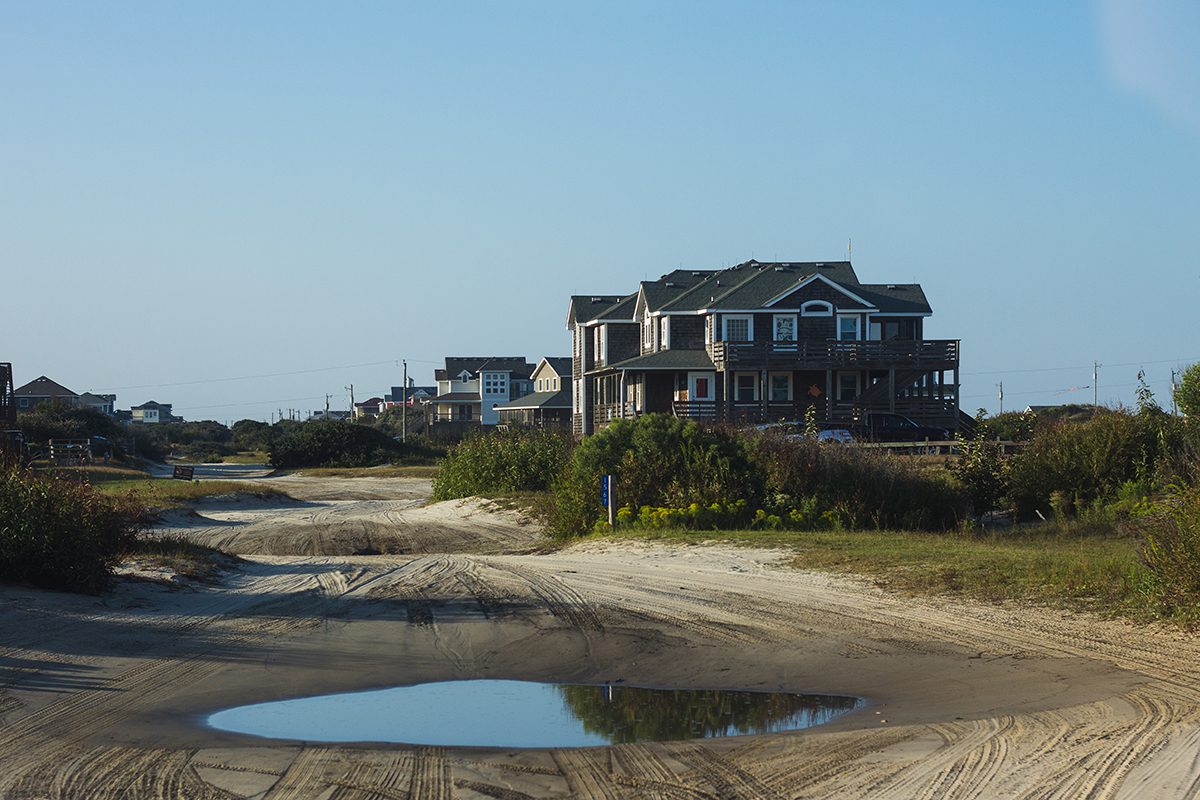
This infection arises from fungal growth in decaying plant matter found in standing water. Irregular weather patterns, exacerbated by climate change, lead to heavy rainfall and droughts, resulting in stagnant water pools, especially on beach roads where tire tracks form indentations in the sand.
“We often experience heavy flooding rains followed by dry periods, leaving patches of stagnant water that never get flushed out,” Puckett explained, highlighting the environmental challenges faced by the horses.
Contaminated water is also a critical issue for residents living on a shallow water table without a coordinated sewage management system. Groundwater levels are typically only a few feet deep in most lots. Baden mentioned that residents used to drink tap water without concern, but that practice has ceased entirely.
Steve Grout, another longtime Carova resident, echoed her sentiments. “Most people invest thousands of dollars in water filtration systems just to ensure the water is clear,” he remarked. “For many, the water that comes out of their faucets is often brown.”
“All of this is interconnected with human activity,” Puckett pointed out. “When we disrupt the marsh … it is supposed to flood and filter that water. When that process is hindered, issues inevitably arise.”
The original inhabitants of Currituck County were the Chowanog, Yeopin, and Poteskyte Native Americans. For centuries, seasonal settlers, including fishermen, lightkeepers, waterfowl hunters, and members of the U.S. Coast Guard, have traversed this land.
It was not until the 1960s that commercial development began to gain momentum in Carova, as developers from Virginia Beach sought to expand. This surge in vehicle traffic along the beaches prompted the U.S. Department of the Interior to intervene, restricting vehicle access in 1973. Today, Carova remains largely untouched by high-rise buildings and commercial developments, making it an attractive destination for vacationers and second-home buyers.
“The appeal of this area lies in its relatively unregulated nature,” explained Clark Twiddy, president of Twiddy & Co., a property management company in the Outer Banks. “Swan Beach, North Swan, and Carova have always been envisioned as natural environments with minimal human disturbance or intrusion.”
However, the allure of a wide-open space comes with inherent repercussions.
Along the sandy roads of Carova, bulldozers idle over heaps of fallen branches and excavated sand. Horses peacefully graze amid “for sale” and “no trespassing” signs at nearly every intersection.
The maritime forest looms behind the dunes, with tree roots stretching beneath vacant lots that await clearing. Despite its designation under the Coastal Barrier Resources System, which aims to disincentivize development in flood-prone areas by stripping federal funding, single-family homes continue to emerge throughout the landscape.
Many residents find employment in the construction, real estate, or tourism sectors, often contributing to the environmental degradation they also strive to protect. The rise in lot sales over the past three years means that more and more lots require clearing, intensifying the pressure on local ecosystems.
Baden expresses concern regarding this trend. “I purchased my house when it was 10 years old,” she reflected. “For all I know, the lot I built on could have once been home to live oak trees.”
The adjacent lot to Baden’s residence was recently cleared. Her neighbor, J-P Peron, a real estate agent and Carova resident, sold it to someone who may soon become a new neighbor. She observed as another neighbor cleared their lot and now refuses to walk on it, feeling it harbors negative energy due to the many deaths that occurred there.
Additionally, extensive construction is taking place in wetlands and other flood-vulnerable areas. Many of these sites, particularly along the Currituck Sound side, are likely to be underwater with just a foot of sea-level rise, which is almost certain by 2050. More intense hurricanes, driven by climate change, are expected to exacerbate flooding in the coming decades.
Residents in Swan Beach, situated on lowland marsh, already face regular flooding issues. To build in these areas, property owners must bring in truckloads of sand to elevate low spots and create space for septic tanks and water systems.
“I’m amazed that construction is occurring in these wetland areas,” White stated. “I never imagined the land in front of my house would be developed, given that it’s clearly wetland, and the water must go somewhere.”
In Currituck County, regulations for construction are minimal, and the absence of federal support does little to deter those who can afford to build. Compounding the issue is the fact that the northern Outer Banks are currently experiencing an extended drought, according to White and her partner, Bill Sanderlin. A common watering hole for the horses in Swan is typically waist-deep but has been completely dry for some time. White and Sanderlin pointed out that many of Swan Beach’s roads are flooded for about half the year, which may mislead recent buyers into believing the land is drier than it is.
Nevertheless, these conditions are not sufficient to deter real estate companies from pursuing buyers. “In the real estate business, we disclose important information. The only significant issue arises from a failure to disclose,” Twiddy remarked.
Once individuals establish themselves as full-time residents, it is common for them to wish to prevent others from moving into the area. This desire may stem from a wish to preserve their privacy or, like Baden and White, to prevent further deforestation and protect more space for the horses.
“The most desirable buyers for vacant lots are those living next door,” Peron noted. “If you have the means and an opportunity, you seize it.” He added, “I purchased a lot south of my home but have been unable to acquire one to the north, despite trying for over a decade.”
“You chose that lot because it was so lovely and open,” he continued, “but the last thing you want is a massive house constructed just 20 feet away from you.”
The presence of the horses also contributes to this land acquisition effort. Residents are actively working to purchase land to remove it from development, ensuring the horses have sufficient space to roam and take shelter during extreme weather events.
“Our goal is to raise enough funds to acquire all the land in a corridor connecting Swan Beach to the Virginia line,” White shared, describing her involvement in this initiative.
Peron has successfully secured two land donations for the Corolla Wild Horse Fund, particularly in areas that are challenging to develop. Puckett fully supports this practice, stating, “Any lot taken out of development is a positive move.”
Preparing for Climate Change Challenges in Carova
Carova faces imminent threats from climate change, raising critical questions about how residents in the 4×4 area and across the state will respond to these challenges.
One state initiative actively working on the ground is the North Carolina Resilient Coastal Communities Program, managed by the state Division of Coastal Management. This program aims to equip communities with the expertise and funding necessary to execute resilience and adaptation projects. Representatives from Currituck County are involved, although the only listed project in the 4×4 area is a shoreline stabilization study focused on exploring options for beach nourishment.
Further south, on Pine Island sanctuary in Currituck Sound, Audubon North Carolina is initiating marsh restoration pilot projects aimed at strengthening eroding shorelines and elevating sinking wetlands through sediment application and constructing structures using natural materials like Christmas trees.
The advantages of acquiring neighboring lots extend beyond protecting the horses; it also enhances ecosystem connectivity for other wildlife. “Our shared presence here is not coincidental. We are united by our desire to preserve this environment,” Puckett emphasized. “Protecting the horses inherently means protecting the environment. If the habitat is suitable for the horses, it will also be conducive to the health of all other wildlife.”
However, none of these initiatives will meaningfully assist Carova residents in preparing for rising sea levels, intensified storms, extreme heat waves, or other climate threats anticipated in the future.
Edward Ponton, one of the few full-time residents with deep family roots in the 4×4 area, questions whether these threats are taken seriously enough, especially since individuals with multiple homes can easily escape. The Ponton family has called Swan Beach home for generations and intends to remain in the area.
“You can’t help but wonder if some of those individuals will profit from their investments and leave, while we’re left to contend with whatever challenges arise,” Ponton reflected. “My father often remarks that piracy still thrives on the Outer Banks.”
This is the second installment in a two-part special reporting series on climate change along the northern Outer Banks. Read part one here. This series is part of the Pulitzer Center’s nationwide Connected Coastlines reporting initiative.
