


In August, Australian Olympic gymnast Georgia Godwin achieved an incredible milestone by winning five medals at the 2022 Commonwealth Games. This impressive feat ties her with Allana Slater as Australia’s most successful Commonwealth Games gymnast. However, it was her poignant remarks following her second gold medal victory in consecutive days that shed light on the challenges many athletes face on their journey to success.
“I strive to demonstrate that gymnastics is a safe sport where everyone should feel secure while practicing,” Godwin expressed after clinching the individual vault gold medal.
“And we are moving in a positive direction, which is truly encouraging to witness.”
READ MORE: Why Yvie Jones disliked this childhood photo for years
The world of gymnastics, both in Australia and globally, has been overshadowed in recent years by various scandals and controversies.
The former doctor for the United States women’s national gymnastics team, Larry Nassar, was sentenced to 60 years in prison for his sexual assaults against the athletes under his care. This troubling issue was highlighted in the 2020 Netflix documentary Athlete A, whose release opened the floodgates for numerous public allegations of abuse and claims of a “toxic” culture within the sport, voiced by Australian athletes.
In response, an independent cultural review was conducted by the Australian Human Rights Commission, commissioned by Gymnastics Australia. The report, published in May 2021, unveiled “systemic risk factors” such as child abuse, neglect, bullying, misconduct, and sexual harassment directed at athletes within the sport.
Following the release of this “confronting” report, Gymnastics Australia issued an apology to its athletes and acknowledged the significant work still required. Now, over a year later, they are beginning to take tangible steps toward fulfilling their commitments.
READ MORE: Vile call AFLW star Jess Hosking received from a total stranger
The Emotional Journey of Achieving Athletic Greatness
There’s a powerful photograph of former elite gymnast Alexandra Eade taken during the 2018 Commonwealth Games on the Gold Coast, capturing a moment filled with raw emotion.
In the image, she beams with joy on the podium, tears streaming down her face as the national anthem plays. The significance of the moment is clear; after 16 years dedicated to gymnastics, the then-20-year-old had just secured a gold medal in the floor event, following a bronze medal in the team all-around event just days earlier.
However, what the camera failed to capture were the turbulent moments leading up to this milestone. Despite experiencing one of the highest achievements an athlete can hope for, Eade felt unable to genuinely celebrate, as her triumph was overshadowed by the difficult experiences she endured behind the scenes.
READ MORE: Gut-wrenching phone call hours before baby’s scary premature birth
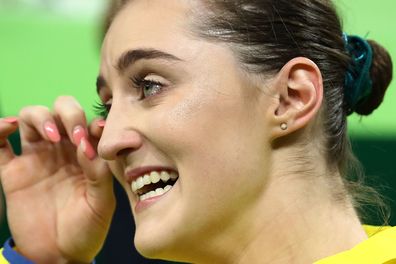
Eade’s journey began at the age of four when she attended her first gymnastics training session. What followed was a grueling 18-year commitment, during which “gymnast” became her defining identity. From competing at a local club to training 32 hours a week from the age of 11 or 12, she eventually found herself medaling at the 2018 Commonwealth Games.
Despite her stellar performance in 2018, Eade felt she could not fully celebrate her achievements.
Foremost, she was physically and mentally drained. Years of rigorous training took a toll, and she describes a culture where her weight and food intake were closely monitored by coaches and staff, which she characterizes as “body-shaming.”
“I was just so exhausted that celebrating felt impossible,” Eade explains to 9Honey. “Moreover, my significant achievements were not recognized as they should have been.”
“Winning gold at the Games is one of the pinnacle experiences an athlete can have, yet it was downplayed significantly…”
READ MORE: Alex Nation’s ‘horrendous’ pregnancy sparks sad decision
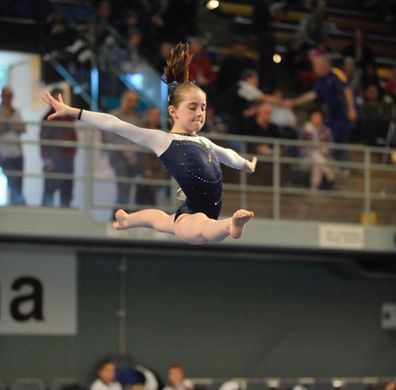
Immediately following her medal-winning performance, Eade was met with critiques from her coaches, who remarked that it “could have been better” and that she “could have scored higher.” While she acknowledges that these critiques were “truthful,” she questions why such accomplishments were not celebrated.
“Every performance can always be improved, but why not take the time to celebrate victories?” she asks. After the Commonwealth Games, she experienced a significant emotional drop, feeling uncertain about her gymnastics career and the perception that her achievements were not acknowledged as special.
“It may sound trivial, but my friends and family outside of gymnastics were the ones who celebrated my accomplishments, saying, ‘Oh my God, that’s an incredible achievement.’ It was their excitement that helped me realize how significant it actually was,” she reflects. “It took perspectives from those outside the gymnastics world for me to appreciate my success.”
Twenty months after her Commonwealth Games triumph, Eade announced her retirement from competitive gymnastics in November 2019. Eight months later, she joined at least 20 fellow Australian gymnasts in speaking out about alleged abuse and mistreatment throughout their careers.
READ MORE: Push for ‘fur mums’ to gain ‘same rights as working parents’
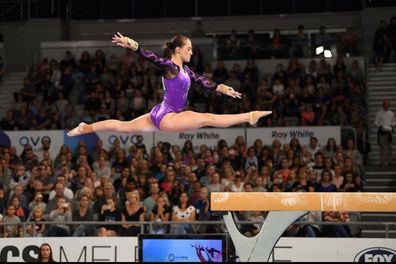
Eade, while acknowledging that others’ accusations of sexual assault do not “resonate” with her, admits to feeling “salty” when Athlete A was released, as it triggered memories of her own alleged mistreatment in the sport.
One incident remains vivid in her memory: while competing overseas, she fell off the bars, and her coach reportedly yelled at her, claiming her fall was due to her “heavy bum.” Eade recalls pushing through her tears to continue.
“Kim Kardashian faced backlash for losing [seven kilograms] in three weeks for her personal reasons, which is undeniably unhealthy,” Eade states. “But that was the expectation placed on us – to make drastic changes in our body composition in between sessions, which is unrealistic and detrimental for a young woman going through puberty.”
Eade also recounts participating in a “really big” competition abroad, where she and other athletes were subjected to 16 days of exhaustive training with inadequate food. She sustained an Achilles injury during that competition, yet her coaches allegedly accused her of lying about it just to avoid practice. Consequently, she competed despite her tendon injury.
The treatment that Eade and her peers experienced during the 2018 Commonwealth Games was reportedly “similar.”
“It’s difficult to reflect on those times,” Eade shares. “[Back then] you think, ‘This is what we must endure to be the best.’ While it’s true that some level of perseverance is needed, the fat-shaming, yelling, and harsh discipline are simply unnecessary.”
READ MORE: Dami Im speaks out about ‘traumatising’ alleged abuse at record label

The combination of various factors ultimately led to Eade’s retirement. However, she believes the critical reason was the “lack of support from [her] coaches and support staff.”
As she progressed in the sport she loved from childhood, Eade’s mental health began to deteriorate. Months prior to her retirement, she was pulled from a competition due to a minor injury, yet she claims she was also “forced” to return to compete after an injury when she “wasn’t ready,” leading to a severe leg fracture.
“That decision was taken away from me, stripping me of my autonomy,” Eade recalls, noting that after her leg injury, she felt abandoned by the sporting organization, as if she had been “pushed aside.”
“Physically, my body was in pain, and I began to realize how miserable I was, which directly impacted my mental health,” Eade reflects. “I had to ask myself, ‘Is this truly what I want?’”
Ultimately, Eade concluded it was not. Although she did not feel she retired “on [her] own terms,” she continues to wrestle with that reality three years later.
“I still miss achieving extraordinary feats and feel I had more to contribute. Unfortunately, the lack of support forced me to retire due to a serious injury,” she shares.
READ MORE: Sydney mum’s tough decision after reaching a crisis point
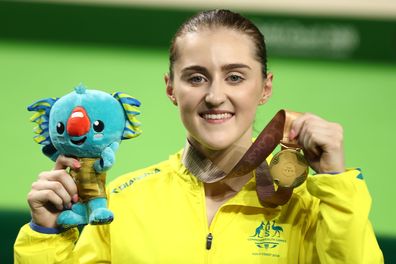
Innovative Body Care Framework by Gymnastics Australia Sets New Standards in Athlete Care
A significant part of Eade’s healing journey has involved collaborating with Gymnastics Australia on their groundbreaking Body Care Framework, developed in partnership with the Butterfly Foundation and both past and present athletes in response to the Australian Human Rights Commission’s report.
“We aim to educate and demonstrate that there are alternative approaches to discussing and perceiving bodies,” explains Tracey Menzies-Stegbauer, Wellbeing and Engagement Manager at Gymnastics Australia, in an interview with 9Honey.
“The athlete’s body is just one part of who they are, and recognizing the whole athlete is crucial.”
The Body Care Framework is pioneering as the first of its kind in high-performance sports globally, and it is being implemented across all levels of gymnastics in Australia, including local clubs.
Its primary goal is to “create an environment where every body is respected, nourished, and empowered to reach their personal goals.” Currently, Gymnastics Australia is focusing on educating its community about the framework and its implications for supporting athletes and addressing potential misconduct following its launch earlier this year.
“It’s essential to ensure that the athletes’ voices are acknowledged and respected,” Menzies-Stegbauer continues, emphasizing that the framework also provides coaches with the necessary resources and education to assist their athletes when they require support from specialists, such as a GP or psychologist.
READ MORE:

Sienna Blake is a licensed aesthetic consultant and beauty writer specializing in cosmetic surgery advancements and non-invasive treatments. With a background in dermatology and over eight years of industry experience, Sienna is passionate about helping people achieve confidence through informed beauty decisions. She holds a Bachelor's degree in Health Sciences and regularly collaborates with top plastic surgeons to stay at the forefront of aesthetic innovations. Outside of her work, Sienna enjoys traveling, skincare research, and practicing Pilates.
