



Adapting our skincare routines to the specific demands of each season is vital for maintaining healthy skin. However, doing so twice daily can feel daunting. Our skin endures a myriad of daily environmental stressors, making it imperative to have a well-structured nighttime skincare routine that facilitates its recovery and renewal.
Interestingly, even while we sleep, our skin is actively engaged in a restorative process. This highlights the significance of having a comprehensive nighttime skincare regimen! In this article, we will explore the contrasting roles of our skin during the day and night, and how your evening routine can pave the way for achieving the ultimate ‘beauty sleep’.

The Daily Challenges Our Skin Faces and Their Impact
Have you ever stopped to consider why your morning and nighttime skincare routines differ so greatly? The answer is straightforward: our skin has unique requirements to effectively combat the challenges of the day versus the need to recuperate overnight. Daily exposure to a range of pollutants can significantly overwhelm the skin’s natural ability to repair itself.
Factors such as outdoor pollution, harmful UV rays, and free radicals play a substantial role in degrading skin health over time. Additionally, fluctuations in temperature, whether due to high humidity or dry conditions, can disrupt the skin’s natural balance. Even if you spend your day indoors, electronic devices emit blue light, which can gradually damage your skin’s layers.
These external aggressors pose a significant threat to our skin’s vitality. The consequences can manifest as a lack of radiance, uneven hyperpigmentation, and skin that feels dry or overly reactive. The presence of free radicals also accelerates the aging process, leading to the development of fine lines and wrinkles, ultimately affecting our skin’s overall appearance.
The Skin’s Nighttime Restoration Process
A restful night of sleep does more than just stave off the “you look tired” remarks. It actively engages your body in healing and rejuvenation. While you drift off into slumber, your skin takes advantage of this downtime to undergo a cellular recovery process. Increased blood flow during sleep ensures that your skin receives the nutrients and oxygen it needs, allowing you to wake up with a radiant, healthy glow!
This boosted circulation not only helps you feel more refreshed and energetic but also diminishes dark circles under your eyes. While you indulge in restorative sleep, the processes of cell mitosis—wherein skin cells divide and renew—peak. This includes the shedding of dead skin cells and their replacement with fresher, healthier cells. As a result, you awaken to vibrant, revitalized skin!
While many skin functions operate at their peak during the night, factors like Transepidermal Water Loss (TEWL) increase, while sebum production tends to decrease. As your immune system works overtime to restore itself, your skin’s capacity to retain moisture diminishes. This is precisely why implementing a thorough nighttime skincare routine is crucial for maintaining hydration and support.
The Essential Role of Your Nighttime Skincare Routine
Are you prepared to achieve stunning skin while maximizing your sleep? Embracing the journey to dreamland is intrinsically linked with an effective evening skincare regimen.
During the night, the enhanced blood flow to your skin plays a critical role in rebuilding collagen and repairing damage incurred from UV exposure, which helps to combat the appearance of wrinkles and age spots.
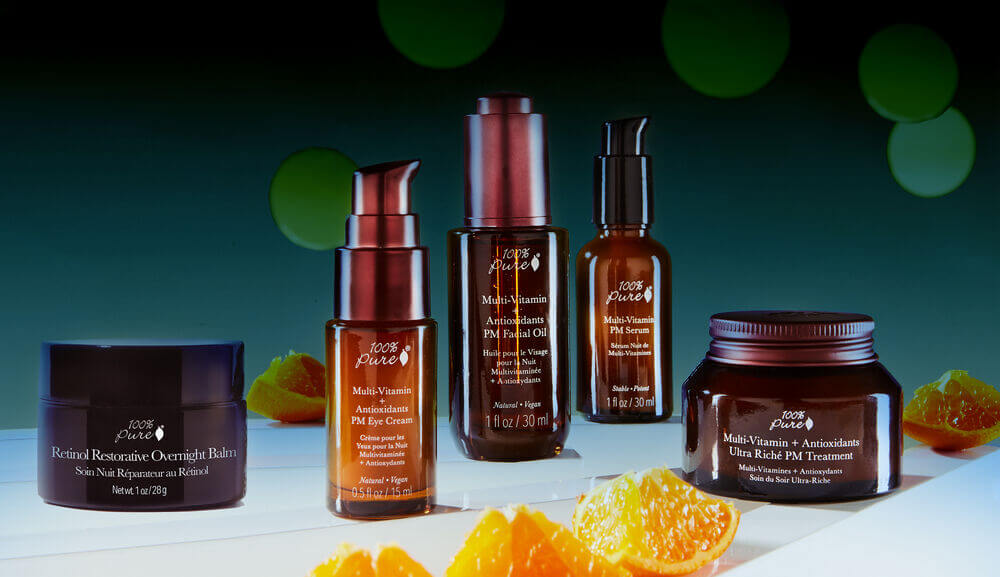
Incorporating a nightly face balm into your skincare routine could be the key to unlocking a new level of skin health. This product is essential for maintaining deep hydration and promoting visible improvements. Our Retinol Restorative Overnight Balm is gentle enough for frequent use and is infused with soothing jasmine essential oil, which not only tones the skin but also aids in lulling you into a peaceful night’s sleep.
For those struggling with dryness, introducing the Multi-Vitamin + Antioxidants Potent PM Serum can provide significant benefits for aging skin. This serum is packed with hydrating ingredients like rose water, hyaluronic acid, rosehip oil, and sea buckthorn oil. For extra hydration, consider sealing in moisture with the rich and reparative Multi-Vitamins + Antioxidants Ultra Riche PM Treatment. Additionally, if you wish to lock in hydration and nourishment, we highly recommend using a vitamin-packed facial oil, such as our Multi-Vitamin + Antioxidants PM Facial Oil.
And let’s not overlook the delicate eye area! The skin surrounding your eyes requires special attention, which can be achieved through our Multi-Vitamin + Antioxidants PM Eye Treatment.
Indeed, the concept of ‘beauty sleep’ holds significant truth! By intertwining a healthy lifestyle with an effective evening skincare routine and ensuring you get ample rest, you can provide your skin with the necessary resources for repair and recovery. This is a winning strategy for revitalizing your skin and enhancing your overall well-being.
Common Questions About Nighttime Skincare and Its Benefits
What Skin Processes Occur During the Night?
At night, your skin shifts into a recovery and repair mode, driven by several physiological changes that take place during sleep. Enhanced blood flow facilitates the delivery of essential nutrients and oxygen to the skin, aiding in the repair of damage caused by UV rays and environmental pollutants. Cellular regeneration peaks at night, allowing the skin barrier to repair and rejuvenate itself. This regeneration is vital for mitigating the signs of aging and ensuring your skin remains healthy and resilient.
How Do Daytime and Nighttime Skincare Routines Differ?
The primary distinctions between daytime and nighttime skincare routines lie in their purposes and the types of products utilized:
Daytime routines are largely focused on protection. They typically incorporate products containing SPF to shield the skin from harmful UV rays, as well as antioxidants that defend against pollutants and environmental stressors. Moisturizers used during the day tend to have a lighter consistency, allowing them to sit comfortably under makeup.
Conversely, nighttime routines concentrate on repair and deep hydration. They often involve richer moisturizers and specialized treatments that support skin regeneration, including retinol, peptides, and hyaluronic acid. Since sun exposure isn’t a concern at night, you can safely use products that may increase skin sensitivity to sunlight, such as retinol.
Why Is Moisturization Critical in a Nighttime Skincare Routine?
Moisturization at night is vital because, during sleep, your skin undergoes significant water loss through evaporation, known as transepidermal water loss (TEWL). Applying an effective moisturizer helps to lock in hydration and fortify the skin’s barrier, preventing excessive moisture loss. A robust barrier means your skin is better equipped to repair itself and defend against irritants. Night creams and moisturizers are generally richer in texture and contain active ingredients that promote skin elasticity and recovery.
How Does Retinol Enhance Nighttime Skin Repair?
Retinol, a vitamin A derivative, is renowned for its anti-aging and skin-repairing properties. It functions by promoting cell turnover and stimulating collagen production, leading to a reduction in the visibility of fine lines, wrinkles, and age spots. Additionally, retinol improves overall skin texture and tone. Because it accelerates cell renewal, it can increase skin sensitivity to UV rays, which is why it is best utilized in the evening. Over time, retinol contributes to a firmer, more youthful skin structure.
What Role Do Peptides Play in Nighttime Skin Recovery?
Peptides are short chains of amino acids that are vital for producing proteins like collagen, elastin, and keratin. These proteins are essential for maintaining the skin’s firmness, elasticity, and overall strength. When included in skincare products, peptides signal the skin to generate more collagen, aiding in the repair of skin damage and minimizing the signs of aging. During the night, while your skin is actively repairing itself, peptides can bolster the skin’s natural regeneration process, resulting in enhanced texture and a reduction in fine lines and wrinkles.
A thorough understanding of your skin’s distinct nighttime needs and selecting appropriate products that facilitate its natural repair processes can greatly enhance both the health and appearance of your skin. Nighttime represents a unique opportunity to utilize potent ingredients that work in harmony with your skin’s natural rhythms, leading to clearer and more youthful-looking skin.
var windowWidth,lazyLink,lazyImages,lazySource,lazyBackground,lazyIframe,lazyScripts,navigator_platform,lazyLoadedJS,src,style,datasrc,urls,analytics,s,x,i,j,flag;
function init(){flag&&(flag=0,load_all_js(),lazyLoadImg(),lazyLoadBackground(),lazyLoadIframe(),lazyLoadSource())}
function isElementInViewport
var a=t.getBoundingClientRect();
return a.top>=0&&a.left>=0&&a.bottom<=(window.innerHeight||document.documentElement.clientHeight)&&a.right<=(window.innerWidth||document.documentElement.clientWidth)
}
function insertAfter(newNode, referenceNode) {
referenceNode.parentNode.insertBefore(newNode, referenceNode.nextSibling);
}
function isElementInView
var a=t.getBoundingClientRect();
return a.top(window.innerHeight/2||document.documentElement.clientHeight/2)
}
function lazyLoadLink(){
lazyLink.forEach(function
t.href=null==t.dataset.href?t.href:t.dataset.href
})
}
function lazyLoadImg(){
lazyImages.forEach(function
null!=(src=windowWidth<600?null==t.dataset.mobsrc?t.dataset.src:t.dataset.mobsrc:t.dataset.src)&&(t.src=src),t.classList.remove("lazy2")
})
}
function lazyLoadImg2(){
lazyImages.forEach(function
isElementInViewport
})
}
function lazyLoadSource(){
lazySource.forEach(function
t.srcset=null==t.dataset.srcset?t.srcset:t.dataset.srcset
})
}
function lazyLoadBackground(){
lazyBackground.forEach(function
lazybg=windowWidth<768?null==t.dataset.mobstyle?t.dataset.style:t.dataset.mobstyle:t.dataset.style,null!=lazybg&&(t.style=lazybg),t.classList.remove("lazybg")
})
}
function lazyLoadIframe(){
lazyIframe.forEach(function
t.src=null==t.dataset.src?t.src:t.dataset.src
})
}
function lazyLoadScripts(){
j!=lazyScripts.length&&("lazyload2"==lazyScripts[j].getAttribute("type")?(lazyScripts[j].setAttribute("type","lazyloaded"),void 0!==lazyScripts[j].dataset.src?((s=document.createElement("script")).src=lazyScripts[j].dataset.src,document.body.appendChild(s),s.onload=function(){j++,lazyLoadScripts()}):((s=document.createElement("script")).innerHTML=lazyScripts[j].innerHTML,document.body.appendChild(s),j++,lazyLoadScripts())):(j++,lazyLoadScripts()))
}
function lazyLoadCss
(s=document.createElement("link")).rel="stylesheet",s.href=t,document.getElementsByTagName("head")[0].appendChild(s)
}
function lazyLoadJS
if(lazyLoadedJS)return setTimeout(function(){lazyLoadJS
}
function wnwAnalytics() {
var script2 = document.querySelectorAll(".analytics");
script2.forEach(function(analyticsScript) {
trekkie.integrations=false;
s = document.createElement("script");
s.innerHTML = analyticsScript.innerHTML;
insertAfter(s, analyticsScript);
analyticsScript.parentNode.removeChild(analyticsScript);
});
}
document.addEventListener("DOMContentLoaded",function(){windowWidth=screen.width,lazyLink=document.querySelectorAll("link"),lazyImages=document.querySelectorAll("img.lazy2"),nolazyImages=document.querySelectorAll("img.lazy"),lazyBackground=document.querySelectorAll(".lazybg"),lazyIframe=document.querySelectorAll("iframe"),lazySource=document.querySelectorAll("source"),lazyScripts=document.getElementsByTagName("script"),navigator_platform=navigator.platform,i=0,j=0,flag=1,window.addEventListener("scroll",function(){init()}),window.addEventListener("mousemove",function(){init()}),window.addEventListener("touchstart",function(){init()}),"Linux x86_64"!=navigator_platform&&init(),setTimeout(function(){init()},60000)});
function load_all_js() {
lazyLink=document.querySelectorAll("link");
lazyLoadLink();
}
