



[ad_1]
A perfume may smell distinct on each individual due to unique skin chemistry and specific skin type. The natural oils, pH levels, and even dietary habits of your body influence how fragrance notes evolve into a personalized scent profile.
Imagine spraying the same perfume on two different people and leaving the room. When you return an hour later, one person radiates like a sun-kissed garden, while the other emits an aroma reminiscent of something medicinal. Identical fragrance, yet entirely different experiences.
This phenomenon is not a flaw; it is simply skin chemistry at work.
Fragrance is a dynamic entity. Upon contact with your skin, it begins to interact with your body temperature, natural oils, dietary choices, and even the humidity of your environment. A scent that blooms beautifully on one person may come across as flat, sharp, or oddly synthetic on another. Understanding these factors is essential in discovering a fragrance that truly complements you—not just how it smells in the bottle or on a test strip, but how it resonates with you several hours later.
Your Skin Chemistry: The Foundation of Fragrance
Individuals with oily skin possess a unique chemistry that retains fragrance longer. The oils cling to the fragrance molecules, slowing their evaporation, which allows the base notes—such as amber, woods, and musks—to fully develop over time. Conversely, dry skin absorbs perfume oil quickly, often leading to a scent that dissipates within an hour.
Cooler skin tends to keep fragrance close, creating an intimate aura that barely projects beyond arm’s length. In contrast, warmer skin can push scent outward, sometimes more intensely than intended.
Skin chemistry encompasses various factors: pH levels, the natural oils produced by your body, and the specific mix of compounds residing on your skin at any given moment. These factors vary significantly among individuals, resulting in the same perfume smelling remarkably different on two people standing side by side. Not just slightly different—sometimes, it can be entirely unrecognizable.
When you add your unique scent to the mix, what you wear is never merely the perfume. It becomes the perfume combined with your individuality.
Understanding Biological Factors That Influence Scent
The biological factors influencing scent are more complex than many people realize. Hormonal fluctuations are significant yet often overlooked contributors.
Hormones can alter how fragrances interact with your body in subtle ways. For instance, estrogen can intensify scent sensitivity, which is why a fragrance may smell overwhelmingly strong at certain points in a woman’s monthly cycle, only to be barely perceptible a week later. During pregnancy, hormonal changes can even transform a familiar scent into something unpleasant. skin chemistry evolves with age, which is one reason why a perfume that you adored at twenty-five may smell completely different at forty.
Genetics also plays a crucial role. The ability to detect and interpret aromatic compounds varies from person to person, independent of personal preferences. For instance, some individuals might not be able to smell specific scent molecules at all, a condition known as specific anosmia. As a result, two fragrance enthusiasts wearing the same eau de parfum may perceive it entirely differently. Neither is incorrect; their biology simply processes the notes in distinct ways.
Unique skin chemistry is not a problem to fix; it is what makes a fragrance uniquely yours.
How Your Diet and Lifestyle Affect Fragrance
Your diet can subtly alter your natural body odor. Consuming spicy foods, garlic, or high-sugar items can shift the underlying scent that interacts with the perfumes you apply. For instance, a vanilla-forward fragrance after a heavy meal may veer into an overly sweet territory, while a citrus scent on a day when you’ve indulged in garlic can become sharp and off-putting.
Medications can also modify body chemistry, leading to unpredictable interactions with perfume oils. Physical activity raises body temperature, causing fragrances to bloom more rapidly and project more intensely, but the dry-down phase may arrive sooner. A scent that lasts all day when you’re seated at a desk might fade away within two hours if you’ve been active.
These variations do not indicate a flaw in the perfume but highlight the active role skin plays in how a fragrance is perceived.
The Impact of Your Environment on Fragrance
During summer, heat accelerates evaporation, causing fragrances to project strongly, sometimes excessively. Fragrances that are perfectly balanced for cooler weather can feel overwhelming on hot days. In winter, cold air keeps fragrance molecules closer to the skin, often resulting in a quieter, more intimate scent experience.
Humidity can influence fragrance in the opposite manner. Moist air can trap scent molecules near the skin for longer, which is why a fragrance may feel richer and more enduring on a warm, humid evening compared to a dry, air-conditioned environment. Various surroundings—urban air, cleaning products, recycled office air—can dull or alter a fragrance’s character over time.
Layering fragrances can enhance your scent experience. Using a matching body lotion or complementary scents from a home fragrance diffuser within the same fragrance family can anchor the scent and increase its resilience against environmental factors. Fragrances from the same house often harmonize rather than clash.
The Best Methods for Testing Fragrance
Testing fragrances on paper strips is ineffective for anything beyond an initial impression. They primarily reveal the top notes, leaving much of the fragrance’s essence unexplored.
The only way to determine if a fragrance truly complements you is to apply it to your skin—preferably on your inner wrist or the crook of your arm—and leave it undisturbed for at least thirty minutes. An hour is even better. Scent perception evolves as the fragrance dries down. What might initially smell fresh and appealing can transform into something entirely different or even extraordinary by lunchtime.
Avoid rubbing the fragrance into your skin. Rubbing disrupts the perfume molecules and collapses the scent structure before it has a chance to develop fully. Spray, wait, and observe.
Shop for fragrances in the morning when your sense of smell is most acute. Limit your tests to two or three fragrances per session; beyond that, your scent perception may become unreliable, leading to decisions influenced by nose fatigue rather than the fragrance itself.
Skin Type, Hydration, and Fragrance Longevity
Dry skin is the most common reason fragrance fades more quickly than anticipated and can alter how a perfume smells. It absorbs perfume oil rapidly, leaving the scent molecules with little to attach to. The solution is straightforward: moisturize before applying perfume. An unscented body lotion acts as a barrier that slows down evaporation. A basic body oil containing natural oils like jojoba or sweet almond is even more effective, as it helps retain fragrance molecules and skin oils together, providing the scent with a foundation.
Acidic skin can intensify certain notes, especially florals and citruses, while oily skin tends to soften and prolong them. Neither skin type is inherently superior; they simply yield different results. Understanding your skin type can guide both your fragrance selections and application methods.
Hydrated skin enhances the overall quality of fragrance. Notes like vanilla, musks, and woods appear smoother and more well-rounded on moisturized skin. In contrast, the same base notes may come across as powdery or flat on dry skin.

Selecting the Right Fragrance for Your Skin Chemistry
If you’ve ever felt that a perfume didn’t suit you—too sharp, overly synthetic, or oddly flat—often, the issue lies not with the fragrance itself but with a mismatch to your unique skin chemistry.
Fragrances heavy on synthetic components tend to rest on the skin’s surface. Natural essential oils, however, interact with your skin oils, forming a scent that feels more like an extension of you rather than something merely applied. For individuals who find scents fade quickly, Eau de Parfum Intense is typically a better choice. The higher concentration of fragrance oils allows for slower evaporation and a more gradual transition through the scent notes.
Consider genderless fragrances as well. Designed to harmonize with a broader range of skin chemistries, they often adapt more seamlessly to individual biology compared to those tailored for a specific demographic. The ideal scent isn’t necessarily the one that smells best in the bottle; it’s the one that works best with your personal chemistry and develops beautifully over time.
Discover a Pairfum London Fragrance That Complements Your Skin
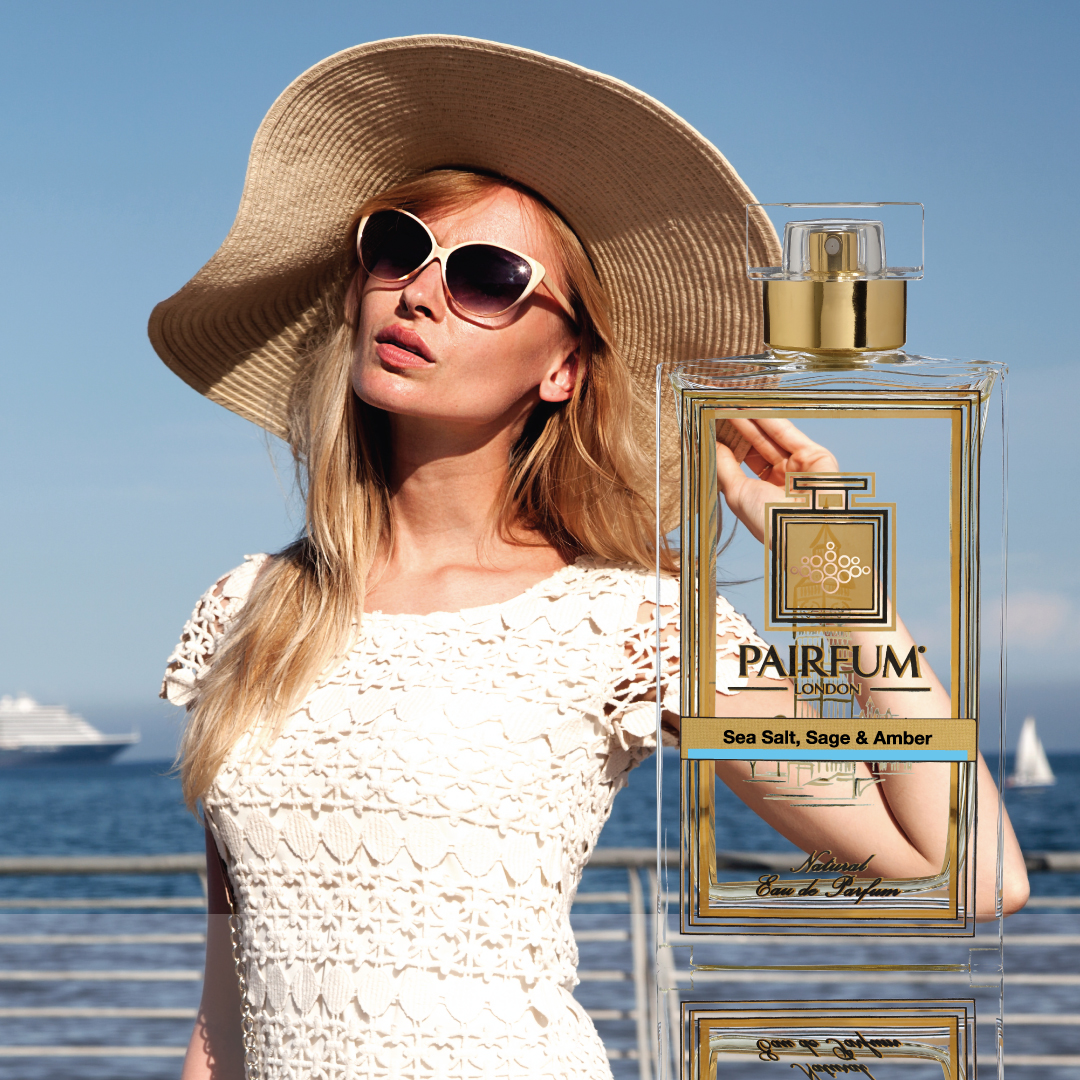
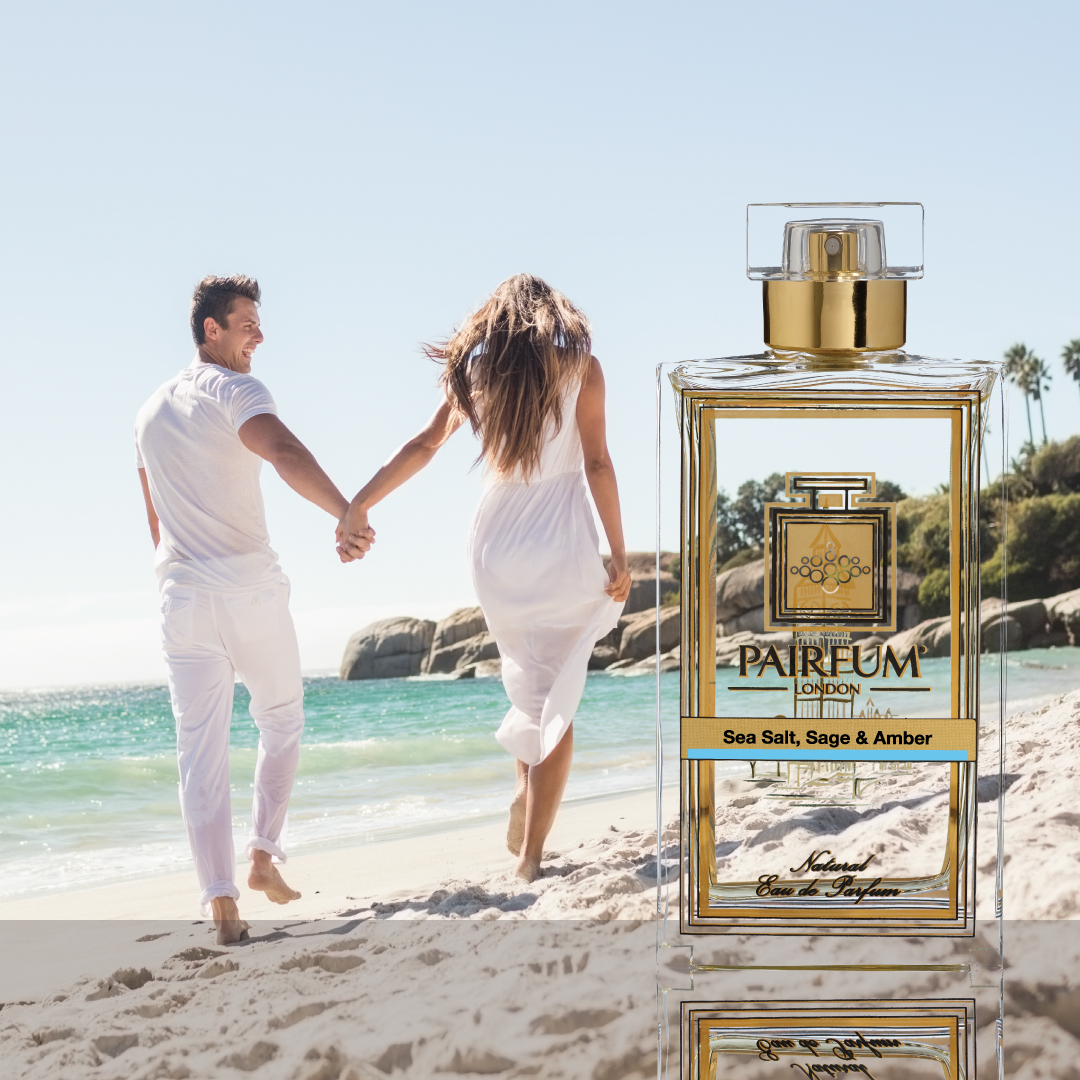
If you’re eager to experience how a high-quality natural fragrance interacts with your skin chemistry, a sampler is a much more practical option than a department store strip. Pairfum London’s Sea Salt, Sage & Amber is an excellent fragrance to explore, designed to evolve and revealing different facets depending on the wearer.
Sea Salt, Sage & Amber Eau de Parfum by Pairfum London
This unisex Eau de Parfum Intense opens with top notes of Sage, Grapefruit, Bergamot, and Tangerine, presenting a bright saline freshness. The heart notes of Sea Salt, Seaweed, Kelp, and Sea Breeze bring a cool, watery clarity, while the base notes of Musk, Amber, and Cedarwood evolve into a warmer, more grounded scent as time passes. On oily skin, it deepens and lasts longer, while on dry skin, the citrus top notes may project more sharply before the base notes arrive.
Handcrafted in the UK using natural essential oils. The fragrance is vegan, cruelty-free, and eco-friendly. The 100ml bottle includes free shipping to the UK, EU, US, and Canada, along with a complimentary mini sampler so you can test it on your skin before opening the full bottle. The cost of the sampler is deducted from any full-size purchase, offering a low-risk opportunity to discover if it becomes your signature scent.

Embrace Your Signature Fragrance
The fact that your perfume smells different from others is not a flaw; it’s the essence of what makes fragrance personal.
Fragrance interacts with various aspects of who you are: your skin type, natural oils, hormones, diet, the season, and your surroundings. Two individuals can share the same bottle for months and still experience different scents. A fragrance that suits one person perfectly might not resonate with another, not due to poor choices, but because skin chemistry is uniquely individual.
Always test fragrances on your skin. Allow time for the scent to develop and notice how it transforms throughout the day. A well-crafted fragrance evolves with you, gradually shifting from something applied to something that feels like a natural part of you. That’s when you know you’ve found your signature scent.
The post Why Your Perfume Smells Different on You appeared first on Pairfum London.