


[ad_1]
Pear leaf is a fragrance ingredient because it offers a unique blend of freshness and subtle sweetness, which matters for perfumers and fragrance enthusiasts seeking innovative notes for spring compositions.
At CosmeticsUrgeryNews, we specialize in cosmetics, beauty, body care, hair care, and perfume, helping consumers and fragrance creators achieve elegant and refreshing scents.
This guide will explore the aromatic profile of pear leaf, its historical significance in perfumery, and its role in modern fragrance creation. We will cover the following key attributes:
- The lifecycle of the pear tree and its impact on scent.
- The unique aroma profile of pear leaf.
- Challenges in cultivating pear trees.
- Fragrance families where pear leaf excels.
- Iconic perfumes featuring pear leaf.
What is the Historical Significance of Pear Leaf in Perfumery?
Long before pear leaf was recognized as an ingredient, the fruit itself symbolized comfort and love in ancient Greek and Roman cultures. Early perfumes incorporated pear aromas, which were appreciated for their tender and ripe scent. However, utilizing the actual fruit posed challenges for perfumers.
Eventually, perfumers began to experiment with materials surrounding the fruit, including sap, bark, and leaves. As interest in natural perfumery grew, so did the fascination with green botanical notes. By the late 20th century, green-fruity notes gained popularity in everyday perfumes, offering a modern and elegant alternative to heavy florals and sharp citrus. Pear leaf emerged as a favored ingredient, providing a soft lift without being overly playful or crisp.
What is the Lifecycle of the Pear Tree?
Understanding the lifecycle of the pear tree, scientifically known as Pyrus communis, enhances appreciation for the scent of pear leaf. During the growing season, the leaves are vibrant and slightly waxy. Healthy leaves contribute to a cleaner, more vibrant scent, while stressed plants may lose their olfactory charm.
Most pear varieties thrive in fertile, moisture-retentive soil and require ample sunlight. The trees can reach heights of 10 to 20 meters, although many garden varieties are cultivated on dwarfing rootstocks for easier maintenance.
What Makes the Aroma Profile of Pear Leaf Unique?
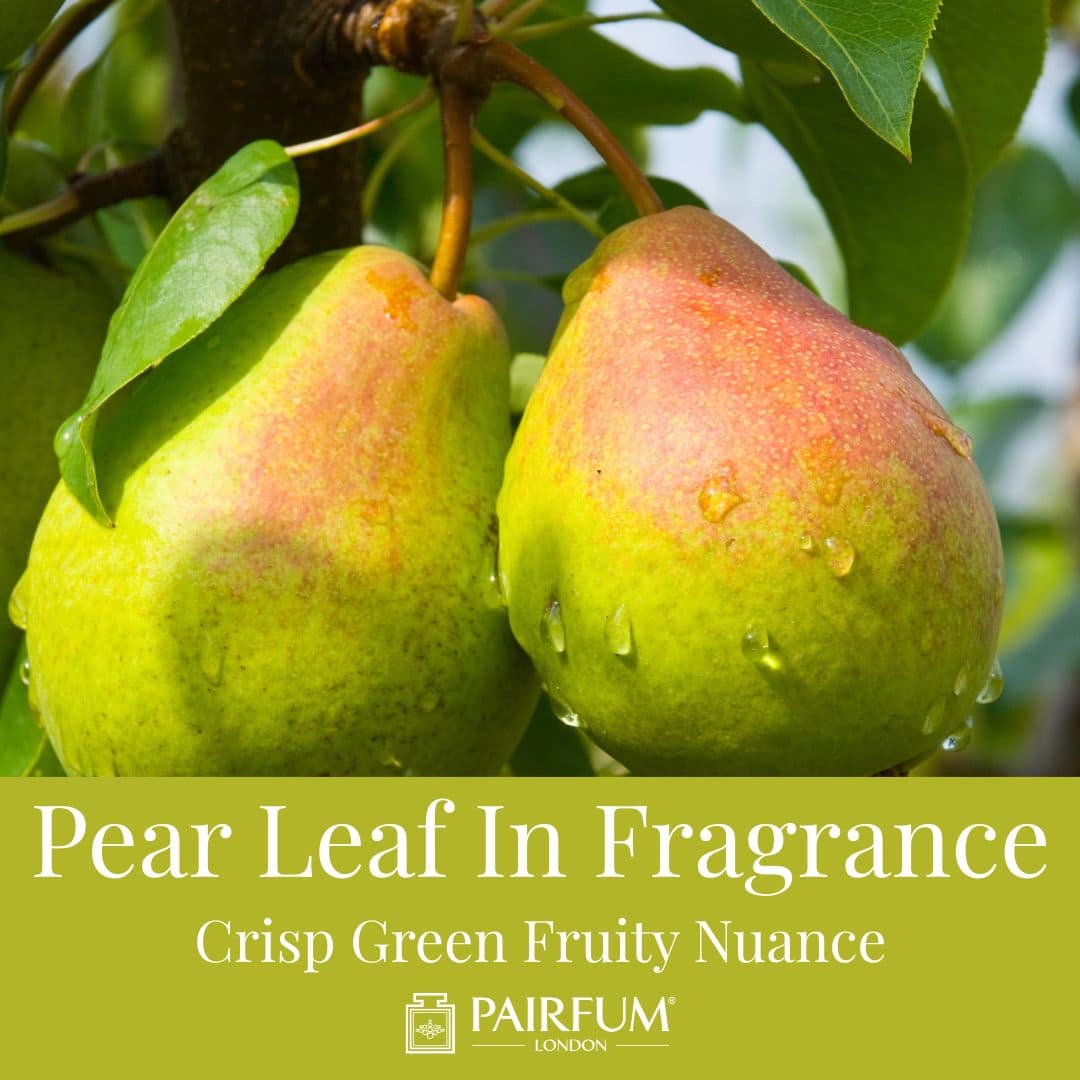
Pear leaf does not smell like the fruit; it offers a lighter, greener aroma reminiscent of crushed leaves with a hint of sweetness. This makes it an ideal choice for spring fragrances, as it provides clarity to floral blends without feeling cold.
Pear Note Types & Scent Characteristics
| Note Type | Scent Characteristics |
|---|---|
| Pear Leaf | Crisp, botanical, light sweetness, green |
| Pear Fruit | Juicy, honeyed, dense, ripe |
Pear leaf acts as a connector between light, sweet top notes and more substantial heart or base notes, creating a seamless transition that feels both modern and natural.
What Challenges Do Pear Trees Face in the Orchard?
The purity of pear leaf scent is closely tied to its botanical health. The pear tree faces several challenges, including pests like the pear leaf blister mite (Eriophyes pyri), which can compromise the leaf’s natural oils and scent profile.
Fungal diseases, such as pear rust, can also affect the tree, creating unsightly lesions on leaves. Maintaining mature trees and protecting young ones is essential for preserving the quality of the leaves. According to the Royal Horticultural Society, keeping the orchard floor clean by removing fallen leaves is crucial for pest management.
Which Fragrance Families Highlight Pear Leaf?
Pear leaf excels in fragrance families that require roundness without depth. You will typically find it in:
- Green florals: Pairing well with soft notes like freesia, peony, or neroli.
- Fruity-florals: Enhancing body in blends featuring apple, melon, or lychee without excessive sweetness.
- Aquatic greens: Contributing a leafy feel to fresh and clean perfumes.
Pear leaf harmonizes beautifully with:
- Rose: Offering a clean contrast to soften powdery finishes.
- Citrus: Such as bergamot or mandarin, enhancing brightness.
- Soft woods and musks: Providing a smooth transition between top and base notes.
Which Iconic Perfumes Feature Pear Leaf?
While pear leaf may not be the star of a fragrance, it plays a vital role in several modern blends. Different pear varieties inspire unique scent profiles. For instance, the Conference pear offers a classic aroma, while the Passe Crassane variety provides a deeper, more complex note.
As fresh perfumes evolve, the green-fruity mix of pear leaf adds a touch of luxury. It creates a smooth foundation in various compositions, ensuring freshness even in blends with pronounced notes like rose or powdery iris.
Petite Chérie by Goutal Paris: A soft fragrance capturing the essence of a pear tree in a garden, blending fruit with distinct green qualities.
Poirier d’un Soir by Miller Harris: An atmospheric scent evoking an orchard at sunset, balancing bright pear notes with cedarwood and birch.
English Pear & Freesia by Jo Malone London: A British classic featuring King William pear, paired with white freesia for a crisp green aroma.
